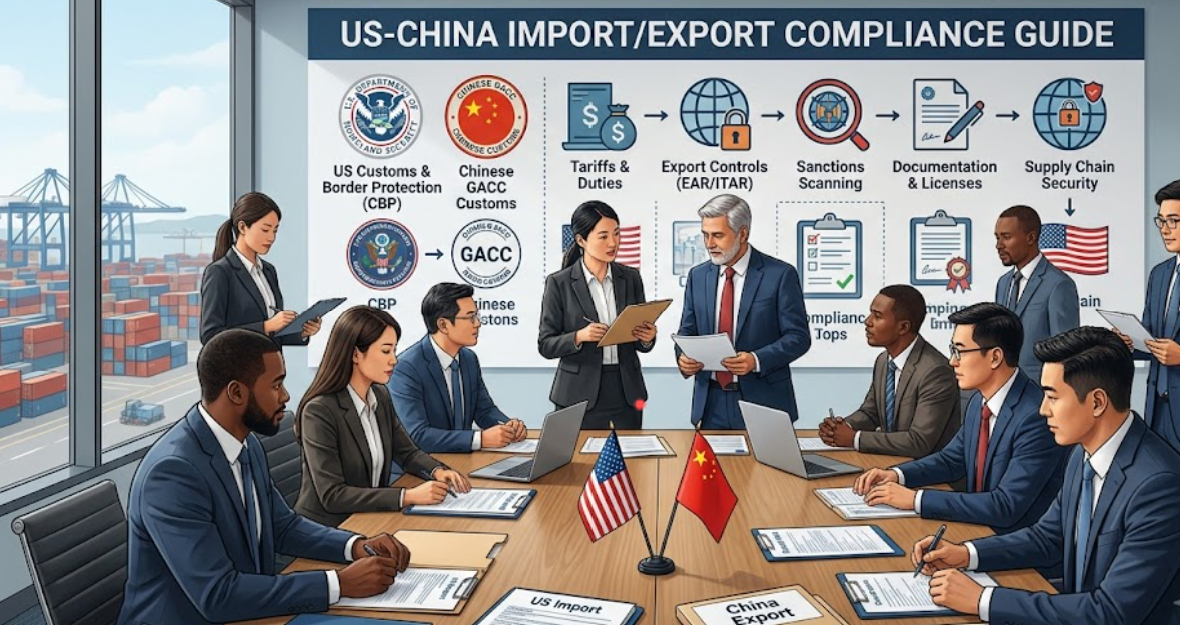
Guangzhou, the southern gateway of the Pearl River Delta, has been a crossroads of international trade for centuries. Today, it is also where many foreign investors first encounter the intricate regulatory architecture that governs doing business in China. Whether the goal is to import components for a manufacturing operation, export finished goods under a Chinese brand, or build a regional procurement hub, the legal journey begins with a single decision: what corporate form should the investment take, and how should the resulting entity be structured for cross-border trade? Getting these foundational choices wrong can delay operations for months and expose the investor to customs, foreign exchange, and tax liabilities that are far more expensive to cure than to prevent.
Guangzhou, the southern gateway of the Pearl River Delta, has been a crossroads of international trade for centuries. Today, it is also where many foreign investors first encounter the intricate regulatory architecture that governs doing business in China. Whether the goal is to import components for a manufacturing operation, export finished goods under a Chinese brand, or build a regional procurement hub, the legal journey begins with a single decision: what corporate form should the investment take, and how should the resulting entity be structured for cross-border trade? Getting these foundational choices wrong can delay operations for months and expose the investor to customs, foreign exchange, and tax liabilities that are far more expensive to cure than to prevent.
This article, written from the perspective of a Guangzhou-based corporate and compliance lawyer focusing on supply chain and ESG matters, walks through the lifecycle of a foreign-invested trading company in China: the definition and features of the foreign-invested joint stock company, the step-by-step procedures for incorporation, the statutory conditions that must be satisfied, and the customs, foreign exchange, and export tax rebate filings required to obtain full import and export qualification. It then turns to the newer layer of obligations — supplier due diligence, green supply chain requirements, and export control compliance — that increasingly defines modern trade compliance for foreign investors.
Background & legal framework
The Foreign-Invested Joint Stock Company: Legal Definition and Key Features
Under Chinese law, a foreign-invested joint stock company is an enterprise legal person whose entire capital is divided into equal shares. Shareholders are liable to the company only to the extent of the shares they subscribe for, and the company bears responsibility for its debts with all of its assets. What distinguishes this form from an ordinary domestic joint stock company is the composition of its shareholding: Chinese and foreign shareholders jointly hold the company's shares, and the shares purchased and held by foreign shareholders must account for no less than 25 percent of the company's registered capital.
Since the Foreign Investment Law of the People's Republic of China took effect on January 1, 2020, the old regime of case-by-case approval and separate foreign-investment enterprise statutes has been replaced by a unified system built on pre-establishment national treatment plus a negative list. Foreign investors now enjoy the same treatment as domestic investors in all sectors other than those on the negative list, and the previous requirement of separate approval for each foreign-invested project has largely given way to record-filing and registration. The joint stock company structure remains popular among investors planning an eventual listing, because it provides a transparent share structure, facilitates the transfer of shares, and aligns naturally with the admission requirements of China's domestic securities markets.
Step One — Business Registration: From Name Verification to Business License
Every foreign trade company begins with industrial and commercial registration. The process opens with name verification, which confirms that the proposed company name is compliant and does not duplicate an existing registration. The founders then submit the incorporation materials, and once the application is approved, the market regulation authority issues the business license. Registered capital is set according to the investor's operational needs. Since the reform of the registered capital system, most companies enjoy a subscribed capital system with a committed contribution period, which means that capital does not need to be fully paid in at the moment of establishment — although the amount subscribed should be realistic, because shareholders remain legally obligated to contribute the full amount they have undertaken.
Once the business license is obtained, the entity exists as a legal person. However, the license alone does not authorize foreign trade activities. A newly established trading company must then complete a sequence of administrative filings: foreign trade operator filing with the commerce authority, customs registration, Electronic Port (E-Port) filing with the issuance of an IC card for electronic clearance, foreign exchange registration with the foreign exchange authority, and export tax rebate recognition with the tax authority. Only when all of these steps are completed in order may the company lawfully conduct import and export business.
How the dispute was handled
Step Two — Statutory Conditions for Establishing the Company
Before any of this can begin, the founder must satisfy a set of statutory conditions. There must be shareholders in the number required by law, and for a joint stock company the Company Law requires promoters who subscribe for a portion of the shares before the company is established. The legal representative must have full capacity for civil conduct and no disqualifying record — a history of serious violations, a revoked business license, or certain criminal convictions can disqualify an individual from serving. The registered capital must be set at a level consistent with the company's business scale and with the shareholders' actual ability to contribute.
The company must also have a compliant and non-duplicated name, a genuine registered address with real and verifiable business premises rather than a merely nominal location, a clearly defined business scope that accurately describes the activities to be carried out, and, where special commodities are involved, the corresponding licenses and permits required by law. Finally, the company must open a basic deposit account at a bank, which is required for the receipt of capital contributions, the settlement of foreign exchange, and day-to-day operations. Each of these conditions is examined during the registration process, and deficiencies at this stage are among the most common causes of rejection or delay.
Step Three — Obtaining Full Import and Export Qualification
Foreign trade operator status is not automatic. The trading company must apply to the customs authority for formal registration and obtain its customs registration code, the unique import and export identifier used in every customs declaration. It must then complete filing with the entry-exit inspection and quarantine authorities so that regulated goods can be cleared without interruption. At the same time, the company applies to the Electronic Port platform for its E-Port card, the digital certificate that enables electronic declaration and clearance, and files with the State Administration of Foreign Exchange so that it can lawfully receive payment from overseas buyers and settle foreign currency into renminbi.
For goods subject to export tax rebates, the company should complete export tax rebate recognition with the tax authority. The rebate — a refund of value-added tax and consumption tax already paid on exported goods — is one of the most important cash-flow benefits of exporting, but it is strictly policed. Documentation must be accurate, transactions must be genuine, and the tax declaration and customs data must match. Exporters that fail to complete these filings in the correct sequence often find their first shipment delayed at the border or their rebate applications rejected for months.
Practical implications
Beyond Incorporation — ESG and Compliance Along the Supply Chain
Establishment is only the beginning. For a foreign-invested company operating in Guangdong, the compliance obligations that matter most today run along the supply chain. The first layer is supplier due diligence. Under China's Environmental Protection Law and the rules on environmental information disclosure, companies are increasingly expected to verify that their suppliers hold the required environmental permits, discharge permits, and workplace safety production licenses. A supplier that operates without proper permits is not merely a reputational risk; it can interrupt production, draw customs scrutiny of the goods, and expose the buyer to liability where the goods were manufactured in violation of environmental or safety law.
The second layer is the green supply chain. With China's carbon peak and carbon neutrality commitments, large buyers — many of them foreign-invested multinationals — are demanding that their Chinese suppliers report energy consumption, carbon footprints, and compliance with green procurement standards. These contractual ESG clauses are becoming standard in supply agreements, and they create real legal duties: audit rights, reporting obligations, and contractual remedies if a supplier falls short. Lawyers advising foreign-invested companies now routinely negotiate these provisions alongside price, quality, and delivery terms, and a failure to include them can leave the buyer without any legal lever when a sustainability issue arises downstream.
The third layer is export control and sanctions compliance. The Export Control Law of the People's Republic of China, effective December 1, 2020, establishes a comprehensive control list system covering dual-use items, military products, and other controlled goods, technologies, and services. Foreign-invested trading companies must screen their products, customers, and end uses, and must maintain the records required by law. Violations can result in fines, suspension of export qualification, and even criminal liability for individuals involved. Given the convergence of Chinese export controls and foreign sanctions regimes, a dual-compliance review is now a necessary part of every cross-border transaction.
Conclusion — Practical Takeaways for Foreign Investors
Establishing a foreign trade company in Guangzhou, or anywhere in China, is a structured process with clearly defined steps, but each step carries its own legal consequences. My practical advice to foreign investors is to sequence the work correctly: complete business registration first, then foreign trade operator filing, customs registration, E-Port activation, foreign exchange registration, and export tax rebate recognition — while ensuring that every statutory condition, from the legal representative's qualifications to the genuineness of the registered address, is satisfied before any documents are submitted.
Beyond formation, treat supply chain compliance as a continuous obligation rather than a one-time filing exercise. Institutionalize supplier due diligence, build ESG clauses into procurement contracts, maintain export control screening procedures, and keep documentation in order for customs, foreign exchange, and tax purposes. In an environment where regulators are coordinating more closely across commerce, customs, tax, and environmental authorities, a foreign-invested company that aligns its corporate structure, trade filings, and supply chain governance from day one is far better positioned to trade lawfully, efficiently, and sustainably.