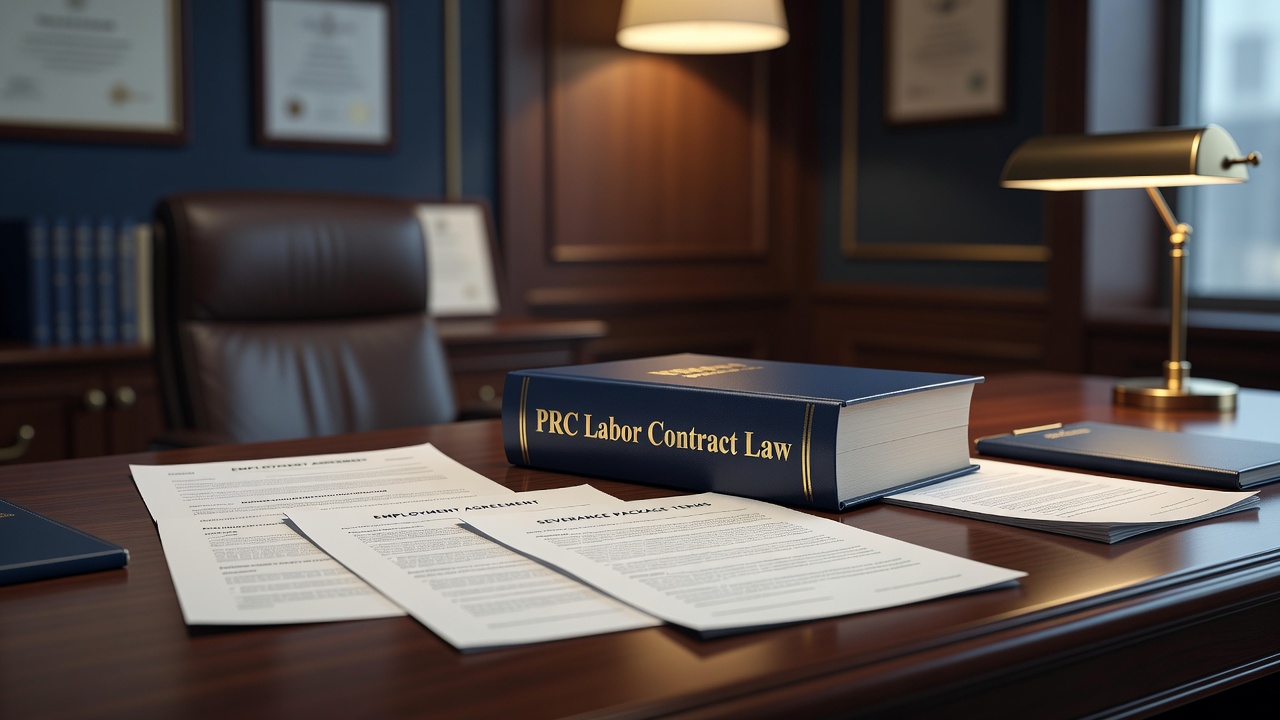
Foreign employees working in China enjoy legal protections under the PRC Labor Contract Law, but understanding what constitutes wrongful termination and how to challenge it can be challenging. Zhang Yingjie, a full-time lawyer at Tianjin Sanguan Law Firm in the Beichen District of Tianjin with extensive experience in employment and labor disputes, provides this guide to wrongful termination in China for foreign employees and the employers who hire them.
What Constitutes Wrongful Termination Under Chinese Law
Under the PRC Labor Contract Law, an employer may terminate an employment contract under specific circumstances. Wrongful termination occurs when an employer dismisses an employee without one of the legally recognized grounds, fails to follow the proper procedures, or does not pay the required severance. The law recognizes three categories of termination: termination by mutual agreement between employer and employee; termination by the employer without cause, which requires 30 days notice or one months salary in lieu of notice plus statutory severance; and termination for cause, which allows immediate dismissal without severance for serious misconduct by the employee. Common grounds for termination for cause include material breach of the employers rules and regulations, serious dereliction of duty causing substantial harm to the employer, or criminal liability. Termination without cause is permitted when the employee is ill or injured and cannot return to work after the medical treatment period, when the employee is incompetent and fails to improve after training or position adjustment, or when a major change in circumstances makes the original contract unperformable and the parties cannot reach agreement on modification. Employers who terminate without following these legal requirements commit wrongful termination.
Special Protections for Foreign Employees
Foreign employees in China benefit from the same labor law protections as Chinese employees, with some additional considerations. Foreign workers must hold a valid work permit and residence permit to work legally in China. If an employer wrongfully terminates a foreign employee, the employee may be entitled to reinstatement, severance pay, and compensation for the period of unemployment. Severance pay is calculated at one months salary for each full year of service, with partial years of six months or more counting as a full year. The monthly salary used for severance calculation is capped at three times the average monthly salary in the city where the employee works, as announced by the local Bureau of Statistics. Foreign employees should be aware that their work permit is tied to their employing entity. Upon termination, the employer must cancel the work permit, and the foreign employee has a limited period, typically 30 days, to find a new employer and transfer the work permit or leave the country. This makes it particularly important for foreign employees to challenge wrongful terminations promptly, as delay can affect their legal immigration status in China.
Background & legal framework
Procedures for Challenging Wrongful Termination
Foreign employees who believe they have been wrongfully terminated have several legal avenues for challenging the dismissal. The first step is typically to file a labor dispute arbitration application with the Labor Dispute Arbitration Committee in the district where the employer is registered or where the employment contract was performed. Labor arbitration is a mandatory pre-litigation procedure in China, meaning the dispute must go through arbitration before it can be taken to court. The statute of limitations for filing a labor arbitration claim is one year from the date the employee knew or should have known that their rights were infringed. The arbitration committee must render a decision within 45 days of accepting the case, extendable to 60 days in complex cases. If either party is dissatisfied with the arbitration award, they may file a lawsuit in the Peoples Court within 15 days of receiving the award. The court will hear the case de novo, meaning it considers the evidence and arguments from scratch rather than merely reviewing the arbitration decision. Attorney Zhang advises foreign employees to preserve all relevant evidence, including the employment contract, pay stubs, termination notice, and any written communications with the employer, as these will be critical to proving wrongful termination.
Remedies Available for Wrongful Termination
If the arbitration committee or court finds that the termination was wrongful, several remedies are available. The employee may choose reinstatement to their former position with back pay for the period of unemployment. Alternatively, the employee may elect to accept the termination and receive severance pay plus additional compensation. Under Chinese law, an employer who wrongfully terminates an employee may be ordered to pay twice the statutory severance amount as a penalty. This means an employee with five years of service who earns 20,000 RMB per month would be entitled to 100,000 RMB in statutory severance (5 months × 20,000 RMB) plus an additional 100,000 RMB in damages, for a total of 200,000 RMB. The employer may also be ordered to pay the employees legal fees and arbitration or litigation costs. In practice, many wrongful termination cases are resolved through mediation during the arbitration process, as both parties have incentives to avoid the time and expense of full litigation. Attorney Zhang notes that the overwhelming majority of labor dispute cases in China result in findings favorable to the employee, as Chinese labor law is strongly protective of employee rights.
Preventive Measures for Foreign Employees
Foreign employees can take several steps to protect themselves against wrongful termination. Before signing an employment contract, employees should carefully review the termination provisions to ensure they understand the grounds on which they can be dismissed. The employment contract should specify the job duties, compensation structure, working hours, and grounds for termination in clear terms. Foreign employees should also review the employers internal rules and regulations, as these may contain additional grounds for termination that the employer can invoke. Maintaining copies of all employment-related documents, including performance evaluations, email communications, and documentation of working hours, can be invaluable in a wrongful termination dispute. Attorney Zhang also recommends that foreign employees maintain their network of professional contacts in China, as finding new employment within the 30-day work permit transfer window requires a proactive job search. In some cases, it may be advisable to negotiate a severance agreement with the employer that provides for a reasonable separation package in exchange for a release of claims, avoiding the uncertainty and delay of formal proceedings.
Zhang Yingjie practices at Tianjin Sanguan Law Firm in the Beichen District of Tianjin, specializing in employment and labor law, contract disputes, and civil litigation. She advises both Chinese and international clients on wrongful termination claims, severance negotiations, and employment contract review.
How the dispute was handled
This article is for informational purposes only. Employees should consult qualified legal professionals for advice tailored to their specific circumstances.
Employment Law Application Notes
I convert complex Chinese procedure into a dated checklist with owners for translation, notarization, and internal sign-off across time zones.
I plan enforcement first—assets, licenses, receivables, and interim measures—so strategy is not limited to winning on paper.
- ⚖️ Written scope and remedy map
- 📜 Bilingual document control
- 🛡️ Deadline and limitation tracking
- 💼 Enforcement and settlement options in parallel
Operational Checklist for Foreign Readers
I plan enforcement first—assets, licenses, receivables, and interim measures—so strategy is not limited to winning on paper.
Practical implications
I document scope, assumptions, and decision rights at engagement start so foreign clients know what will be filed, who must approve, and when silence becomes a missed deadline.
- ⚖️ Written scope and remedy map
- 📜 Bilingual document control
- 🛡️ Deadline and limitation tracking
- 💼 Enforcement and settlement options in parallel
Risk Controls Before Escalation
I document scope, assumptions, and decision rights at engagement start so foreign clients know what will be filed, who must approve, and when silence becomes a missed deadline.
I treat bilingual consistency as a risk control: chops, authority documents, and English summaries must tell the same commercial story.
- ⚖️ Written scope and remedy map
- 📜 Bilingual document control
- 🛡️ Deadline and limitation tracking
- 💼 Enforcement and settlement options in parallel