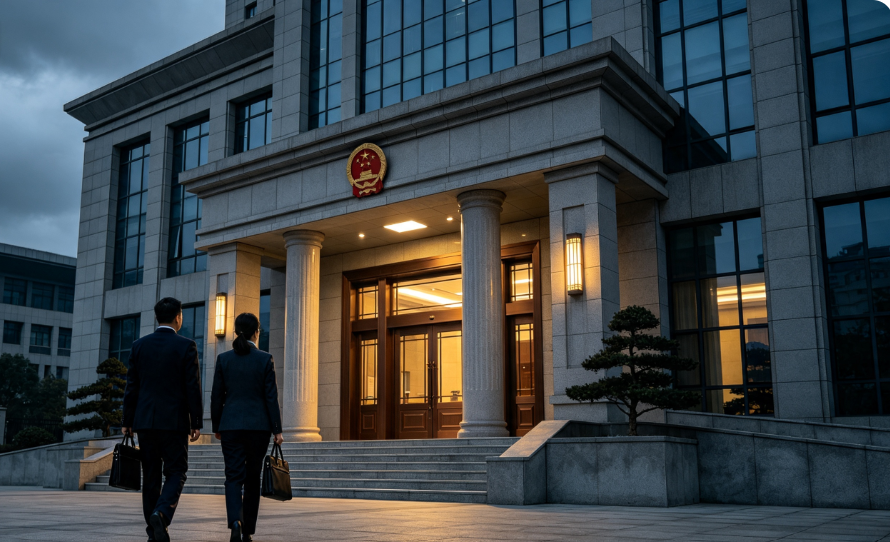
Foreign individuals and businesses may need to pursue civil litigation in Chinese courts for disputes ranging from commercial contract breaches to personal injury claims. Understanding the procedural framework, evidence rules, and practical considerations for foreign plaintiffs is essential for successfully navigating the Chinese court system. This guide provides a comprehensive overview of civil litigation in China under the Civil Procedure Law of the People's Republic of China.
The Chinese Court System
Civil litigation in China is governed by the Civil Procedure Law of the People's Republic of China, most recently amended in 2021. The court system has four levels: Basic People's Courts at the district level, Intermediate People's Courts at the prefectural level, Higher People's Courts at the provincial level, and the Supreme People's Court in Beijing. Foreign-related civil cases are generally heard by Intermediate People's Courts. The statute of limitations for most civil claims is three years under the Civil Code. The choice of court is determined by the defendant's domicile or the place where the contract is performed or the tort occurs.
Commencing a Civil Lawsuit
A civil lawsuit in China begins with filing a complaint with the competent People's Court. The complaint must state the parties' identities, the facts of the case, the legal basis for the claim, and the relief sought. The court must decide whether to accept the case within seven days of filing. If accepted, the court serves a copy of the complaint on the defendant within five days. The defendant then has 15 days to file a defense. After the exchange of pleadings, the court schedules a pre-trial conference to identify the disputed issues and exchange evidence.
Evidence Rules and Burden of Proof
Under Article 64 of the Civil Procedure Law, the burden of proof falls on the party asserting a claim. The Supreme People's Court's Several Provisions on Evidence in Civil Proceedings establishes detailed rules for evidence admissibility. Evidence types include documentary evidence, physical evidence, witness testimony, expert opinions, and electronic data. Foreign-origin documents must be notarized, translated into Chinese, and certified through the apostille process or Chinese embassy legalization. The court may order both parties to exchange evidence within a specified period, and evidence not disclosed within the deadline may be excluded.
Foreign Plaintiffs in Chinese Courts
Foreign plaintiffs enjoy procedural equality with Chinese citizens under Article 5 of the Civil Procedure Law. However, a foreign plaintiff must demonstrate legal standing and proper authorization. Documents executed outside China must be notarized by a local notary public, authenticated by the Chinese embassy or apostille, and translated into Chinese by a certified translation agency. Foreign plaintiffs may appoint a Chinese lawyer as their representative, and foreign lawyers must work through a Chinese co-counsel. Deposits for litigation costs are calculated as a percentage of the claim amount, typically 0.5% to 2.5% depending on the value of the claim.
Duration and Costs of Litigation
A typical civil case in Anhui courts takes 6 to 12 months from filing to first-instance judgment under the Civil Procedure Law. The court must conclude a case applying ordinary procedure within 6 months, extendable by 6 months upon court president approval. Summary procedure cases must be concluded within 3 months. Legal fees, court costs, translation fees, and service fees should all be considered. The prevailing party is generally entitled to recover court costs but not full legal fees. Enforcement of judgments is handled by the court's enforcement division and may require additional time and legal steps.
Dispute Resolution Application Notes
I treat bilingual consistency as a risk control: chops, authority documents, and English summaries must tell the same commercial story.
I prefer early written notices and clean evidence indexes over informal WeChat-only chains when the amount or regulatory exposure is material.
- ⚖️ Written scope and remedy map
- 📜 Bilingual document control
- 🛡️ Deadline and limitation tracking
- 💼 Enforcement and settlement options in parallel
Operational Checklist for Foreign Readers
I prefer early written notices and clean evidence indexes over informal WeChat-only chains when the amount or regulatory exposure is material.
I convert complex Chinese procedure into a dated checklist with owners for translation, notarization, and internal sign-off across time zones.
- ⚖️ Written scope and remedy map
- 📜 Bilingual document control
- 🛡️ Deadline and limitation tracking
- 💼 Enforcement and settlement options in parallel
Risk Controls Before Escalation
I convert complex Chinese procedure into a dated checklist with owners for translation, notarization, and internal sign-off across time zones.
I plan enforcement first—assets, licenses, receivables, and interim measures—so strategy is not limited to winning on paper.
- ⚖️ Written scope and remedy map
- 📜 Bilingual document control
- 🛡️ Deadline and limitation tracking
- 💼 Enforcement and settlement options in parallel
Implementation Detail 1
I prefer early written notices and clean evidence indexes over informal WeChat-only chains when the amount or regulatory exposure is material.
I convert complex Chinese procedure into a dated checklist with owners for translation, notarization, and internal sign-off across time zones.
- ⚖️ Written scope and remedy map
- 📜 Bilingual document control
- 🛡️ Deadline and limitation tracking
- 💼 Enforcement and settlement options in parallel