
Professional profile
About Zhang
Senior Partner | Cross-border investment, international trade, maritime and shipping
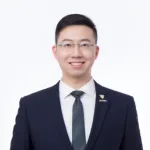
Zhang Yi is a Qingdao-based senior partner at Allstar Law Offices whose practice combines cross-border investment, international trade and maritime commerce. His background is particularly relevant to companies that need counsel capable of understanding not only transaction documents but also the operational risks surrounding exports, overseas investment, credit, logistics, foreign exchange and commercial disputes. His professional experience spans foreign investment into China, Chinese outbound investment, international trade and the risk-management issues that frequently arise when a business project crosses several jurisdictions.
Read full profile
Before moving into private legal practice, Zhang worked from 1992 to 2000 in the international business function of the Qingdao branch of the People's Insurance Company of China. His early work included marine cargo insurance for export shipments, claims, recovery and later export credit insurance, credit analysis, credit-limit approval, claims and international debt collection. That background is unusual among corporate lawyers because it exposed him directly to the commercial mechanics behind international sales and overseas receivables. Shipping risk, insurance allocation, counterparty credit and the practical recoverability of claims often become decisive in cross-border transactions even though they receive limited attention during initial corporate structuring.
Zhang entered legal practice in 2001 and developed a long-term focus on foreign-related matters. He later became a founding partner of a Qingdao law firm before joining Allstar's Qingdao office in 2015. His official biography describes extensive work for multinational companies, foreign investors and Chinese companies investing overseas. That work includes cross-border acquisitions, investment projects, asset restructuring and financing. He has handled investment-structure design, project negotiation, legal due diligence and drafting of transaction documents, while also advising on industrial policy, regulatory approvals, tax, foreign exchange, import and export issues and employment matters connected with investment projects.
This breadth makes Zhang particularly relevant to companies undertaking greenfield projects or acquisitions outside China. A Chinese manufacturer building a factory in Southeast Asia, Mexico or another overseas market may need to coordinate Chinese outbound-investment procedures with host-country corporate formation, site control, construction, financing, equipment exports, employment, tax and environmental licensing. Those issues cannot be managed effectively as isolated workstreams. An equipment-export delay can affect construction milestones; a land-use problem can undermine financing; an incorrectly structured technology license can create IP or tax exposure; and a weak dispute clause can leave the investor without an efficient remedy against a local partner or contractor.
His representative experience publicly described by Allstar includes Chinese investment projects in Singapore, Indonesia, Cambodia, Thailand, Morocco, Côte d'Ivoire, France and Mexico, as well as acquisitions by a Chinese listed digital-technology company involving targets in the United Kingdom and South Africa. His inbound investment experience includes work for foreign companies establishing and operating businesses in Qingdao. The official profile also lists advisory work for companies and organizations from Europe, North America and other regions. These matters demonstrate experience on both sides of the investment corridor: foreign companies entering China and Chinese companies expanding overseas.
Zhang's international trade and maritime background adds a distinctive layer to his transaction practice. Manufacturing investment is inseparable from supply chains. A foreign-owned or overseas factory may depend on imported equipment, components, raw materials and technology while exporting finished products to several markets. Counsel therefore needs to consider customs, sanctions and export-control restrictions, cargo and insurance arrangements, distribution contracts, payment security and dispute enforcement together with corporate ownership. Zhang's combination of investment, trade and maritime experience allows those risks to be considered as part of a single project rather than as unrelated legal questions.
His public professional roles reinforce the foreign-related orientation of his work. Allstar identifies him as a leading lawyer in foreign-related legal services and notes leadership roles in national, Shandong and Qingdao professional bodies dealing with international legal services, international trade and investment. His profile also describes overseas professional training and international presentations concerning foreign investment in China. Such activity is relevant because cross-border counsel must keep pace with the interaction between Chinese outbound rules, host-country requirements and changing trade and investment conditions.
For foreign investors, Zhang's experience is relevant where the legal matter involves more than routine company formation. Examples include establishing a joint venture, acquiring a Chinese business, restructuring an existing foreign-invested enterprise, negotiating an investment agreement, handling a cross-border commercial contract or planning an exit. For Chinese businesses, his experience can be relevant to an overseas acquisition, greenfield plant, project financing, international distribution structure or dispute arising from an outbound investment.
A further strength of Zhang's profile is that his experience follows the life cycle of an international project. Legal issues arise during feasibility analysis, negotiation and diligence, but they continue after closing through construction, hiring, imports, sales, compliance and later restructuring. If a disagreement develops, earlier transaction choices determine the client's leverage. Counsel who understands those later stages can build stronger termination rights, payment protections, security arrangements, governance mechanisms and dispute clauses into the deal at the beginning.
Within Qingdao, Zhang's practice aligns closely with a city built around port activity, manufacturing, international trade and foreign investment. Companies in machinery, consumer products, food, chemicals, logistics and other export-facing sectors often need advice that connects corporate structuring with the movement of goods and money. His early insurance and export-credit experience adds a practical perspective to that work.
Capability