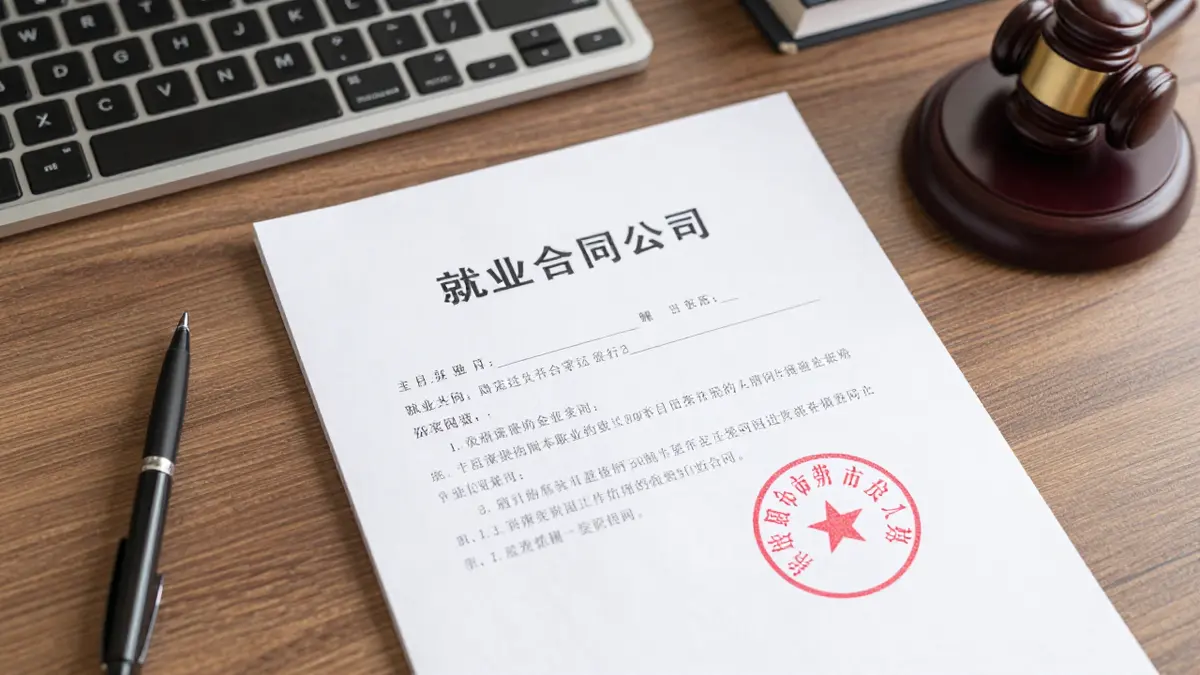
If you''ve been fired from your job, do you have grounds to challenge the termination? Your Rights in the Workplace If you''ve been fired from your job, how do you know if the termination was legal or illegal (called "wrongful termination")? Most employment is "at will," which means an employee may be fired at any time and for any reason or for no reason at all (as long as the reason is not illegal). But there are some important exceptions to the at-will rule -- and legal remedies -- that may help you keep your job or sue your former employer for wrongful termination. Written PromisesIf you have a written contract or other statement that promises you job security, you have a strong argument that you are not an at-will employee. For example, you may have an employment contract stating that you can only be fired with good cause or for reasons stated in the contract. Or, you may have an offer letter or other written document that makes promises about your continued employment. If so, you might be able to enforce those promises in court. For help determining whether you were an at-will employee.Implied Promises< /p>The existence of an implied employment contract -- an agreement based on things your employer said and did -- is another exception to the at-will rule. This can be difficult to prove because most employers are very careful not to make promises of continued employment. But implied contracts have been found where employers promised "permanent employment" or employment for a specific period of time or where employers set forth specific forms of progressive discipline in an employee manual.In deciding whether an implied employment contract exists, courts look at a number of things, including:
duration of your employment
regularity of job promotions
history of positive performance reviews
assurances that you would have continuing employment
whether your employer violated a usual employment practice in firing you -- such as neglecting to give a required warning, or
whether promises of long-term employment were made when you were hired.
Unlawful dismissal → 2n economic compensation; n is capped service years and wage.
Diagram in text
FAILURE MODES
Unlawful termination
No statutory ground or procedure
2n formula
Breaches of Good Faith and Fair DealingIf your employer acted unfairly, you may have a claim for a breach of a duty of good faith and fair dealing. Courts have found that employers breached the duty of good faith and fair dealing by:
firing or transferring employees to prevent them from collecting sales commissions
misleading employees about their chances for promotions and wage increases
fabricating reasons for firing an employee when the real motivation is to replace that employee with someone who will work for lower pay
soft-pedaling the bad aspects of a particular job, such as the need to travel through dangerous neighborhoods late at night, and
repeatedly transferring an employee to remote, dangerous, or otherwise undesirable assignments to coerce the employee into quitting without collecting severance pay or other benefits that would normally be due.
Some courts don''t recognize the "good faith and fair dealing" exception to at-will employment. And some states require that a valid employment contract exist before employees can sue for a breach of good faith and fair dealing.Violations of Public PolicyIt is illegal to violate public policy when firing a worker -- that is, to fire for reasons that society recognizes as illegitimate grounds for termination. Before a wrongful termination claim based on a violation of public policy will be allowed, most courts require that there be some specific law setting out the policy. Many state and federal laws have specified employment-related actions that clearly violate public policy, such as firing an employee for:
disclosing a company practice of refusing to pay employees their earned commissions and accrued vacation pay
taking time off work to serve on a jury
taking time off work to vote
serving in the military or National Guard, or
notifying authorities about some wrongdoing harmful to the public (whistle-blowing).
Some states also protect employees from being fired for very specific reasons, like service as an election officer or volunteer firefighter. Some courts have also held that employers cannot fire you because you took advantage of a legal remedy or exercised a legal right -- such as filing a workers'' compensation claim or reporting a violation of the Occupational Safety and Health Act (OSHA).DiscriminationEmployers may not fire even at-will employees for illegal reasons -- and discrimination is illegal. If you believe you were fired because of your race, color, national origin, gender, religion, age, disability, or genetic information, you should talk to a lawyer right away. There are strict time limits and rules that apply to discrimination claims; for example, you must file a complaint of discrimination with a state or federal agency before you may sue your employer in court. RetaliationEmployers are forbidden from retaliating against employees who have engaged in certain legally protected activities. To show that you lost your job as a result of your employer''s retaliation, you must prove all of the following:
You were engaged in a legally protected activity -- such as filing a complaint with the Equal Employment Opportunity Commission or formally complaining to your employer about harassment or discrimination.
That activity prompted your employer to act -- for example, you were reprimanded just after your employer found out that you filed a charge of sexual harassment.
Your employer''s action had adverse consequences for you -- you were fired, denied a promotion, or given a negative performance review that was unwarranted, for example.
FraudIn extreme cases, an employer''s actions when firing a worker are so devious and wrong that they rise to the level of fraud. Fraud is commonly found in the recruiting process (where promises are made and broken) or in the final stages of employment (such as when an employee is induced to resign).
Was the termination unlawful, and is 2n correctly computed?
Diagram in text
Understanding Wrongful Termination: China Employment Law Tips — process.
Collect contract and ILR
Test the ground and procedure
Compute n and 2n
Check special protection
To prove that your job loss came about through fraud, you must show all of the following:
your employer made a false representation
someone in charge knew of the false representation
your employer intended to deceive you (or tried to induce you to rely on the representation)
you actually did rely on the representation, and
you were harmed in some way by your reliance on the representation.
The hardest part of proving fraud is showing that the employer acted badly on purpose, in an intentional effort to trick you. That requires good documentation of how, when, to whom, and by what means the false representations were made.DefamationA lawsuit for defamation is meant to protect a person''s reputation and good standing in the community. To prove that defamation was a part of your job loss, you must show that -- in the process of terminating your employment or subsequently providing references -- your former employer made false and malicious statements about you that harmed your chances of finding a new job. To sue for defamation, you must usually show that your former employer:
made a false statement about you
made the statement with malice (that is, knowing that it was false or with reckless disregard to its falsity)
told or wrote that statement to at least one other person, and
harmed you in some way by communicating the statement -- causing you to lose your job, or preventing a new employer from hiring you, for example.
To win a case of defamation, you must prove that the hurtful words were more than petty watercooler gossip. True defamation must be factual information, and it must be false. Whistle-Blowing ViolationsWhistle-blowing laws protect employees who report activities that are unlawful or harm the public interest. Some states protect whistle-blowers who complain that their employer broke any law, regulation, or ordinance at all. Other states give employees whistle-blower protection only when they report that their employer broke certain laws -- like environmental regulations or labor laws.
The Legal Rule
Most employment is "at will," which means an employee may be fired at any time and for any reason or for no reason at all (as long as the reason is not illegal).
The Business Impact
Test the ground, evidence, notice/severance position and required procedure before issuing the termination. A defensible business reason can still create liability if the statutory or contractual process is mishandled. Apply that to the facts of Understanding Wrongful Termination: China Employment Law Tips.
READER DISCUSSION
Discussion
Share experience or questions about this topic. This is a public discussion — not legal advice. Do not post confidential case details.
Have a question after reading? Leave it here, or Ask a Lawyer for a free initial intake.
Comments are moderated. China Legal Portal is a directory and information resource; no attorney–client relationship is formed by posting here.
End of brief
Author
Zhang Yi
Shandong law firm · Employment & Labor
Shandong law firm · Verified listing. This insight is educational and does not create an attorney–client relationship.