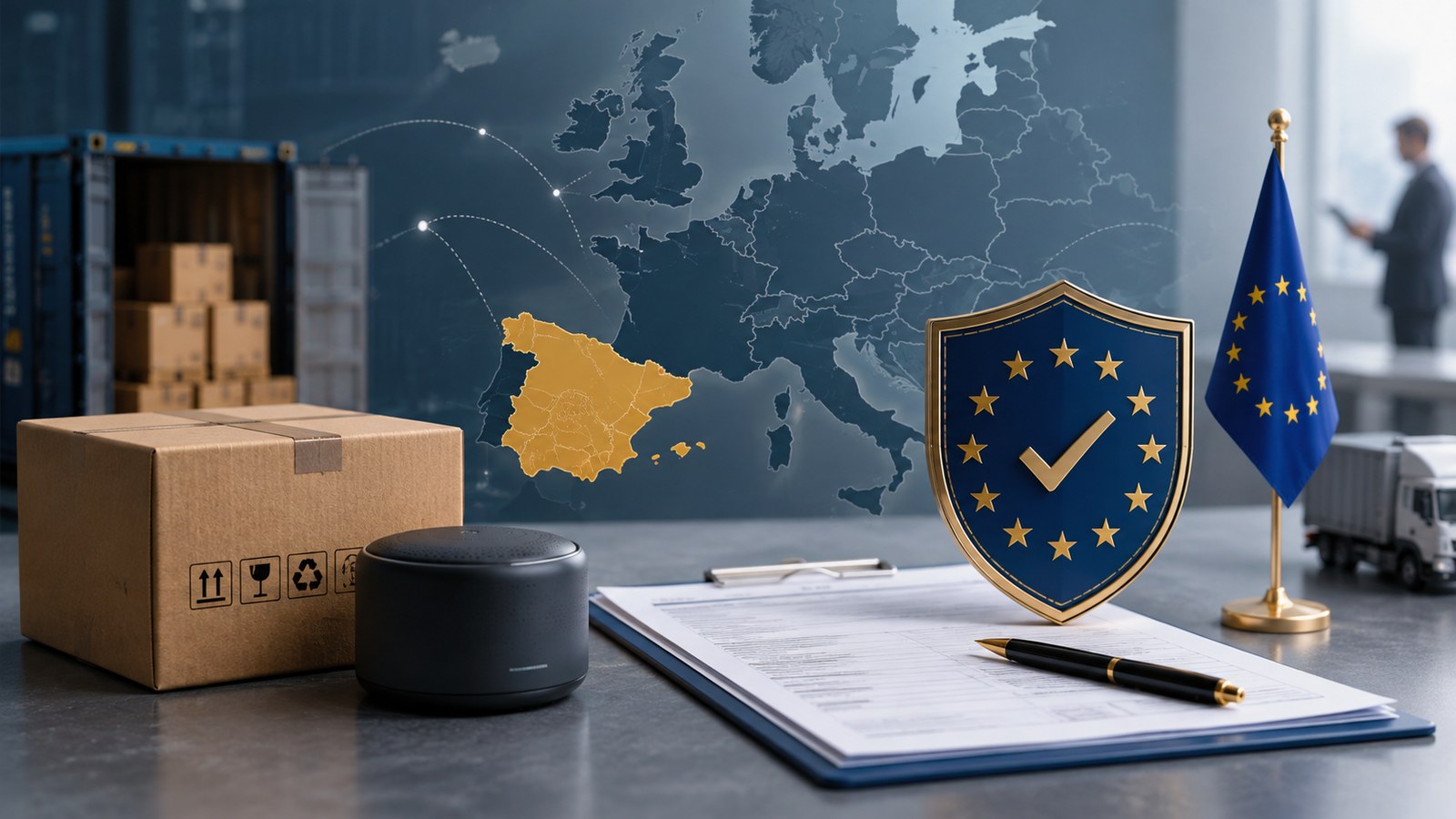

The EU Carbon Border Adjustment Mechanism (CBAM) prices embedded emissions on selected imported goods so that carbon costs converge with the EU Emissions Trading System logic. Chinese exporters of in-scope products—and their EU importers—need emissions data, monitoring methodology, and contractual allocation of CBAM obligations.
Related: ESG roadmap · EV outbound · Trade category guides.
What CBAM is trying to do
The Legal Rule
The EU Carbon Border Adjustment Mechanism (CBAM) prices embedded emissions on selected imported goods so that carbon costs converge with the EU Emissions Trading System logic.
The Business Impact
Use “CBAM for Chinese Exporters: Carbon Border Adjustment Mechanism Orientation” to set the compliance steps before the goods move, not after they reach the border. Confirm the declarant, permits, valuation basis and supporting evidence early enough to fix gaps without disrupting delivery.
CBAM is established under Regulation (EU) 2023/956 of the European Parliament and of the Council of 10 May 2023 establishing a carbon border adjustment mechanism (as implemented and phased by subsequent Commission acts—always confirm the phase applicable to your reporting period). During transitional phases, reporting obligations dominate; definitive phases introduce certificate surrender aligned with embedded emissions, with adjustments related to free allocation logic under the EU ETS design.
CBAM is not a traditional customs duty schedule you can "engineer" only with invoice tricks. It is an emissions-accounting and compliance product attached to imports. The mechanism is designed so that the carbon cost paid by EU producers under the Emissions Trading System converges with the cost imposed on imported goods through CBAM, and the reporting and certificate architecture is built around that convergence. For a Chinese exporter, the practical consequence is that CBAM compliance is a data problem, not a customs-broker problem: the emissions data must be measured, documented, and reported according to the Commission's methodology, and the exporter that treats CBAM as "just another customs form" will find the data gap at the first reporting deadline.
Scope — start from the regulation annexes
Initial CBAM goods include categories such as cement, electricity, fertilisers, iron and steel, aluminium, and hydrogen (see Annex I of Regulation (EU) 2023/956 and updates). Downstream products and expansions are a political and regulatory watch item—re-check scope when your BOM changes or when you sell further-processed goods.
If your product is out of scope today, still track precursors: steel and aluminium inputs can pull customers into CBAM data requests even when your finished SKU is not listed. The scope logic runs through the supply chain, and a manufacturer of a downstream product that is not itself listed may nevertheless receive a data request from an EU customer whose own product is in scope, because the customer must report the embedded emissions of its inputs. The exporter's data file therefore has value beyond its own CBAM filing: it is the answer to the customer's supply-chain questionnaire, and the exporter that cannot produce it is the supplier that the EU buyer replaces.

- CBAM LEGAL MAP
- Covered goods & phases
- Transitional reporting to financial adjustment
Who does what
- EU importers / CBAM declarants — typically bear formal reporting and certificate obligations as the declarant to the customs authority
- Non-EU producers / exporters — hold the underlying emissions data: production routes, fuels, electricity consumption, precursors, and any carbon price already paid
- Verification bodies — in definitive phases, independent verification of the emissions data before it is used for the certificate calculation
The division of labour is the source of most CBAM friction: the legal obligation sits with the EU importer, but the data sits with the Chinese producer. The importer cannot file without the producer's data, and the producer cannot control how the importer uses it. That asymmetry is why the contract between them — not the regulation — is where the practical allocation happens. The exporter's role is to generate, document, and transfer reliable emissions data under a methodology the importer can use, and the importer's role is to report it correctly and allocate the certificate cost back into the commercial terms.
Data — the emissions file that matters
The core data requirement is the embedded emissions of the imported goods: direct emissions from production processes and energy consumption, plus indirect emissions from purchased electricity, calculated per tonne of product. The transitional methodology is defined by Commission implementing acts, including Implementing Regulation (EU) 2023/1773 on the transitional reporting obligations. The exporter should build the emissions file as a structured dataset — production volumes, fuel consumption, electricity purchases, precursor inputs, and the calculation methodology — that can be regenerated for each reporting period and audited by the importer's verification body.
The monitoring methodology is the deciding factor between a reportable file and a dispute. The Commission allows default values in defined cases, but default values are generally higher than actual measured emissions, and an exporter that relies on defaults pays a carbon cost that its own factory does not justify. The investment in measurement — meters on fuel and electricity lines, records of production batches, allocation of emissions across product control numbers — pays back in the certificate cost. A Chinese exporter with real measurement data can undercut the default-value competitors on the delivered cost of carbon, and that is a commercial advantage, not a compliance burden.
Contracts — allocating the CBAM burden
The supply contract should allocate the CBAM workstream before the first shipment. Key clauses include: who provides the emissions data and on what timeline; who selects and pays for the verification body; whether the price adjusts if CBAM certificate costs change; who bears the cost of default-value over-reporting; and what happens if the importer fails to file on time. A contract that says nothing about CBAM leaves the entire risk with the importer — which means the importer will price that risk into the next negotiation, and the exporter will discover the cost in the price, not in the contract.
The contract should also address data quality as a warranty: the exporter warrants that the emissions data is complete and measured in accordance with the agreed methodology, and the importer gets audit rights over the source records. In our experience advising Chinese exporters and their EU buyers on CBAM, the deals that run smoothly are the ones with a CBAM schedule attached to the supply contract — the data template, the timing, the verification plan, and the cost-allocation formula — agreed at the commercial table rather than discovered at the first reporting deadline.
The transitional-to-definitive timeline and the compliance runway
The CBAM timeline is phased, and the phase applicable to a given reporting period determines the work. During the transitional period, the obligations are reporting-only: importers must file quarterly reports on embedded emissions, with default values permitted in defined circumstances. From the definitive phase, certificates must be purchased and surrendered in alignment with the embedded emissions of the goods, and the price of the certificates is linked to the EU ETS allowance price. The transitional period is best understood as a compliance runway: the reporting done now builds the data, methodology, and verification relationships that the definitive phase will require, and an exporter that waits for the definitive phase to start building its emissions file has lost the runway.
The phase-specific detail matters to the exporter's contract drafting. A supply contract signed during the transitional period should address who bears the certificate cost in the definitive phase, whether the price mechanism adjusts when the certificate price changes, and what happens if the emissions methodology changes between phases. The contract should also state who is responsible for keeping the emissions data current when the exporter changes its production process, its fuel mix, or its electricity supplier — because each change alters the embedded emissions and therefore the certificate cost. In our work with Chinese exporters, the contracts that address the phase transition explicitly are the ones that avoid the renegotiation crisis when the definitive phase arrives.
The carbon-price link and the commercial strategy

- Confirm product coverage
- CN codes
- Build emissions data system
- Installation data
CBAM's commercial logic is that the carbon cost of imported goods converges with the carbon cost borne by EU producers, and the certificate price is the mechanism. For a Chinese exporter, this creates a pricing question that belongs in the commercial strategy: the delivered cost of the product now includes a carbon component that the exporter can influence through its own emissions performance. An exporter with lower embedded emissions pays fewer certificates and can price more competitively; an exporter that relies on default values carries a hidden carbon premium that erodes margin at every contract renewal. The strategic answer is to treat emissions as a cost line — measured, managed, and improved — rather than as a compliance footnote.
The carbon-price link also interacts with the customer relationship. EU buyers are increasingly asking suppliers for their emissions data as part of the procurement process, because the buyer's own CBAM certificate cost depends on the supplier's numbers. An exporter that can produce verified, measured emissions data becomes the preferred supplier; an exporter that cannot is priced against the default-value assumption, which is higher than reality for most efficient factories. In our work with Chinese exporters, the companies that win the long-term supply contracts are the ones that present the CBAM data as a commercial asset — a verified, lower-carbon production story — rather than as a form the customer demanded.
The Frankfurt customs desk and the emissions file
From the customs and trade-compliance practice in Frankfurt, CBAM arrives on my desk as a data problem wearing a customs costume. The declarant sits in the EU, but the underlying asset - the embedded-emissions file - sits in the Chinese factory, and I have yet to meet an exporter whose first CBAM conversation did not start with a gap: the fuel and electricity meters are not installed, the batch records do not allocate emissions by product control number, or the production process changed since the last report. In advising Chinese exporters and their EU buyers, I push both sides to the same conclusion: put the CBAM schedule into the supply contract before the first shipment, with the data template, the verification plan and the cost-allocation formula attached. The contracts that survive the transition to the definitive phase are the ones that state who re-measures when the fuel mix changes, who pays when default values exceed measured emissions, and what happens to the certificate price risk. CBAM rewards the exporter that measures; the factory data file is the commercial weapon, and the customs filing is its by-product.
Next steps
If your product or your customer's product is in CBAM scope, start the data project now: identify the in-scope SKUs, map the production and energy data, and agree the CBAM schedule with your EU buyer before the next contract renewal.
Discussion
Share experience or questions about this topic. This is a public discussion — not legal advice. Do not post confidential case details.
Have a question after reading? Leave it here, or Ask a Lawyer for a free initial intake.
Comments are moderated. China Legal Portal is a directory and information resource; no attorney–client relationship is formed by posting here.