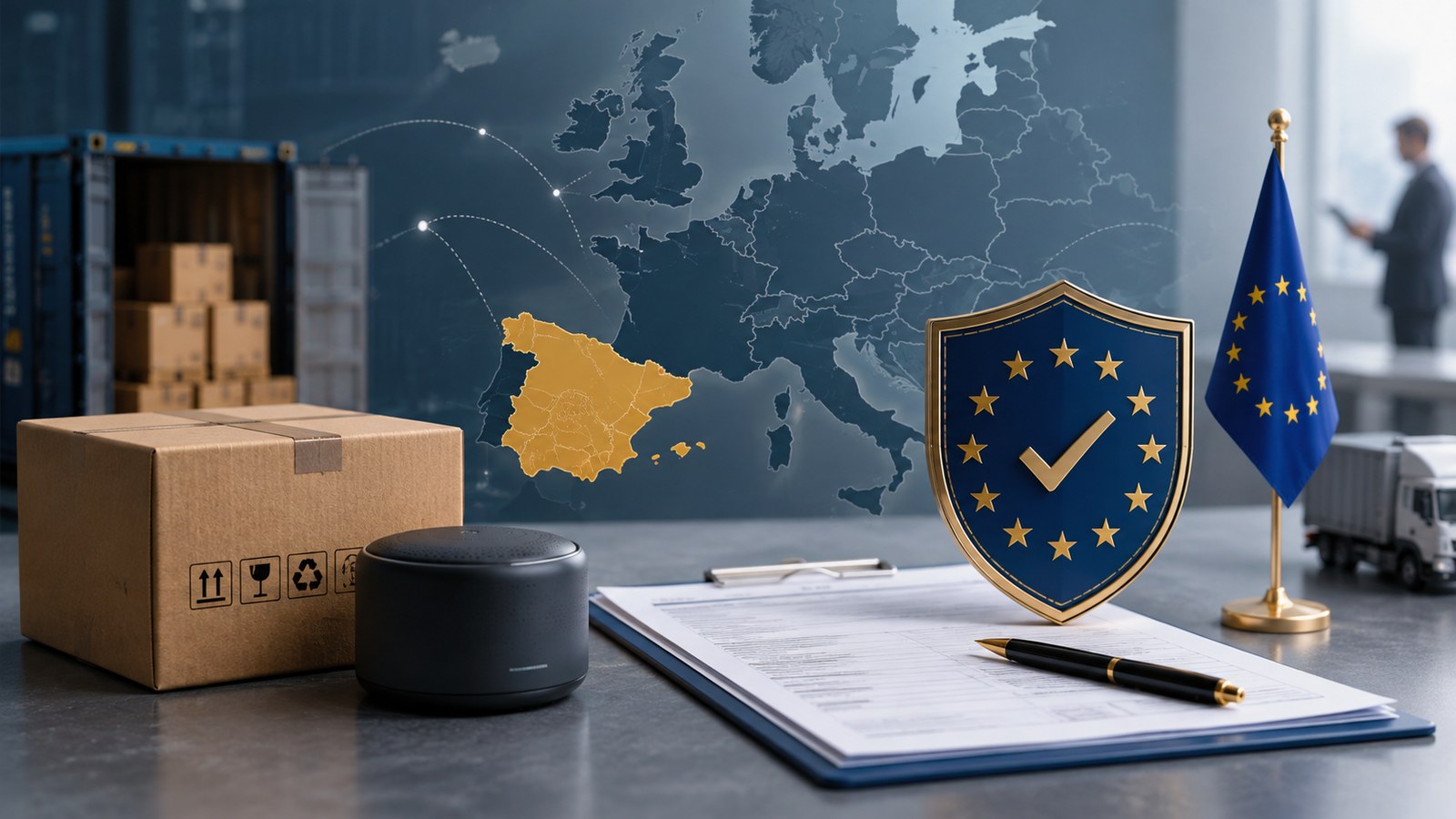

Chinese EV, battery, and component exporters face a stacked compliance map: tariffs and origin, trade-defence investigations (including subsidy-focused cases), industrial-policy incentives such as US clean-vehicle rules, product and battery regulations, and data / connected-vehicle controls. This guide is a planning map for commercial teams—not a substitute for product-specific counsel.
Hub: EV, Battery & New Energy Vehicle Legal Hub · Trade tracker: Export Control Tracker · ESG: Forced labour roadmap.
The stacked compliance map
The Legal Rule
Chinese EV, battery, and component exporters face a stacked compliance map: tariffs and origin , trade-defence investigations (including subsidy-focused cases), industrial-policy incentives such as US clean-vehicle rules, product and battery regulations , and data / connected-vehicle controls.
The Business Impact
Confirm classification, origin evidence, the preference claim and importer-side formalities. Pricing the deal on an assumed tariff rate is risky if the documentary conditions are not met at clearance. Apply that to the facts of EV and Battery Outbound Compliance: EU Trade Defence, US Tariffs and IRA Themes.
An EV or battery export to the EU or the US is not one transaction; it is a stack of regulatory layers that the commercial team must plan together. At the base sit tariffs and origin rules, which determine the duty payable and whether the product qualifies for preferential treatment. Above that sit trade-defence measures — anti-dumping and anti-subsidy investigations in the EU, and Section 301 and Section 232 tariff actions in the US — which can add substantial duties on top of the base tariff. Around them sit industrial-policy incentives, most prominently the US Inflation Reduction Act's clean-vehicle provisions, which reward supply chains that exclude entities of concern. Above the trade layer sit the product and battery regulations — the EU Battery Regulation's sustainability and digital-passport requirements, vehicle type-approval rules, and recycling obligations. And at the top sit the data and connected-vehicle controls, which restrict how the vehicle's data can be collected, stored, and transmitted. Each layer is enforced by a different authority, and a failure in any layer can stop the shipment even when the other layers are clean.
The stacking means that the compliance plan is a matrix, not a checklist: each target market, each product variant, and each supply-chain configuration has its own combination of layers, and the matrix must be built before the first shipment is priced. A price that ignores the trade-defence duties, the battery-passport data work, and the connected-vehicle controls is a price that will be revised after the first customs entry — or after the first investigation notice.
The EU lane: trade defence, the Battery Regulation, and the digital passport
The EU trade-defence lane has been the most visible for Chinese EV and battery exporters. The European Commission's countervailing-duty investigation into passenger electric vehicles from China (2023-2024) applied the anti-subsidy framework to the sector, and the Commission's parallel use of the Foreign Subsidies Regulation and state-aid analysis has made the subsidy question a permanent feature of the EU lane. The EU basic anti-dumping regulation (Regulation (EU) 2016/1036) and the basic anti-subsidy regulation (Regulation (EU) 2016/1037) provide the framework, and the defence work — sampling, questionnaires, verification, injury and causation analysis — follows the operational map in the EU AD/CVD handbook.

- EV/BATTERY GATES
- Tariffs and trade defence
- AD/CVD, Section 301-style duties themes
The product-regulation lane is equally demanding. The EU Battery Regulation (Regulation (EU) 2023/1542) applies to batteries sold in the EU, with requirements covering carbon-footprint declarations, recycled-content targets, durability and performance information, and the battery digital passport that will accompany batteries placed on the market. The digital passport is a data product: the battery's composition, production history, and sustainability attributes are carried in a machine-readable record, and the supply chain must generate and maintain the data that feeds it. For a Chinese battery producer, the passport work starts in the factory — the production data, the material sourcing records, the carbon-footprint calculation — and the exporter that starts the data collection at the customer's request has already missed the timeline.
The US lane: tariffs, the IRA, and the FEOC question
The US lane combines tariff actions with the Inflation Reduction Act's incentive architecture. Section 301 tariffs on Chinese goods and Section 232 measures on certain products raise the base cost of Chinese exports, and the trade-defence overlay can add anti-dumping and countervailing duties on top. The IRA's clean-vehicle credit provisions (26 U.S.C. § 30D) condition the credit on supply-chain requirements that exclude Foreign Entities of Concern (FEOC): the battery components and critical minerals must not come from FEOC-controlled suppliers, and the Treasury's guidance and published FEOC determinations have excluded battery supply chains from the credit. For a Chinese exporter, the FEOC question is not about the credit — Chinese-made vehicles generally do not qualify — but about the supply-chain effect: US customers building compliant vehicles must source battery materials outside the FEOC-designated chain, and a Chinese supplier that cannot demonstrate its chain is FEOC-clean is excluded from the compliant supply chain even if its product is otherwise competitive.
The US Commerce Department's information and communications technology and services (ICTS) rules add a security layer for connected vehicles: the proposed rules address connected-vehicle hardware and software with links to foreign adversaries, and the direction of travel is toward restricting connected-vehicle components with Chinese-linked supply chains. The ICTS analysis requires the exporter to map the vehicle's connectivity stack — the modems, the software, the data flows — and to assess whether any component or provider falls within the restricted categories. The planning consequence for a Chinese EV exporter is that the US lane has become a design question: the connected-vehicle architecture, the data storage, and the component sourcing are now as much a legal decision as an engineering one.
Product and battery regulations: beyond trade
Beyond the trade and incentive layers, the product itself is regulated. In the EU, the vehicle must satisfy type-approval requirements, the battery must meet the Battery Regulation's technical and sustainability standards, and the producer must comply with the extended-producer-responsibility and recycling obligations. In the US, the product must meet the Federal Motor Vehicle Safety Standards, and the battery supply chain faces the evolving FEOC and critical-minerals rules. For components, the product-safety and chemical regulations apply — REACH and related regimes in the EU, and the applicable product-safety rules in the US. The product layer is where the exporter's engineering and compliance teams meet: the design decisions made for performance now have regulatory consequences, and the compliance review must sit inside the product-development process rather than after it.
Data and connected-vehicle controls
The connected vehicle is a data platform, and its data flows are regulated on both sides of the export. On the China side, the data generated by vehicles and drivers — including location data, driving behaviour, and vehicle telematics — is regulated under the data-protection framework, and cross-border transfer of vehicle data raises the PIPL and the specific automotive-data rules. On the destination side, the EU and the US are both building connected-vehicle data regimes, and the exporter must map the data flows — what the vehicle collects, where it is stored, who can access it — and design the architecture so that the data processing satisfies both the home and the host rules. The data layer is the newest and fastest-moving part of the EV compliance stack, and the exporter that treats it as a privacy footnote is building the gap that the next regulation will target.
Strategic compliance roadmap: building the matrix before pricing
The exporter's roadmap runs in six steps. First, build the target-market matrix: for each planned market, list the applicable layers — tariffs and origin, trade-defence exposure, incentive-programme eligibility, product and battery regulations, and connected-vehicle data rules — with the issuing authority and the current status of each. Second, run the trade-defence risk screen: assess whether the product and the export pattern are likely to attract an investigation, and prepare the data room — the product-control-number sales database and the subsidy register — so that a notice of initiation can be answered in the first week. Third, design the product-compliance architecture: the battery digital passport data collection, the type-approval and certification calendar, and the recycling and extended-producer-responsibility obligations, built into the product-development process. Fourth, map the incentive-programme position: for the US IRA, determine the FEOC status of the supply chain and decide whether the exporter will participate in the compliant chain or serve markets outside the incentive; for other programmes, assess eligibility and documentation. Fifth, build the connected-vehicle data file: the data-flow map, the storage locations, the access controls, and the cross-border transfer mechanisms, satisfying both the Chinese and the destination rules. Sixth, assemble the compliance calendar with named owners and quarterly reviews, so that the matrix stays current as the regulations and the market evolve.

- Model duty scenarios
- Key markets
- Map battery regulatory path
- Safety/passport
Keeping the matrix current: the regulatory watch
The EV and battery compliance stack is one of the fastest-moving regulatory environments in international trade, and the matrix is only as good as its last update. The EU Battery Regulation's implementing acts are phased, the US Treasury's FEOC determinations evolve with each guidance document, the Section 301 and trade-defence actions are re-assessed on their own cycles, and the connected-vehicle rules are still being written on both sides of the Atlantic. The exporter's compliance programme therefore includes a regulatory watch: a named owner tracks the published changes in each target market, assesses the impact on the exporter's SKUs and supply chain, and updates the matrix on a defined cadence — at least quarterly, and immediately after any material regulatory event. The watch also feeds the commercial planning: a proposed FEOC guidance change or a new trade-defence investigation affects pricing, sourcing, and market-entry decisions, and the exporter that sees the change early can adjust before the tariff or the exclusion lands, while the exporter that waits for the formal publication loses the planning window.
From Houston: the FEOC screen and the connected-vehicle design question
Much of my work with Chinese EV, battery and component exporters starts in Houston, where the US leg of the transaction - the Section 301 and 232 tariffs, the FEOC supply-chain screen and the ICTS connected-vehicle rules - is examined before the first container is booked. The pattern I see repeatedly is that the commercial team has priced the product on technical merit and treated the US control layers as a logistics detail. In practice the FEOC analysis is a design decision: a battery cell that contains minerals from an entity of concern is excluded from the compliant US supply chain regardless of price, and a vehicle whose connectivity stack touches a restricted component fails the ICTS screen even where the hardware is otherwise compliant. My advice to exporters is to run the classification and supply-chain map before pricing - ECCN classification for the components, OFAC screening for the parties, and the FEOC and ICTS mapping for the chain - so that the US lane is a planned design choice rather than a discovery at the customer audit. The exporters that treat the US leg as a compliance programme, with a named owner and a documented file, are the ones whose export lanes stay open.
Discussion
Share experience or questions about this topic. This is a public discussion — not legal advice. Do not post confidential case details.
Have a question after reading? Leave it here, or Ask a Lawyer for a free initial intake.
Comments are moderated. China Legal Portal is a directory and information resource; no attorney–client relationship is formed by posting here.