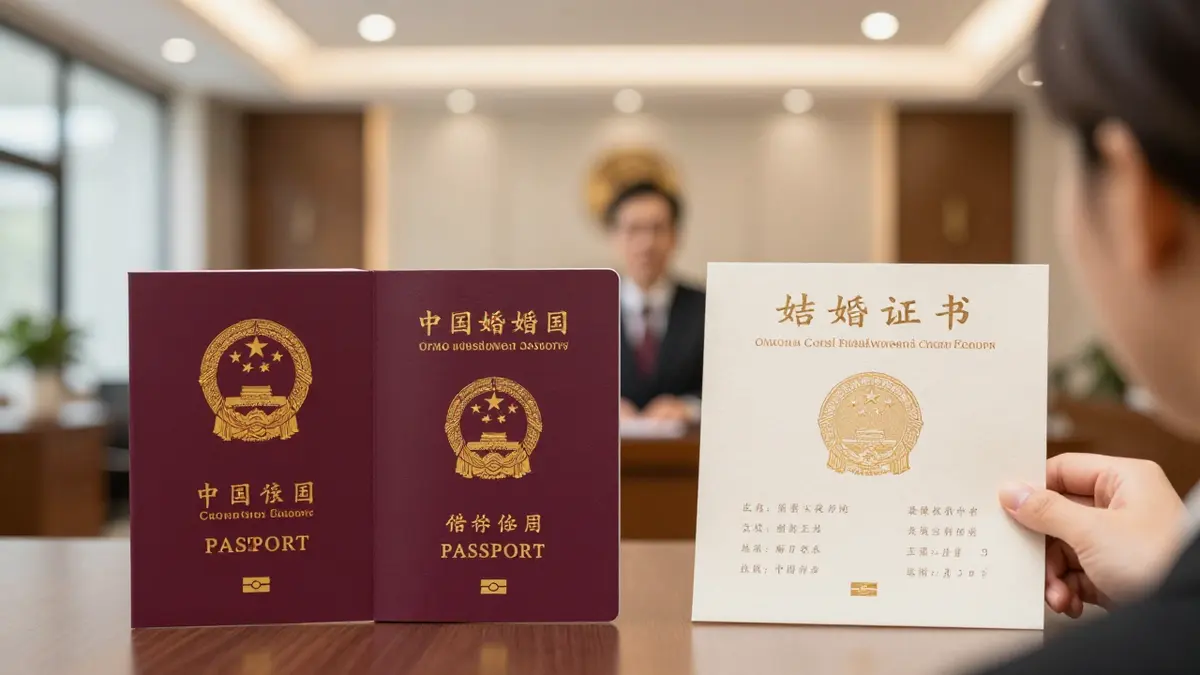

With China's growing integration into the global community, cross-border marriages have become increasingly common. Whether you are a foreigner marrying a Chinese citizen in Beijing or an international couple seeking divorce in Shanghai, understanding the legal procedures, documentation requirements, and applicable law is essential. This guide provides a practical overview of the key legal considerations for international couples.
Marriage Between Chinese Citizens and Foreign Nationals
Chinese law permits marriage between Chinese citizens and foreign nationals within mainland China. The governing legal framework includes the Civil Code, the Marriage Registration Regulations, and the Provisions for the Registration of Marriage Between Chinese Citizens and Foreigners. Under Chinese private international law, the formal validity of a marriage is governed by the law of the place where the marriage is celebrated — meaning that a marriage properly registered in China will be recognised as formally valid in most foreign jurisdictions, including Canada, the United Kingdom, Australia, and the United States, provided it does not violate the fundamental public policy of the recognising jurisdiction. Both parties must appear in person at the designated marriage registration authority — typically the civil affairs bureau of the province, autonomous region, or municipality directly under the Central Government. A significant reform took effect in May 2025, when China's revised Marriage Registration Regulation eliminated the longstanding requirement to register at the place of household registration, allowing couples to register anywhere in the country. This is a major practical convenience for international couples living in cities far from the Chinese spouse's registered hometown.
Documentation Requirements

- FAILURE MODES
- Marriage validity
- Place of celebration and formalities
The foreign party must provide a valid passport or other internationally recognised travel document; a certificate of no impediment to marriage issued by their embassy or consulate in China, or a sworn affidavit to that effect confirming there is no legal obstacle to the marriage under their home country's law; and a residence permit or visa showing legal stay in China. The Chinese party must provide a valid national ID card and a household registration booklet (hukou). All foreign-language documents must be notarised in the issuing country, legalised by the Chinese embassy or apostilled where applicable, and translated into Chinese by a certified translator. This document preparation chain can easily take several weeks, so international couples should begin the process well in advance of any planned wedding date.
Divorce in Foreign-Related Cases
Foreign-related divorce can proceed through administrative or judicial channels. Administrative divorce (consensual divorce) is available only when both parties agree on all terms — including property division, child custody, and child support — and have signed a written divorce agreement. Both parties must appear in person at the marriage registration authority with their divorce agreement, valid identification, and original marriage certificates. The standard 30-day cooling-off period applies: either party may withdraw within 30 days, and both must return after the period expires to confirm their decision. This cooling-off period can create significant uncertainty in international divorces, because an uncooperative spouse can effectively block an administrative divorce simply by not showing up at the confirmation appointment, forcing the matter into litigation and potentially leaving the foreign spouse in legal limbo for months. Judicial divorce (contested divorce) is required when the parties cannot reach agreement. Jurisdiction is determined under China's Civil Procedure Law: if the Chinese spouse resides in China, the divorce petition is filed in the court of their domicile or habitual residence. If the Chinese spouse lives abroad but has not permanently settled there, the petition may be filed in the court of their last Chinese domicile. This jurisdictional framework means that in most cases, a foreign national married to a Chinese citizen will need to litigate their divorce in a Chinese court, applying Chinese law to the division of assets, custody arrangements, and support obligations.
Applicable Law and Cross-Border Considerations
Under China's Law on the Application of Laws to Foreign-Related Civil Relations, the parties may choose the law of either party's habitual residence or nationality to govern their divorce. In practice, however, when a divorce is litigated in a Chinese court, the court almost invariably applies Chinese law — including the Civil Code's provisions on property division, custody, and support — regardless of the parties' nationalities or where they were married. This means a Canadian or American spouse cannot assume that the divorce will follow the legal principles of their home country simply because they are a foreign national. Foreign divorce judgments are not automatically recognised in China, and conversely, Chinese divorce judgments may require a separate recognition proceeding in the foreign spouse's home country before they can be enforced there against assets located abroad. Prenuptial agreements are recognised under Chinese law but must meet strict formal requirements including notarisation and must not violate public policy. For couples with assets or family connections in multiple countries, I strongly recommend obtaining comprehensive legal advice in both China and the foreign spouse's home country before making any decisions about marriage or divorce.
Family Law Application Notes
- Kickoff scope memo and remedy ladder
- Bilingual document control
- Deadline and limitation tracking
- Enforcement and settlement options in parallel
Operational Checklist for Foreign Readers
- Documented objectives and preferred remedies
- Bilingual document control
- Deadline and limitation tracking
- Enforcement and settlement options in parallel
Risk Controls Before Escalation
- Mandate letter covering scope and outcomes
- Bilingual document control
- Deadline and limitation tracking
- Enforcement and settlement options in parallel
Cross-Border Family Procedure Notes
The Legal Rule
A practical guide to foreign-related marriage and divorce in China: registration requirements, documentation for foreign nationals, divorce procedures, and applicable law.
The Business Impact
Gather the marriage, identity, asset, income and child-related records that determine jurisdiction and relief before filing or negotiating. Cross-border facts can change both the available order and whether it will be practical to enforce. Apply that to the facts of Foreign-Related Marriage and Divorce in China.
- Jurisdiction and recognition questions should be mapped before anyone relocates a child or moves major assets.
- Parenting proposals need operational detail—schooling, holidays, travel consent—not only percentages of time.
- Safety allegations require contemporaneous evidence; post-hoc narratives alone rarely carry interim applications.
- Property division depends on registries, bank records and corporate filings more than on verbal contribution stories.
- Settlement paper should be enforceable: payment security, default clauses and registration cooperation.

- Foreign-Related Marriage and Divorce — Forum and Status — process.
- Prove how/where the marriage was
- Pick a competent divorce forum
- Plan service
- Divide onshore property
What to Prepare for the First Consult
Bring marriage and birth certificates, any prior judgments or mediation agreements, property registry extracts if available, and a two-page chronology. Flag any urgent dates (hearings, travel, school terms) in the first message.
This section is provided to help readers convert general legal information into an action list. It is not a substitute for advice on a specific matter; local procedure, evidence quality and counterparties’ positions can change the correct next step.
Discussion
Share experience or questions about this topic. This is a public discussion — not legal advice. Do not post confidential case details.
Have a question after reading? Leave it here, or Ask a Lawyer for a free initial intake.
Comments are moderated. China Legal Portal is a directory and information resource; no attorney–client relationship is formed by posting here.