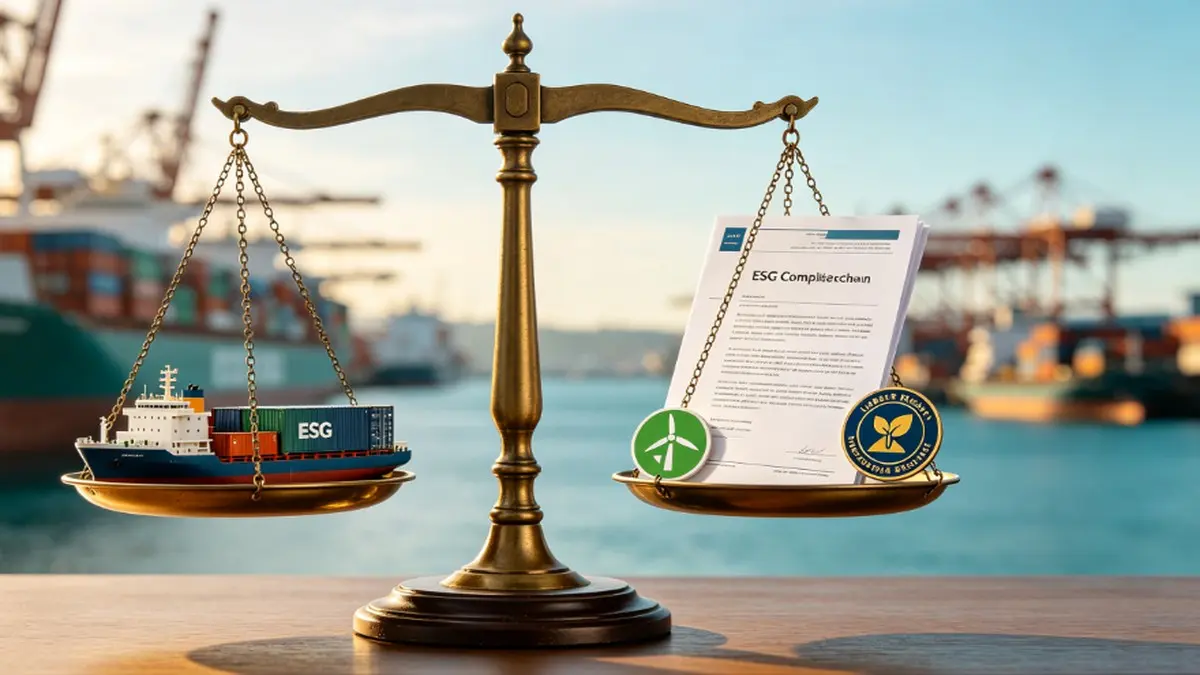

ESG compliance in China is not one general statute. A company may face binding environmental permits and disclosure rules, stock-exchange sustainability reporting, national carbon-market duties, customer contract requirements and destination-market supply-chain laws. Each obligation has a different scope, trigger and evidence standard.
This guide explains how companies operating in or sourcing from China can build an evidence-based environmental and supply-chain governance system. It separates mandatory Chinese requirements from buyer expectations and voluntary frameworks, then maps supplier diligence, contractual flow-down, remediation and public claims.
China ESG obligation map
The Legal Rule
China ESG obligation map Begin by identifying the legal entity, facility, listing status, financing arrangements, products, customers and export destinations.
The Business Impact
Use “Environmental Compliance and Sustainable Supply Chains: Corporate ESG Responsibility” to set the compliance steps before the goods move, not after they reach the border. Confirm the declarant, permits, valuation basis and supporting evidence early enough to fix gaps without disrupting delivery.
Begin by identifying the legal entity, facility, listing status, financing arrangements, products, customers and export destinations. The label “ESG” may describe several separate systems:
| System | Typical trigger | Primary evidence |
|---|---|---|
| Environmental operations | Construction, pollution discharge, waste generation or regulated activity | EIA, permit or registration, monitoring, ledgers and enforcement history |
| Law-based environmental disclosure | Enterprise falls within a mandatory disclosure category or list | Disclosure governance, source records and published environmental information |
| Listed-company sustainability reporting | Applicable stock-exchange rule and reporting cohort | Governance, materiality process, metrics, controls and published report |
| Carbon market | Entity is included in the national or applicable local market | Emissions boundary, source data, report, verification, allowances and surrender |
| Customer or destination law | Contract, product, importer or overseas market creates a requirement | Supply-chain map, diligence, traceability, remediation and customer reporting |
| Voluntary framework | Company elects to report or make a commitment | Defined scope, methodology, baseline, governance and assurance record |
Do not describe a voluntary framework as Chinese law, or a customer questionnaire as a regulatory filing. Conversely, a voluntary sustainability report does not replace permits or mandatory environmental disclosures.
Binding environmental information disclosure
The Measures for the Administration of Law-Based Disclosure of Enterprise Environmental Information apply to specified enterprises, including entities placed on the relevant disclosure list under the rules. Covered companies should establish responsibility, working procedures, accurate ledgers and source-record retention. Disclosures must be timely, true, accurate and complete and must not contain false records, misleading statements or material omissions.
Build the disclosure file from controlled sources such as permit execution reports, compliant monitoring data, waste records, EIA information and enforcement records. Reconcile narrative statements to regulatory data before publication. The factory environmental compliance guide addresses the underlying EIA, permit, waste and inspection systems.
Listed-company sustainability reporting
Shanghai, Shenzhen and Beijing stock exchanges issued coordinated sustainability-reporting guidelines in 2024. Mandatory scope applies to specified important-index constituents and companies listed both domestically and overseas, subject to the applicable exchange rule; the first mandatory reports were due no later than 30 April 2026. Other listed companies may report voluntarily.
Confirm the company's current cohort and exchange requirements rather than assuming every Chinese company must publish the same ESG report. Reporting governance should identify the board and management roles, material topics, reporting boundary, metric owners, data controls, comparison periods, corrections and consistency with financial, regulatory and customer disclosures.
Map the supply chain before auditing it
- Define the objective: legal compliance, customer assurance, product traceability, climate data, human-rights diligence or a combination.
- Map tiers and facilities: identify legal entities, manufacturing sites, subcontractors, key raw materials, logistics and high-risk service providers.
- Segment risk: use product, process, geography, regulatory history, workforce and leverage rather than one questionnaire for every supplier.
- Identify evidence: specify which records prove each requirement and how currency and authenticity will be checked.
- Assign ownership: procurement, EHS, legal, compliance, quality, finance and business teams need defined decisions and escalation paths.
Supplier environmental and ESG diligence
A reliable review tests records against the operating site and public data. Depending on risk, request and verify:
- business identity, ownership, sites, subcontracting and production scope;
- EIA, pollutant-discharge permit or registration and actual process alignment;
- monitoring, permit execution reports, environmental disclosures and enforcement history;
- hazardous-waste classification, storage, ledgers, manifests and contractor qualifications;
- energy and greenhouse-gas boundaries, source data, calculation method and verification status;
- labour, recruitment and grievance controls relevant to the product and destination market;
- prior audit findings, root-cause analysis, remediation evidence and repeat failures.
Certificates and screenshots are starting points. Check issuing bodies, scope, site, dates and public registers where available. A clean head-office policy does not establish conditions at an undisclosed subcontractor.
Contractual flow-down and evidence rights
Translate the risk model into provisions that can operate in China. The agreement should define applicable requirements, approved sites and subcontracting, document retention, data methodology, notice of incidents or regulatory action, audit and access, corrective-action plans, customer communications and suspension or exit.
A broad warranty to comply with “all ESG laws” is rarely enough. Attach measurable specifications and a reporting schedule. State who pays for testing or remediation, how disputed findings are handled, what evidence must be preserved and when the buyer may stop orders. Flow-down obligations should reach relevant sub-suppliers without pretending the buyer has unlimited audit access throughout the chain.
Findings, remediation and responsible exit
- Classify the finding by legal severity, human or environmental impact, recurrence and supply risk.
- Take immediate containment action where continuing harm or unlawful operation is possible.
- Verify root cause and agree dated actions, responsible owners and objective closure evidence.
- Escalate missed deadlines, data manipulation, retaliation or undisclosed subcontracting.
- Choose continued remediation, reduced exposure, suspension or exit based on risk and leverage.
- Preserve the decision record and avoid an abrupt exit that predictably worsens harm without analysis.
For forced-labour and overseas-market controls, use the ESG and forced-labour roadmap for Chinese exporters. Destination laws and import controls require their own analysis.
Carbon data across China ETS, customers and CBAM
Define organisational, facility, process and product boundaries before collecting carbon data. The national China ETS, customer product-footprint requests and EU CBAM use different legal roles and methodologies. Maintain source-meter and activity data, emission factors, calculation versions, changes, review and assurance records for the specific use.
For the China mandatory market, see the national ETS module. Chinese exporters within EU CBAM supply chains should use the CBAM guide and allocate data, verification, correction and confidentiality duties contractually.
Green, sustainable and carbon-neutral claims
A public environmental claim is an advertising and evidence-control issue. Define what is claimed, the product or entity boundary, geography, time period, baseline, method, exclusions and verification. Do not turn a limited certification, facility improvement or purchased credit into a broader product or company claim.
Keep the claim linked to current supporting data and set an expiry or review trigger. Marketing qualifications must be clear enough to prevent the overall impression from misleading consumers. Use the China advertising and marketing law guide for claim substantiation, citations and channel controls.
ESG governance calendar
- Monthly or operational: incidents, permit deviations, supplier alerts, monitoring exceptions and corrective actions.
- Quarterly: high-risk supplier review, data-quality testing, contract exceptions and unresolved remediation.
- Annual: applicability assessment, mandatory environmental disclosure, sustainability-reporting calendar, carbon-market obligations and claims inventory.
- Event-driven: new site, line, product, supplier, subcontractor, acquisition, enforcement event, methodology change or public commitment.
Official sources
- Environmental Protection Law
- Measures for Law-Based Disclosure of Enterprise Environmental Information
- CSRC explanation of the coordinated stock-exchange sustainability-reporting guidelines
- Interim Regulation on Carbon Emissions Trading
- Advertising Law
General information only, not legal, assurance or engineering advice. Official-source currency checked on 31 August 2026.
Discussion
Share experience or questions about this topic. This is a public discussion — not legal advice. Do not post confidential case details.
Have a question after reading? Leave it here, or Ask a Lawyer for a free initial intake.
Comments are moderated. China Legal Portal is a directory and information resource; no attorney–client relationship is formed by posting here.