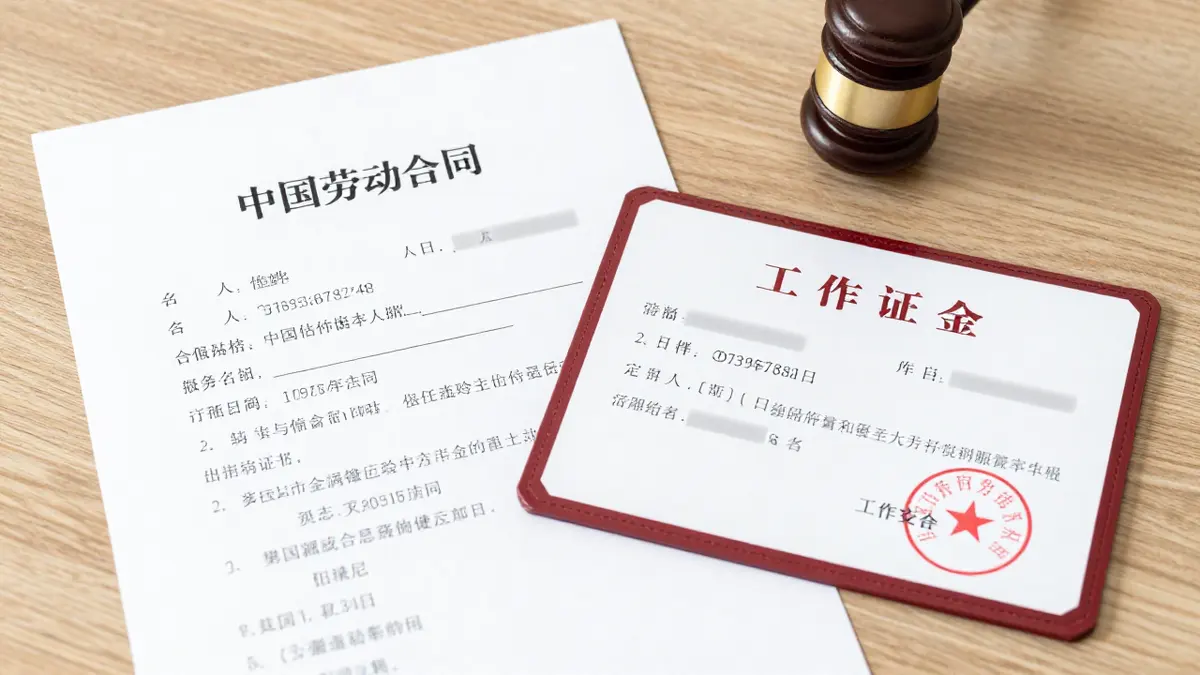

Foreign workers in China who suffer work-related injuries face unique challenges when their employer refuses to cooperate with the work injury determination process. Under Chinese labor law, employers have a statutory obligation to report workplace injuries and apply for work injury determination on behalf of injured employees. When an employer fails or refuses to cooperate, foreign workers must take proactive steps to protect their rights under the PRC Work Injury Insurance Regulations and the PRC Labor Contract Law.
Employer's Obligations Under Chinese Work Injury Law
Under the PRC Work Injury Insurance Regulations, employers must apply for work injury determination within 30 days of the date of injury. If the employer fails to apply within this period, the injured employee or their family members may file a direct application with the local human resources and social security bureau within one year of the injury date. The employer bears the burden of proving that the injury did not arise out of or in the course of employment. If the employer refuses to report the injury or submit required documentation, the employee may file the application independently and request the labor administrative authority to investigate.
Evidence Collection for Foreign Workers
Foreign workers should gather documentation that establishes the employment relationship and the circumstances of the injury. Key evidence includes the written employment contract, wage payment records, attendance records, medical records documenting the injury, witness statements from colleagues, photographs or video of the accident scene, and any written communications with the employer regarding the injury. For workers whose employer fails to maintain proper records, the labor arbitration commission may determine the employment relationship based on circumstantial evidence including work badge records, WeChat communications, email correspondence, and testimony from co-workers.
Legal Remedies When the Employer Refuses to Cooperate

- FAILURE MODES
- Report duty
- Employer report clock
When an employer refuses to cooperate, the employee may file a work injury determination application directly with the local human resources and social security bureau, apply for labor arbitration to confirm the existence of an employment relationship if the employer disputes the relationship, and if the employer fails to pay work injury benefits after the determination is issued, file for labor arbitration to recover medical expenses, work injury compensation, and other statutory benefits. Xiangxi Peng at Hunan Jiaoyang Law Firm in Zhangjiajie has extensive experience representing employees in work injury disputes, including cases involving uncooperative employers and cross-regional employment arrangements.
Employment Law Application Notes
I convert complex Chinese procedure into a dated checklist with owners for translation, notarization, and internal sign-off across time zones.
Strategy starts with what can be secured or collected: counterpart assets, licenses, receivables, and interim measures, then builds merits work around that path.
- Agreed work plan and remedy path
- Bilingual document control
- Deadline and limitation tracking
- Enforcement and settlement options in parallel
Operational Checklist for Foreign Readers
I build the strategy around collection and interim leverage first—assets, licenses, receivables, and protective measures—so a paper win is not the only end state.
I document scope, assumptions, and decision rights at engagement start so foreign clients know what will be filed, who must approve, and when silence becomes a missed deadline.
- Written engagement scope and remedy options
- Bilingual document control
- Deadline and limitation tracking
- Enforcement and settlement options in parallel
Risk Controls Before Escalation
I treat bilingual consistency as a risk control: chops, authority documents, and English summaries must tell the same commercial story.
- Kickoff scope memo and remedy ladder
- Bilingual document control
- Deadline and limitation tracking
- Enforcement and settlement options in parallel
Implementation Detail 1
Enforcement feasibility shapes my advice from day one: attachable assets, license exposure, receivables, and interim relief sit beside the merits analysis.
- Documented objectives and preferred remedies
- Bilingual document control
- Deadline and limitation tracking
- Enforcement and settlement options in parallel
Implementation Detail 2
I prefer early written notices and clean evidence indexes over informal WeChat-only chains when the amount or regulatory exposure is material.
- Mandate letter covering scope and outcomes
- Bilingual document control
- Deadline and limitation tracking
- Enforcement and settlement options in parallel
Readers evaluating related options should also consider limitation periods, the cost of interim applications, and whether bilingual documentation will be required for overseas stakeholders. Early alignment on those points prevents restarting strategy after the first hearing date is already fixed.
Settlement Architecture That Holds
A usable mutual termination agreement addresses release scope, payment timing, social-insurance handling, return of property, rehire bars and reference language—not only a lump sum.
Non-compete clauses need consideration payment records and reasonable scope. Overbroad industry-wide restraints are common draft failures.

- What to Do When Your Employer Refuses to Cooperate After a Work Injury in China — process.
- Demand the employer report
- Apply for determination yourself
- Request SI records
- Compute fund vs employer
Mass restructuring requires documented selection criteria and consistent scripts so town-hall messages do not rewrite the legal story of those who leave.
Discussion
Share experience or questions about this topic. This is a public discussion — not legal advice. Do not post confidential case details.
Have a question after reading? Leave it here, or Ask a Lawyer for a free initial intake.
Comments are moderated. China Legal Portal is a directory and information resource; no attorney–client relationship is formed by posting here.