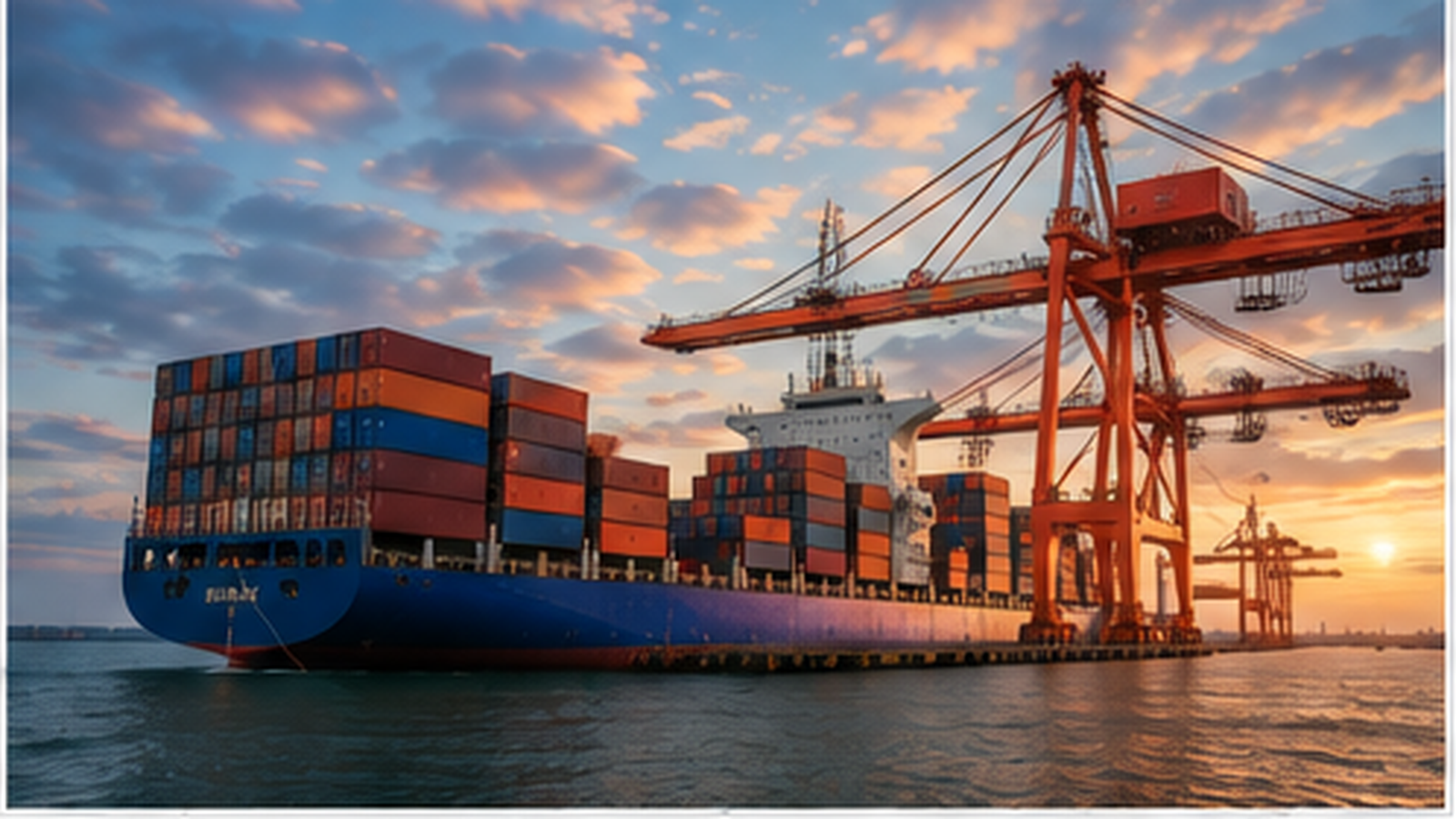

High-end equipment, automation and agricultural technology exports combine export controls, product safety certification, project contracting and — for farming tech — biosecurity and land-use constraints. This guide maps the certification, dual-use, agricultural investment, and project-delivery layers that a Chinese group must clear before its equipment, software, or seeds operate in a foreign market.
Why this matters: equipment sales are long-lived compliance relationships
The Legal Rule
High-end equipment, automation and agricultural technology exports combine export controls , product safety certification , project contracting and — for farming tech — biosecurity and land-use constraints.
The Business Impact
Make the commercial invoice, product description, origin evidence and customs declaration tell the same story. Inconsistent records can turn a routine shipment into a valuation, classification or compliance dispute. Apply that to the facts of Advanced Manufacturing and Agritech Outbound for Chinese Groups.
Unlike consumer products, industrial equipment and agricultural technology have a compliance lifetime measured in decades: the machine is installed, serviced, upgraded, and eventually decommissioned, and each stage carries its own obligations. CE or UL certification attaches to the initial sale, but software updates, spare parts, warranty law, and the seconded engineers who maintain the machine create ongoing duties in the host country. For Chinese groups, the export-control layer adds a parallel track: the same machine that wins a commercial contract may be subject to dual-use control, end-use scrutiny, and — in sensitive geographies — licensing requirements that turn a delivery schedule into a government-process question. The compliance file is not a pre-sale box to tick; it is the operating document of the after-sale relationship.
Advanced equipment: certification, spares, software, people
High-end equipment sales start with local certification — CE, UL, or market-specific machine-safety certification — which must be completed before installation, not after shipment. Spare-parts logistics and warranty law follow: the host market's consumer and commercial warranty rules apply to the equipment, and the distributor or service entity must be contractually positioned to honour them. Industrial IoT software updates are ongoing compliance, not maintenance: a remote update that changes machine behaviour, safety parameters, or data flows must be assessed under both the host product-safety rules and, where the machine collects data, the host privacy law. Seconded engineers need immigration and employment structures — see the overseas employment guide for Chinese factories and expatriates — and the service contract must allocate liability for engineer acts at the customer site.
Electronics and dual-use: start from the control list
For electronics and semiconductor-related equipment, the analysis starts from the control lists. The US Export Administration Regulations (EAR, 15 C.F.R. Parts 730-774) and the PRC Export Control Law of the People's Republic of China (2020) both impose classification and licensing duties, and the EU dual-use framework under Regulation (EU) 2021/821 adds a third layer for exports into or through the EU. The first question for any shipment is classification: is the item, its technology, or its software on a control list, and does the end user or end use trigger scrutiny? End-use statements are evidence: a buyer's statement that the equipment is for a civilian factory in a non-sensitive sector is a compliance artefact that must be collected, verified, and retained, because the exporter's duty does not end at the border — the exporter is expected to know what the buyer says it will do with the equipment, and to walk away when the answer is implausible.

- OUTBOUND GATES
- Destination investment screening
- FDI/NSI-style reviews
Export Control Law of the People's Republic of China (2020), Article 12: The state shall implement export control management over controlled items through the adoption of measures such as a control list, export licensing, and final-user and final-use management.
Agritech and agricultural investment: biosecurity and land
Agricultural technology exports — seeds, spray drones, irrigation IoT, and processing plants — face a distinct stack. Biosecurity permits gate the entry of seeds and biological material, pesticide registration rules govern crop-protection products, and foreign land-ownership limits in many jurisdictions restrict the acquisition of farmland. The Cartagena Protocol on Biosafety informs the international movement of living modified organisms, and national biosafety authorities impose their own permits. For a Chinese agritech group, the foreign-investment screening layer runs in parallel: a farmland purchase, a seed company acquisition, or a critical-infrastructure-adjacent project can trigger the host country's FDI screening, and the US experience includes CFIUS enforcement actions ordering divestment of agricultural land purchases adjacent to sensitive sites. The pairing of biosecurity permits with host FDI screening and China ODI approval means the agricultural deal is one of the most multi-layered outbound transactions a Chinese group can undertake — and the one where skipping a layer is most visible.
Project delivery and disputes
EPC-style projects — engineering, procurement, and construction — need clear variation, delay, and force-majeure clauses, because equipment delivery across borders is exactly where those clauses are tested: a port closure, a control-licence delay, or a site-access dispute can stop the clock and change the economics. The dispute-resolution seat should be chosen early, and the arbitration forum guide covers the trade-offs. In our work with Chinese equipment and agritech groups on international projects, the projects that stay on schedule are the ones with a written variation protocol and a documented licence-dependency schedule — the delivery plan that shows which licence, in which country, gates which shipment. The projects that stall are the ones that treat export-control clearance as a logistics detail and discover, at the port, that the shipment cannot move until a government process that takes months is complete.
Governing statutes and enforcement precedents
The export-control layer is governed by a tri-partite framework. The US Export Administration Regulations (EAR, 15 C.F.R. Parts 730-774) control dual-use items and technology, with the Commerce Control List setting the classification and licensing requirements; the PRC Export Control Law of the People's Republic of China (2020) establishes China's own control-list, licensing, and final-user management regime for sensitive items and technologies; and the EU dual-use framework under Regulation (EU) 2021/821 applies to exports from the EU and, for certain items, to brokering and transit. A Chinese equipment exporter shipping a controlled item must therefore satisfy China's export licence and the destination country's import requirements, and where the equipment embeds encryption, AI software, or sensors, the classification analysis runs at the component level.
Enforcement precedent makes the cost of getting this wrong concrete. The US experience includes CFIUS actions ordering divestment of agricultural land purchases adjacent to sensitive sites, under the national-security review powers in the Defense Production Act framework (31 C.F.R. Part 800). For agritech specifically, foreign land-ownership limits in multiple jurisdictions restrict or prohibit foreign acquisition of farmland, and the deal structures that attempt to circumvent those limits — nominee ownership, long-term leases dressed as control, or indirect shareholdings — have been unwound in enforcement actions. The pairing of biosecurity permits, pesticide registration, and FDI screening means the agritech outbound deal is a multi-agency approval project, and the compliance map must name each agency, each permit, and each timing dependency.
For EPC-style project delivery, the dispute layer is governed by the contract: variation, delay, and force-majeure clauses allocate the risk when a licence delay, a port closure, or a site-access problem stops the schedule. The choice of arbitration seat and rules determines how a delay dispute is resolved, and the export-control dependency schedule — which licence gates which shipment — is the factual heart of any such dispute. The projects that survive are the ones that put the schedule in the contract.
Post-delivery review: keeping the after-sale file current
The compliance file for equipment and agritech projects does not end at delivery; it follows the machine. Software updates, spare-part flows, seconded engineers, and IoT data streams each generate new obligations, and the post-delivery review checks that the after-sale layer matches the plan: the update released last quarter was assessed for export-control and data implications, the new spare-parts route cleared customs properly, the engineer on site has the right work permit, and the machine's data flows are mapped. In our work with Chinese equipment groups, the warranty disputes that become regulatory problems are the ones where the after-sale activity drifted from the documented plan — an update pushed remotely that changed the machine's safety behaviour, a spare part shipped without the export classification, a data stream from the customer's machine that was never mapped. The post-delivery review, run at defined intervals and after every material change, keeps the file and the machine aligned — and the aligned file is what survives a customer dispute, an inspection, or an enforcement inquiry.
Strategic compliance roadmap: the licence-and-permit schedule
The single most useful artefact for an outbound equipment or agritech project is the licence-and-permit schedule: a table listing every certificate, permit, and approval on the critical path — China export licence, destination import licence, CE or UL certification, biosecurity permit, pesticide registration, FDI clearance, land-use approval — with the issuing agency, the processing time, the named owner, and the dependency links. The schedule is built at project inception and updated at every milestone, and the contract's variation and force-majeure clauses are drafted around it so that a licence delay is allocated to the party who owns the application, not litigated as an unforeseen event.

- Define tech and equipment package
- What leaves China
- Classify export controls
- Licences needed
The programme around the schedule runs in five steps. First, classify early: run the export-control classification for the item, its technology, and its software before any commercial commitment, and retain the classification memo. Second, collect end-use evidence: obtain, verify, and retain the buyer's end-use and end-user statements for every controlled or sensitive item. Third, sequence the permits: biosecurity and pesticide approvals for agritech, FDI screening for land and critical assets, and local machine-safety certification for equipment — each named with an owner and a start date. Fourth, contract the delivery layer: variation, delay, force-majeure, and the dispute seat chosen before the first shipment. Fifth, audit the after-sale layer: software-update compliance, spare-parts warranty, seconded-engineer employment, and the data flows from industrial IoT equipment.
Supply-chain compliance notes from Guangzhou
My practice in Guangzhou focuses on supply-chain and ESG compliance for manufacturers, and the advanced-manufacturing and agritech outbound projects I see share three failure patterns. The equipment maker treats certification as a sales-team task, and the first installation is delayed by a CE or machine-safety review that should have run in parallel with the manufacturing schedule. The agritech group signs the farmland or joint-venture term sheet before commissioning the biosecurity and FDI analysis, and the deal dies in government review — or closes and is later unwound — because the permit sequence was never mapped. The EPC contract uses a domestic-style force-majeure clause that does not address licence-dependent delay, and the first export-control hold becomes a dispute about who bears the waiting cost. The supply-chain angle is the layer that multiplies the others: the ESG questionnaire from the customer, the forced-labour and due-diligence expectations, and the traceability records the buyer will audit all depend on the same licence-and-permit schedule. My advice is to build the schedule before the first contract is signed — certification, permits, FDI clearances, export-control positions and ESG documentation as one file — because the compliance file is the delivery plan, and the projects that treat it as such are the ones that deliver on time.
Next steps
Industry rules change quickly. Confirm licences, ratings, and host-country rules for your product before launch, and build the licence-and-permit schedule before the first contract is signed — the schedule is the compliance file, and the compliance file is the delivery plan.
Discussion
Share experience or questions about this topic. This is a public discussion — not legal advice. Do not post confidential case details.
Have a question after reading? Leave it here, or Ask a Lawyer for a free initial intake.
Comments are moderated. China Legal Portal is a directory and information resource; no attorney–client relationship is formed by posting here.