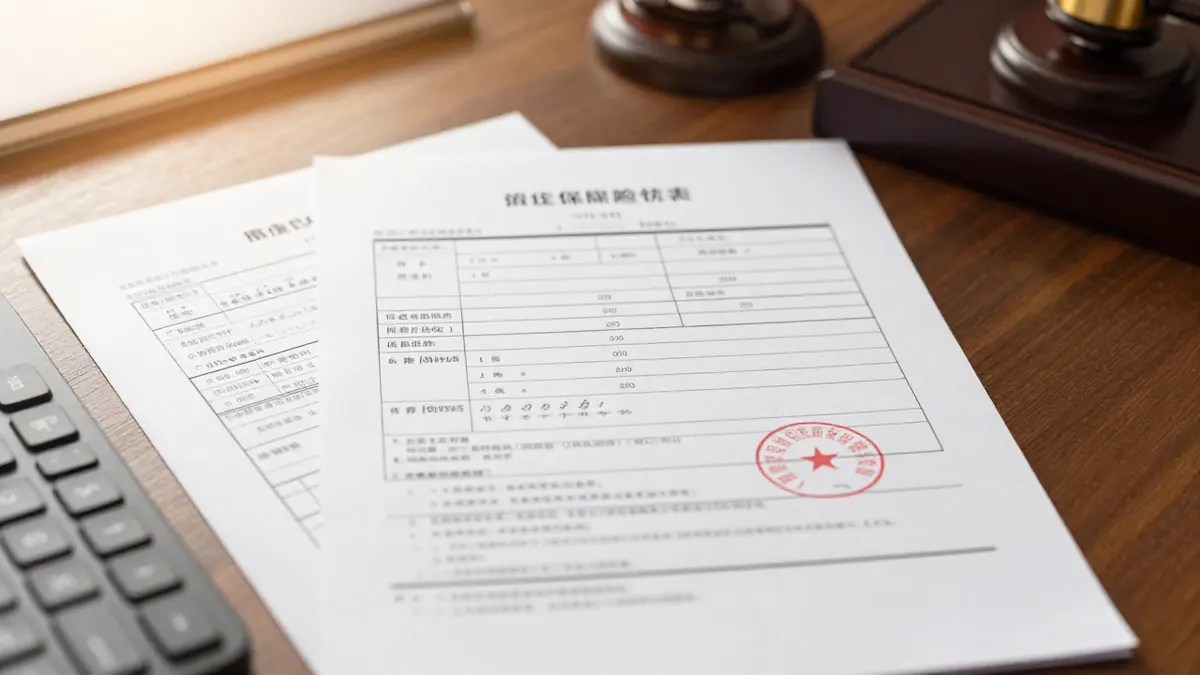

Traffic accidents involving foreign nationals in China can be confusing and stressful, particularly when the foreign party is unfamiliar with Chinese traffic laws, insurance systems, and dispute resolution procedures. Gang Chen, a lawyer based in the Hechuan District of Chongqing with extensive experience in traffic accident claims, provides this practical guide for foreign nationals who have been involved in traffic accidents in China.
Immediate Steps After a Traffic Accident
The moments immediately following a traffic accident are critical for protecting your legal rights. Under Chinese traffic regulations, drivers involved in an accident with injuries or significant property damage must stop immediately, turn on hazard lights, and place warning triangles. The parties should not move the vehicles until the traffic police arrive and document the scene, unless the accident is minor and both parties agree on liability. Foreign nationals should call 122 to report the accident to the traffic police and 120 for medical emergencies. It is important to exchange information with the other driver, including name, phone number, license plate number, insurance policy number, and driving license information. Foreign nationals should also contact their insurance company and, if the accident involves significant injury or disputed liability, their lawyer. Under no circumstances should a foreign national admit fault or sign any liability determination document without legal advice.
Liability Determination in Chinese Traffic Accidents
The traffic police are responsible for investigating the accident and issuing a liability determination, known as a shigu ren ding shu. This document assigns responsibility as full liability, primary liability, equal liability, secondary liability, or no liability. The liability determination is crucial because it governs the allocation of damages between the parties. If a party disagrees with the liability determination, they may request a review within three days of receiving the document. The traffic police may also attempt mediation between the parties to reach a settlement on damages, particularly in cases involving minor injuries or property damage. However, the mediation is not binding, and either party may proceed to litigation if mediation fails.

- FAILURE MODES
- Traffic police determination
Compensation for Injuries and Damages
Chinese law provides for compensation of various categories of damages in traffic accident cases. Medical expenses include hospitalization costs, surgery fees, medication, rehabilitation, and follow-up treatment. Lost income compensates for wages lost due to the accident and recovery period, calculated based on the victims average income over the past three months. If the accident results in disability, the victim is entitled to disability compensation based on the disability grading determined by a forensic medical evaluation. Additional compensation categories include transportation expenses for medical visits, nutrition fees during recovery, nursing care costs, and mental distress damages in cases of serious injury or death. In fatal accident cases, the family is entitled to funeral expenses, death compensation, and support for dependents. Attorney Chen advises clients to retain all medical bills, transportation receipts, and income documentation to support their compensation claims.
Insurance Claims Process
Chinas compulsory traffic accident liability insurance, known as jiao qiang xian, provides a base level of coverage for all vehicles registered in China. The coverage limits are RMB 180,000 for death and disability, RMB 18,000 for medical expenses, and RMB 2,000 for property damage in accidents where the insured driver is at fault. Above these limits, commercial third-party liability insurance provides additional coverage. Foreign nationals driving on an international driving permit should verify that their insurance policy provides adequate coverage in China, as some international policies may have limitations or exclusions. The claims process typically involves submitting the liability determination, medical records, expense receipts, and other supporting documents to the insurance company, which then assesses the claim and makes a payment within the policy limits. If the insurance company disputes the claim amount or delays payment, legal action may be necessary.
Gang Chen practices law in the Hechuan District of Chongqing, representing clients in traffic accident claims, personal injury litigation, and insurance disputes. He advises foreign nationals to seek legal representation promptly after a traffic accident to ensure their rights are protected throughout the claims process.
This article is for informational purposes only. Individuals should consult qualified legal professionals for advice tailored to their specific circumstances.
Personal Injury Application Notes
I convert complex Chinese procedure into a dated checklist with owners for translation, notarization, and internal sign-off across time zones.
Enforcement feasibility shapes my advice from day one: attachable assets, license exposure, receivables, and interim relief sit beside the merits analysis.
- Agreed work plan and remedy path
- Bilingual document control
- Deadline and limitation tracking
- Enforcement and settlement options in parallel
Operational Checklist for Foreign Readers
I treat collectability and interim protection as core design inputs, not afterthoughts, so counsel work supports outcomes that can be executed in China.
I document scope, assumptions, and decision rights at engagement start so foreign clients know what will be filed, who must approve, and when silence becomes a missed deadline.
- Written engagement scope and remedy options
- Bilingual document control
- Deadline and limitation tracking
- Enforcement and settlement options in parallel
Risk Controls Before Escalation
I treat bilingual consistency as a risk control: chops, authority documents, and English summaries must tell the same commercial story.
- Kickoff scope memo and remedy ladder
- Bilingual document control
- Deadline and limitation tracking
- Enforcement and settlement options in parallel
Practical Takeaways for Foreign Parties
The Legal Rule
In China, treat traffic accident claims as a question of a guide for foreign nationals. Naming the city does not replace the papers, approvals or forum that actually control the outcome.
The Business Impact
In China, confirm the documents, authority and local filings for this traffic accident claims matter before you pay, transfer or sue. The city name is not a substitute for the file. Apply that to the facts of Traffic Accident Claims in China: A Guide for Foreign Nationals.
- Confirm which Chinese authority or court has power over your facts before you spend on a strategy built for the wrong forum.
- Preserve contracts, payment records, chat logs and notices early; later reconstructions are weaker and more expensive.
- Separate negotiation leverage from legal entitlement. Many matters settle, but only after the file is strong enough that settlement is rational for both sides.
- Build a bilingual chronology for headquarters stakeholders so decisions are made on shared facts rather than fragmented updates.
- Ask counsel for a staged plan with deadlines: interim measures, filings, evidence collection and settlement windows.

- Traffic Accident Claims in China — process.
- Call police and preserve scene
- Notify insurers
- Obtain the determination
- Compute heads of damage
Document Checklist
As a starting set, gather the operative agreements and amendments, invoices or payment proofs, key correspondence (including WeChat exports where relevant), corporate authority documents, and any notices already received from counterparties or authorities. Perfect organisation is not required; a partial package with a short chronology is enough to begin triage.
This section is provided to help readers convert general legal information into an action list. It is not a substitute for advice on a specific matter; local procedure, evidence quality and counterparties’ positions can change the correct next step.
Discussion
Share experience or questions about this topic. This is a public discussion — not legal advice. Do not post confidential case details.
Have a question after reading? Leave it here, or Ask a Lawyer for a free initial intake.
Comments are moderated. China Legal Portal is a directory and information resource; no attorney–client relationship is formed by posting here.