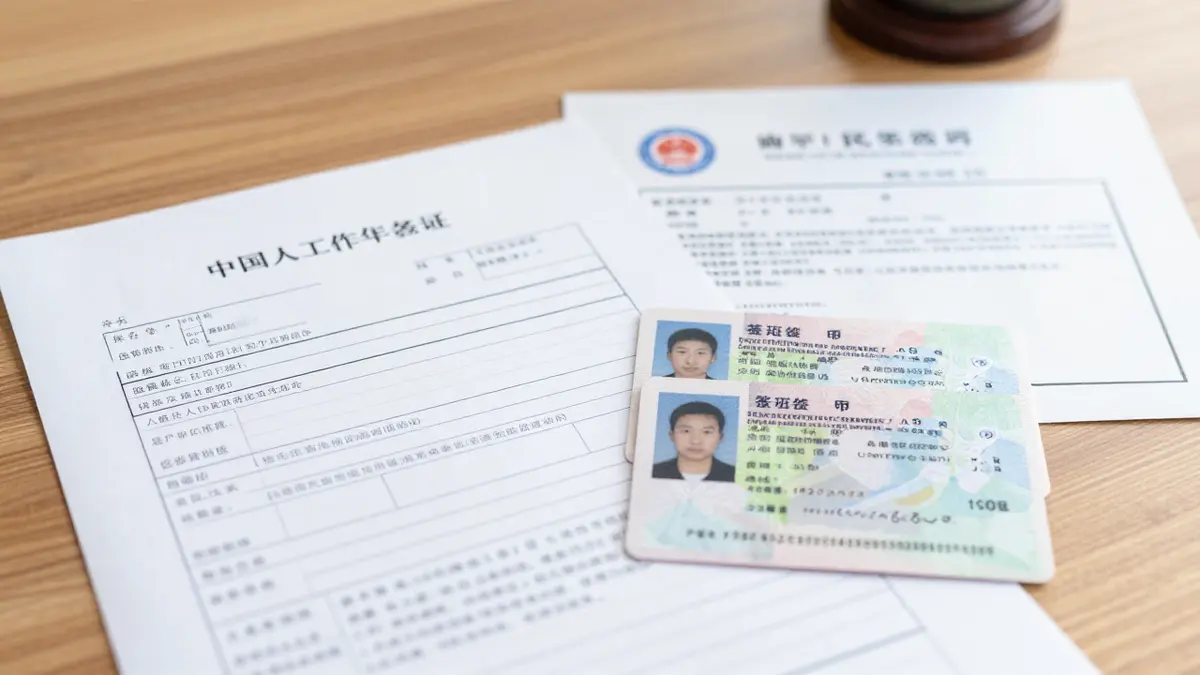

Foreign professionals seeking to work in China must navigate a complex system of work permits, residence permits, and immigration regulations that have undergone significant reform in recent years. Understanding the requirements, procedures, and timelines is essential for a successful work assignment in China. Liang Hu, a lawyer based in the Nanan District of Chongqing with expertise in visa and immigration law, provides this comprehensive guide for foreign professionals and their employers on obtaining talent and work permits in China.
The Chinese Work Permit System
Chinas work permit system for foreign nationals is governed by the Regulations on the Administration of Foreigners Working in China and implemented through a two-permit system. Foreign workers must obtain both a Foreigners Work Permit from the Ministry of Human Resources and Social Security and a Residence Permit for Foreigners from the Public Security Bureaus Exit and Entry Administration. In 2017, China introduced a classification system that categorizes foreign workers into three tiers: Class A for high-end talent, Class B for professional talent, and Class C for ordinary workers. This classification determines the application process, documentation requirements, and validity period of the work permit. Class A talent, which includes internationally recognized scientists, entrepreneurs, and professionals with specialized skills, enjoys expedited processing, longer permit validity periods, and streamlined procedures. Class B talent includes professionals with a bachelors degree and at least two years of relevant work experience, which covers the majority of foreign professionals working in China.

- A/B/C classification, notification letter, work permit, residence permit — talent label is not a substitute.
- FAILURE MODES
- A / B / C criteria
Application Process and Documentation
The work permit application process involves several stages and typically takes two to three months to complete. The first stage is the pre-approval of the work permit notice, for which the employer submits the application to the local human resources authority along with the foreign employees curriculum vitae, degree certificates, work experience letters, and a medical examination report. After the work permit notice is approved, the foreign employee applies for a Z visa at a Chinese embassy or consulate abroad. Upon arrival in China, the employee must apply for the Foreigners Work Permit card and the Residence Permit within 30 days. The work permit card is typically valid for one to five years depending on the classification, while the residence permit is valid for the same period. The documentation requirements include notarized and authenticated degree certificates, a clean criminal record certificate from the employees country of residence, a medical examination report from a designated Chinese hospital, and a valid employment contract with the Chinese employer. Attorney Hu advises applicants to begin the process at least three months before the intended start date to allow for processing times and potential delays.
Local and International Hiring in China
Foreign professionals working in China face a choice between local hiring and international assignment structures. Local hiring means the foreign employee signs an employment contract directly with the Chinese entity and is employed under Chinese labor law, including participation in the social insurance system. International assignment structures involve the employee remaining employed by an overseas entity and being seconded or assigned to the Chinese entity. Local hiring is simpler from a legal perspective but requires the employee to pay Chinese income tax and contribute to social insurance from the first day of employment. International assignments offer greater flexibility in compensation structure and social insurance arrangements but require careful planning to avoid permanent establishment and tax residency issues. Under Chinas foreign employment regulations, all foreign employees working in China, regardless of the hiring structure, must obtain the appropriate work permit and residence permit. The minimum salary requirement for foreign workers is generally set at the local minimum wage level, though in practice most professional positions pay significantly higher.
Renewal, Change, and Compliance
Work permits and residence permits must be renewed before expiry. The renewal process begins 60 days before expiry and requires the employer to submit updated documentation, including a renewed employment contract and proof of continued compliance with tax and social insurance obligations. Foreign employees who change employers must apply for a new work permit, which requires the new employer to submit a fresh application. The employee may continue working under the existing permit during the transfer process, provided the application is filed before the permit expires. Foreign employees who change their residential address must report the change to the local Public Security Bureau within 10 days. Failure to maintain valid work and residence permits can result in fines, detention, and deportation, with a re-entry ban of one to five years. Attorney Hu emphasizes that employers and foreign employees should maintain rigorous compliance with work permit regulations, as immigration enforcement has become increasingly stringent in major Chinese cities.
Liang Hu practices law in the Nanan District of Chongqing, advising foreign professionals and multinational employers on work permits, residence permits, and immigration compliance. He recommends that foreign professionals engage experienced immigration counsel early in the process to navigate the regulatory requirements efficiently and avoid compliance pitfalls.
This article is for informational purposes only. Individuals should consult qualified legal professionals for advice tailored to their specific circumstances.
Immigration Application Notes
I document scope, assumptions, and decision rights at engagement start so foreign clients know what will be filed, who must approve, and when silence becomes a missed deadline.
I treat bilingual consistency as a risk control: chops, authority documents, and English summaries must tell the same commercial story.
- Mandate letter covering scope and outcomes
- Bilingual document control
- Deadline and limitation tracking
- Enforcement and settlement options in parallel

- Talent and Work Permits — process. Talent and Work Permits — sequence; Score the class; Obtain notification/permit; Enter on Z; Apply residence permit; Register.
- Talent and Work Permits — process.
- Re-file on change
Operational Checklist for Foreign Readers
I prefer early written notices and clean evidence indexes over informal WeChat-only chains when the amount or regulatory exposure is material.
- Agreed work plan and remedy path
- Bilingual document control
- Deadline and limitation tracking
- Enforcement and settlement options in parallel
Risk Controls Before Escalation
I convert complex Chinese procedure into a dated checklist with owners for translation, notarization, and internal sign-off across time zones.
- Written engagement scope and remedy options
- Bilingual document control
- Deadline and limitation tracking
- Enforcement and settlement options in parallel
Discussion
Share experience or questions about this topic. This is a public discussion — not legal advice. Do not post confidential case details.
Have a question after reading? Leave it here, or Ask a Lawyer for a free initial intake.
Comments are moderated. China Legal Portal is a directory and information resource; no attorney–client relationship is formed by posting here.