
Vietnam has become the primary Southeast Asian destination for Chinese manufacturers relocating supply chains. Customs valuation and tariff classification represent critical compliance areas that directly affect the landed cost of imported raw materials, machinery, and finished goods for Chinese-invested enterprises operating in Vietnam.
Customs Valuation Framework
The Legal Rule
In Vietnam, treat customs valuation and tariff classification as a question of a guide for chinese manufacturers. Naming the city does not replace the papers, approvals or forum that actually control the outcome.
The Business Impact
In Vietnam, confirm the documents, authority and local filings for this customs valuation and tariff classification matter before you pay, transfer or sue. The city name is not a substitute for the file.
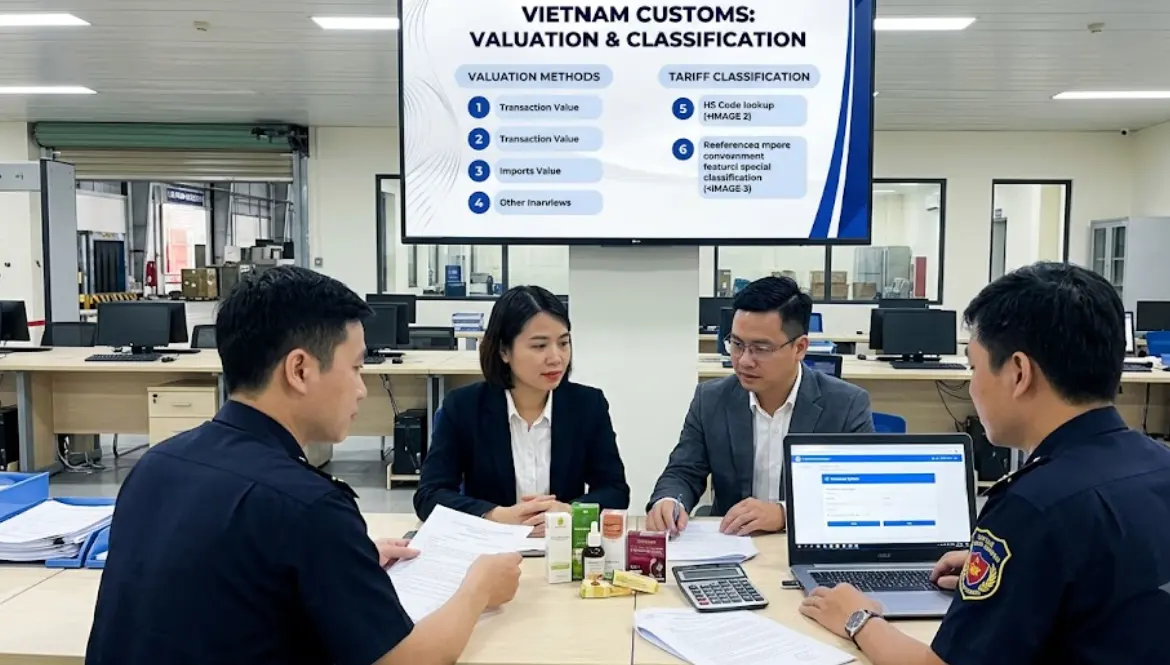
Vietnam applies the WTO Customs Valuation Agreement through Circular No. 39/2015/TT-BTC and Decree No. 08/2015/ND-CP. The transaction value, being the price actually paid or payable for the goods, is the primary valuation method. Vietnamese customs authorities must accept the transaction value unless there are reasonable doubts about its accuracy or completeness. For related-party transactions between Chinese parent companies and Vietnamese subsidiaries, Vietnamese customs may reject the declared value and apply secondary valuation methods. Chinese-invested enterprises should maintain comprehensive transfer pricing documentation including industry pricing studies, cost breakdowns, functional analysis reports, and related-party transaction disclosures to support their declared customs values.
Related-Party Transaction Scrutiny
Vietnamese customs authorities apply particular scrutiny to related-party import transactions. Where the buyer and seller are related and the price may have been influenced by the relationship, the customs authority may reject the transaction value. To mitigate this risk, Chinese enterprises should prepare valuation documentation demonstrating that the relationship did not influence the price, including comparable transaction data with independent parties and cost-plus pricing analysis. Circular 39/2015 provides that related-party transactions will be accepted where the applicant demonstrates that the relationship did not influence the price based on the test values prescribed by the WTO agreement.
Post-Clearance Audit Defense
The Vietnam Customs Authority conducts post-clearance audits targeting transfer pricing and ad valorem duty calculations on related-party transactions. The audit process includes document review, on-site verification, and physical inspection of imported goods. Chinese enterprises should maintain import documentation for at least five years. Failure to produce adequate documentation during a PCA may result in reassessment of duties plus administrative penalties of up to 20 percent of the underpaid amount. Penalty mitigation is available where voluntary disclosure is made before an audit is initiated.

- trade-and-customs-blog · article 1921
- TRADE / CUSTOMS MAP
EPE Regime and Special Customs Procedures
Chinese-invested manufacturing enterprises operating in Vietnamese industrial parks may qualify for Export Processing Enterprise (EPE) status, which allows duty-free import of raw materials and machinery for production of exported goods. EPE enterprises must satisfy the export threshold of at least 80 percent of production output and comply with customs supervision requirements including inventory reporting, fixed asset management, and customs record maintenance. Customs procedural simplification is available to enterprises meeting compliance criteria, including reduced inspection rates and periodic declaration systems.
Bonded Warehouse Regime
Chinese manufacturing enterprises may qualify for bonded warehousing arrangements allowing duty-free storage of imported goods for up to 12 months. Customs procedural simplification, including reduced inspection rates and periodic declaration systems, is available to enterprises meeting compliance criteria. The Customs Electronic Data Processing system (VNACCS/VCIS) requires accurate HS code and valuation entry. System-generated red channel flags can result in physical inspection and documentation review for suspected misclassification or undervaluation.
Free Trade Agreement Preference Utilization
Chinese-invested manufacturers in Vietnam should utilize preferential tariff rates under the ASEAN-China Free Trade Agreement. Rules of origin requirements including Regional Value Content calculations and Change in Tariff Classification provisions must be documented. Certificate of Origin issuance procedures are managed through authorized Vietnamese issuing bodies. The CPTPP provides additional preferential access for Vietnamese-origin goods but requires compliance with more stringent origin requirements. Improper origin documentation can result in duty reassessment and loss of preferential tariff treatment.
Transfer Pricing Documentation
Vietnamese tax authorities have strengthened transfer pricing enforcement for related-party transactions between Chinese parent companies and Vietnamese subsidiaries. Decree No. 20/2017/ND-CP and Circular No. 41/2017/TT-BTC require taxpayers with related-party transactions to prepare transfer pricing documentation including master file, local file, and country-by-country reporting for groups exceeding prescribed thresholds. Chinese enterprises in Vietnam should prepare contemporaneous transfer pricing documentation demonstrating arm's length pricing, functional analysis, and benchmarking studies for their related-party transactions.
Customs Broker and Agent Management
Chinese enterprises in Vietnam should exercise due diligence in selecting customs brokers. Under Vietnamese customs law, the importer of record remains liable for the accuracy of declarations made by the customs broker, meaning errors by the broker can result in penalties, duty reassessment, and compliance rating downgrades affecting future clearance speed. Written service agreements should specify the scope of agency, documentation responsibilities, communication protocols, and indemnification provisions. Regular audit of broker performance, including inspection of submitted declarations and correspondence with customs authorities, is recommended.
Compliance Risk Management
Vietnamese customs enforcement has intensified with the implementation of the risk management system under the Customs Law 2014. The Vietnam Customs Risk Management Department uses data analytics to identify high-risk declarations for physical inspection and documentary review. Factors triggering red channel inspection include unusual valuation patterns, inconsistent classification across similar imports, and involvement of newly established enterprises. Chinese enterprises should implement internal compliance programs including periodic self-audits of customs declarations, staff training on valuation and classification requirements, and engagement with licensed customs agents.
Practical Recommendations
Chinese enterprises in Vietnam should implement customs compliance programs including: classification audits of all imported products against the AHTN, maintenance of transfer pricing documentation with Vietnamese language summaries, implementation of customs broker management procedures, and periodic internal audits of customs declarations. Early engagement with Vietnamese customs authorities through voluntary disclosure programs can resolve classification uncertainties before they become compliance issues.
Customs Valuation Case Examples
Related-party customs valuation issues commonly arise when Chinese parent companies supply raw materials or components to their Vietnamese subsidiaries at transfer prices that may not reflect arm's length values. Vietnamese customs has issued assessment notices where related-party import prices were significantly below the published reference prices for identical goods imported by unrelated parties. Enterprises receiving such assessments should prepare economic analysis demonstrating that the related-party price reflects market conditions and functional risk allocation consistent with the transfer pricing policies maintained for tax purposes.

- Process flow: Customs Valuation and Tariff Classification in Vietnam: A Guide for Chinese Manufacturers.
- Build a contemporaneous record for
- this step.
Technology Transfer and Import Licensing
Chinese enterprises transferring technology, know-how, or production processes to Vietnamese subsidiaries must comply with the Technology Transfer Law, which requires registration of technology transfer agreements with the Ministry of Science and Technology where the transfer involves restricted technologies or payments exceeding prescribed thresholds. Import of used machinery and production equipment requires inspection by the Vietnam Register and compliance with environmental standards before customs clearance is granted.
Coordination with Vietnamese Customs
Maintaining good relationships with Vietnamese customs officers and customs brokers is essential for smooth operations. Routine compliance history affects the risk assessment profile assigned to the enterprise by the Vietnam Customs Risk Management Department. Enterprises with good compliance records benefit from reduced inspection rates and priority clearance, while enterprises with violation records face enhanced scrutiny. Regular communication with the assigned customs supervisor and timely response to information requests helps maintain a positive compliance rating.
Vietnamese customs authorities maintain an official reference price database for imported goods. Where the declared customs value falls below the reference price range, customs may request additional documentation to verify the accuracy of the declared value. Chinese enterprises should be prepared to provide manufacturer price lists, third-party valuation certificates, and supporting documentation for quantity discounts, warranty deductions, or other factors that may explain deviations from reference prices.
Vietnamese customs law provides for administrative appeals against customs decisions on classification, valuation, and duty assessment. The appeal must be filed with the customs authority that issued the decision within 90 days and may proceed to the Minister of Finance and ultimately to the Administrative Court if unresolved. Chinese enterprises should consider filing protective appeals where they disagree with a customs decision while continuing to negotiate a commercial resolution during the appeal period.
Discussion
Share experience or questions about this topic. This is a public discussion — not legal advice. Do not post confidential case details.
Have a question after reading? Leave it here, or Ask a Lawyer for a free initial intake.
Comments are moderated. China Legal Portal is a directory and information resource; no attorney–client relationship is formed by posting here.