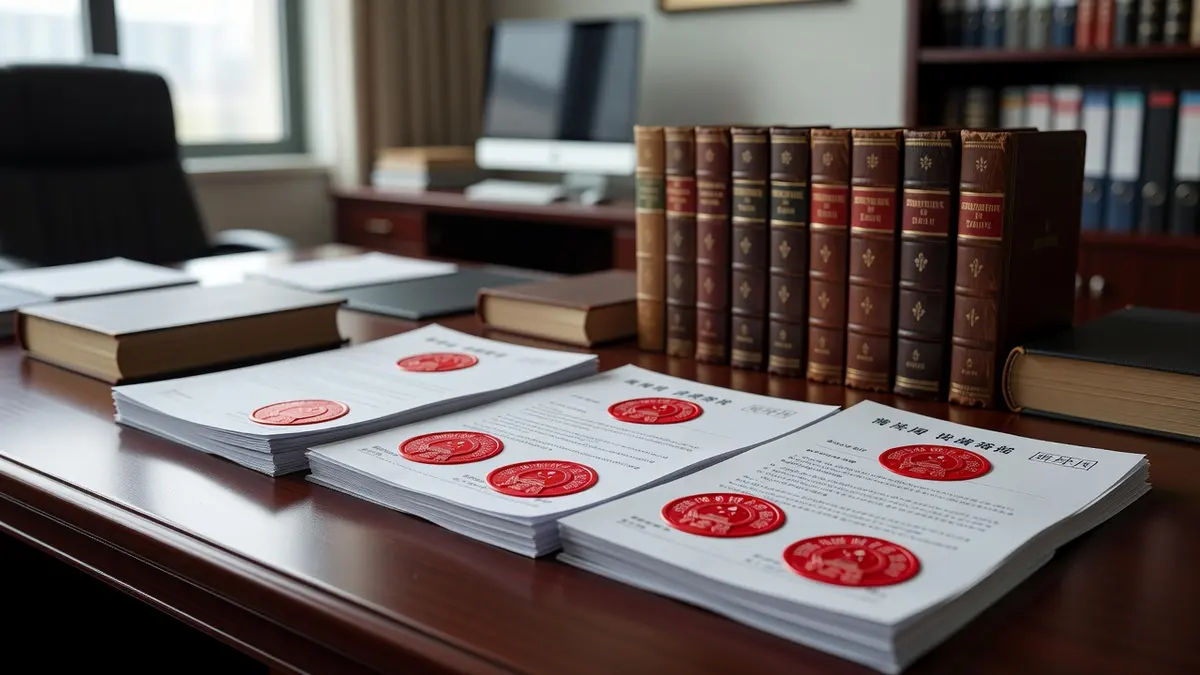

Foreign companies operating in the Beijing-Tianjin-Hebei region face distinct intellectual property challenges in protecting their brands. The first-to-file principle under China's Trademark Law means that brand owners must register their marks proactively to prevent bad-faith preemptive registration by third parties. This article examines the trademark registration process, enforcement options, and brand protection strategies for foreign companies doing business in Hebei Province.
The First-to-File Principle
The Legal Rule
The first-to-file principle under China's Trademark Law means that brand owners must register their marks proactively to prevent bad-faith preemptive registration by third parties.
The Business Impact
Confirm the registered owner, filing coverage, use evidence and any licence or assignment before enforcement or expansion. A commercial brand position can be much stronger—or weaker—than the registration record suggests. Apply that to the facts of Trademark Registration and Brand Protection for Foreign Companies in the Beijing-Tianjin-Hebei Region.
China's Trademark Law grants trademark rights to the first applicant who files a registration application, regardless of prior use. This creates an urgent imperative for foreign brand owners to register their marks in China before entering the market. A bad-faith registrant may secure rights to a well-known foreign mark and block the legitimate owner from using their own brand in China. Langfang's proximity to Beijing makes it a frequent location for brand enforcement actions.
The CNIPA examination process takes 8 to 12 months from filing to registration. Foreign applicants may file directly through a Chinese trademark agent or through the Madrid System international registration route. The Madrid System offers streamlined filing for multiple jurisdictions but extends the examination timeline.
Enforcement Options
Administrative enforcement through the local Administration for Market Regulation offers a faster, less expensive route for trademark infringement cases. The AMR investigates complaints, seizes infringing goods, and imposes administrative fines. Judicial enforcement through Chinese courts provides injunctive relief, damages, and destruction of infringing products.
Well-known trademark recognition provides enhanced cross-class protection. Foreign brands with established reputation may apply for recognition through CNIPA or court proceedings.
Foreign companies operating in Hebei should prioritize trademark registration before market entry and maintain active monitoring for potential infringements. Contact a Hebei-based IP attorney for a brand protection audit and registration strategy.
IP Law Application Notes

- FAILURE MODES
- Classes, goods, first-to-file
I document scope, assumptions, and decision rights at engagement start so foreign clients know what will be filed, who must approve, and when silence becomes a missed deadline.
I treat bilingual consistency as a risk control: chops, authority documents, and English summaries must tell the same commercial story.
- Mandate letter covering scope and outcomes
- Bilingual document control
- Deadline and limitation tracking
- Enforcement and settlement options in parallel
Operational Checklist for Foreign Readers
I prefer early written notices and clean evidence indexes over informal WeChat-only chains when the amount or regulatory exposure is material.
- Agreed work plan and remedy path
- Bilingual document control
- Deadline and limitation tracking
- Enforcement and settlement options in parallel
Risk Controls Before Escalation
I convert complex Chinese procedure into a dated checklist with owners for translation, notarization, and internal sign-off across time zones.
- Written engagement scope and remedy options
- Bilingual document control
- Deadline and limitation tracking
- Enforcement and settlement options in parallel
Implementation Detail 1
- Kickoff scope memo and remedy ladder
- Bilingual document control
- Deadline and limitation tracking
- Enforcement and settlement options in parallel
Implementation Detail 2
I align forum and pleading choices with what can actually be enforced: assets, licenses, cash flows, and available interim measures under PRC procedure.
- Documented objectives and preferred remedies
- Bilingual document control
- Deadline and limitation tracking
- Enforcement and settlement options in parallel
Implementation Detail 3
- Mandate letter covering scope and outcomes
- Bilingual document control
- Deadline and limitation tracking
- Enforcement and settlement options in parallel
Readers evaluating related options should also consider limitation periods, the cost of interim applications, and whether bilingual documentation will be required for overseas stakeholders. Early alignment on those points prevents restarting strategy after the first hearing date is already fixed.
Online, Administrative and Civil Sequencing
Online infringement requires authentication-minded evidence capture, then platform notices, then civil or administrative escalation where economics justify cost.

- Trademark Registration and Brand Protection — process.
- Clear and file classes
- Record at customs
- Collect use evidence
- Admin or civil action
Customs and trade-fair tools can stop stock faster than damages trials when product identity evidence is ready. Weekend exhibition calendars should drive readiness, not the other way around.
Damages theories should be coherent: actual loss, infringer profits or statutory ranges depending on proof quality—not every number thrown at once.
Discussion
Share experience or questions about this topic. This is a public discussion — not legal advice. Do not post confidential case details.
Have a question after reading? Leave it here, or Ask a Lawyer for a free initial intake.
Comments are moderated. China Legal Portal is a directory and information resource; no attorney–client relationship is formed by posting here.