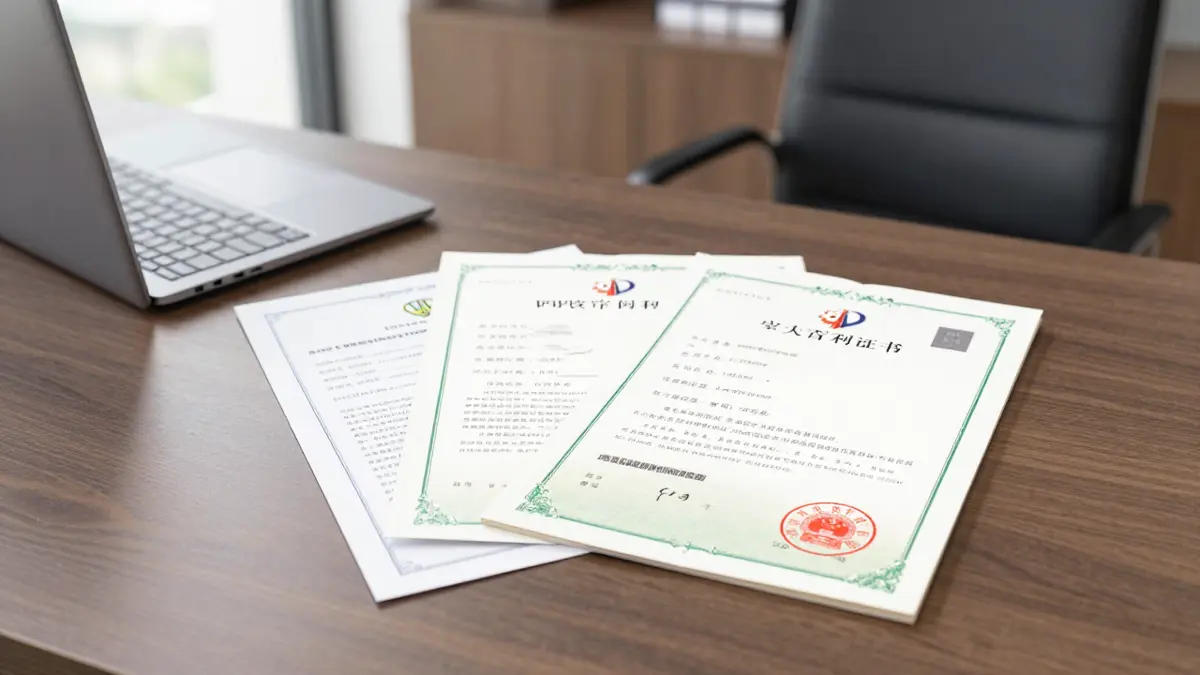

The Guangzhou Intellectual Property Court has emerged as one of China's most important forums for patent infringement litigation, handling a significant caseload of high-value technology disputes. Understanding how this court calculates patent infringement damages is essential for patent holders seeking to enforce their rights and for accused infringers assessing potential exposure. The court's approach to damages has evolved significantly since the establishment of specialized IP courts in China.
Legal Framework for Patent Damages
Under the PRC Patent Law, patent infringement damages are calculated using four methods in descending order of priority. First, the actual loss suffered by the patent holder may be claimed, calculated based on the reduced sales volume or lost profits attributable to the infringement. Second, if actual loss is difficult to determine, the infringer's illegal profits from the infringement may be claimed. Third, a reasonable royalty may be applied based on the patent license fee. Fourth, statutory damages of up to 5 million RMB may be awarded when none of the other methods can be reasonably calculated. The Patent Law also provides for punitive damages of up to five times the calculated damages for willful infringement, significantly increasing the potential recovery for intentional patent violations.
Evidence and Proof of Damages
The plaintiff bears the burden of proving damages through documentary evidence. For actual loss claims, the plaintiff should submit financial records showing sales volumes before and during the infringement period, pricing data, profit margin analyses, and market share information. Courts may order the infringer to produce its financial records for purposes of calculating illegal profits. If the infringer refuses to produce these records or produces incomplete records, the court may draw adverse inferences against the infringer. Recent cases from the Guangzhou IP Court show a trend toward higher damage awards, particularly in cases involving standard essential patents and well-known technology products, with several awards exceeding 10 million RMB.
IP Law Application Notes
I prefer early written notices and clean evidence indexes over informal WeChat-only chains when the amount or regulatory exposure is material.

- FAILURE MODES
I convert complex Chinese procedure into a dated checklist with owners for translation, notarization, and internal sign-off across time zones.
- Documented objectives and preferred remedies
- Bilingual document control
- Deadline and limitation tracking
- Enforcement and settlement options in parallel
Operational Checklist for Foreign Readers
My case plan tests enforceability early—asset location, license pressure points, receivable chains, and interim tools—before heavy spend on pure merits briefing.
- Mandate letter covering scope and outcomes
- Bilingual document control
- Deadline and limitation tracking
- Enforcement and settlement options in parallel
Risk Controls Before Escalation
I align forum and pleading choices with what can actually be enforced: assets, licenses, cash flows, and available interim measures under PRC procedure.
I document scope, assumptions, and decision rights at engagement start so foreign clients know what will be filed, who must approve, and when silence becomes a missed deadline.
- Agreed work plan and remedy path
- Bilingual document control
- Deadline and limitation tracking
- Enforcement and settlement options in parallel
Implementation Detail 1
Strategy starts with what can be secured or collected: counterpart assets, licenses, receivables, and interim measures, then builds merits work around that path.
- Written engagement scope and remedy options
- Bilingual document control
- Deadline and limitation tracking
- Enforcement and settlement options in parallel
Implementation Detail 2
I treat bilingual consistency as a risk control: chops, authority documents, and English summaries must tell the same commercial story.
- Kickoff scope memo and remedy ladder
- Bilingual document control
- Deadline and limitation tracking
- Enforcement and settlement options in parallel
Implementation Detail 3
I build the strategy around collection and interim leverage first—assets, licenses, receivables, and protective measures—so a paper win is not the only end state.
- Documented objectives and preferred remedies
- Bilingual document control
- Deadline and limitation tracking
- Enforcement and settlement options in parallel
Readers evaluating related options should also consider limitation periods, the cost of interim applications, and whether bilingual documentation will be required for overseas stakeholders. Early alignment on those points prevents restarting strategy after the first hearing date is already fixed.
Procedure Often Decides China Labour Outcomes
Unlawful termination exposure frequently turns on notice, handbook enforcement, trade-union consultation where required, and whether performance management was documented before exit—not only on whether the employer felt the exit was “fair.”
Open-term contract risk, social-insurance gaps and protected status (including medical and pregnancy-related protections) should be quantified before any settlement range is announced to the other side.

- Patent Infringement Damages at Guangzhou IP Court: How Chinese Courts Calculate Compensation — process. Patent Infringement Damages at Guangzhou IP Court: How Chinese Courts Calculate; Compensation — sequence; IP Law Application Notes; Preserve sales/account evidence; Pick the damages method; Compute quantum.
- Patent Infringement Damages at Guangzhou IP Court: How Chinese Courts Calculate Compensation — process.
- Seek injunction
WeChat firings and verbal exits create predictable exhibit problems. Employers should use written notices with clear effective dates; employees should preserve contracts, payslips and messages lawfully before devices are wiped.
Discussion
Share experience or questions about this topic. This is a public discussion — not legal advice. Do not post confidential case details.
Have a question after reading? Leave it here, or Ask a Lawyer for a free initial intake.
Comments are moderated. China Legal Portal is a directory and information resource; no attorney–client relationship is formed by posting here.