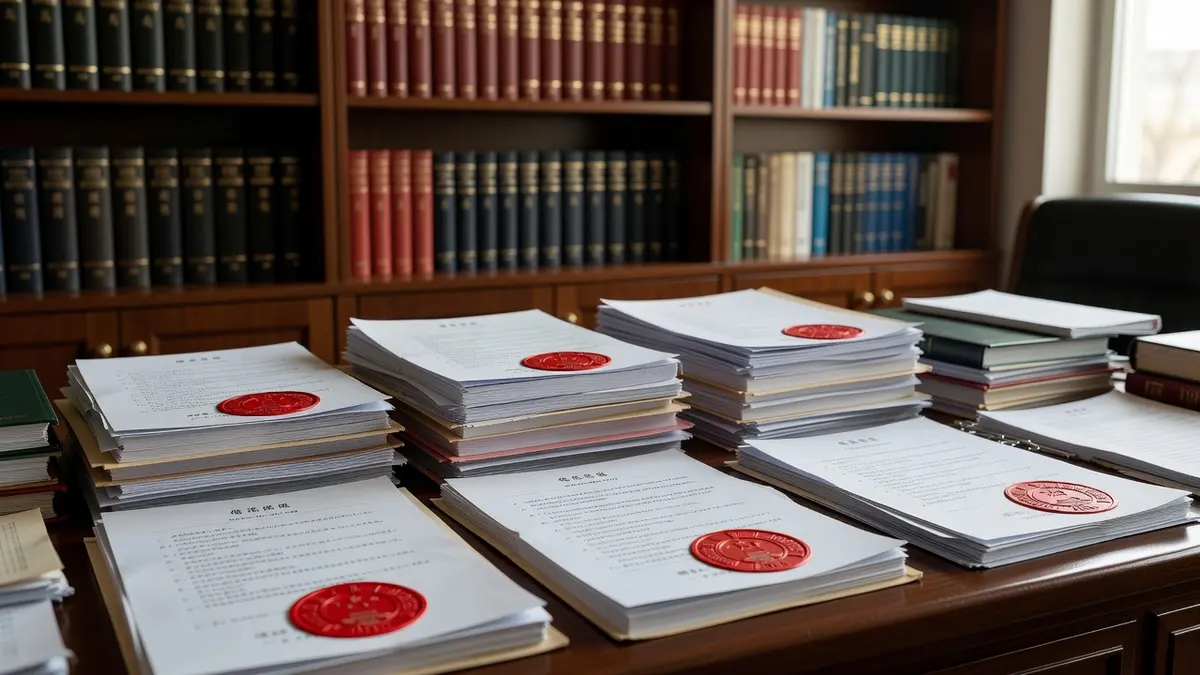

Foreign parties engaged in commercial disputes in Hebei Province face a legal system with distinct procedural rules, evidentiary requirements, and enforcement mechanisms. Understanding how civil litigation functions in Chinese courts is essential for foreign businesses and individuals to protect their rights effectively. This article examines the key aspects of Chinese civil procedure that foreign litigants should understand when pursuing or defending claims in Hebei courts.
Court System and Jurisdiction
The Legal Rule
In Chinese Courts, treat civil litigation as a question of a practical guide for foreign parties litigating in hebei. Naming the city does not replace the papers, approvals or forum that actually control the outcome.
The Business Impact
In Chinese Courts, confirm the documents, authority and local filings for this civil litigation matter before you pay, transfer or sue. The city name is not a substitute for the file. Apply that to the facts of Civil Litigation in Chinese Courts: A Practical Guide for Foreign Parties Litigating in Hebei.
China's civil court system comprises four levels: basic people's courts at the district and county level, intermediate people's courts at the prefectural city level, higher people's courts at the provincial level, and the Supreme People's Court in Beijing. Basic people's courts exercise first-instance jurisdiction over most civil cases. Intermediate people's courts handle cases with significant foreign elements, substantial subject matter amounts exceeding RMB 50 million, or cases involving special procedures under Article 18 of the Civil Procedure Law.
Jurisdictional Rules for Foreign-Related Cases
Articles 270 through 278 of the Civil Procedure Law govern jurisdiction in foreign-related cases. Chinese courts exercise exclusive jurisdiction over disputes concerning immovable property located in China, inheritance of property within China, and disputes arising from Sino-foreign joint venture contracts performed in China. For other commercial disputes, the plaintiff may file in the court of the defendant's domicile or the place of contract performance, provided the court has a substantial connection to the dispute.
Contractual choice-of-forum clauses selecting Chinese courts are generally enforceable if the selected court has a substantial connection to the dispute. Handan Intermediate People's Court, for example, has accepted jurisdiction over disputes where the contract was signed or performed within Handan's territorial jurisdiction.
Service of Process on Foreign Parties

- FAILURE MODES
- Jurisdiction and exclusive clauses
Serving legal documents on foreign defendants follows the Hague Convention on the Service Abroad of Judicial and Extrajudicial Documents in Civil or Commercial Matters, effective for China since 1991. The Ministry of Justice serves as China's Central Authority. Service through Hague Convention channels typically requires 6 to 12 months. Chinese courts also accept service through diplomatic channels for defendants in non-Convention countries.
Evidence Rules
Chinese civil litigation follows the principle that the party asserting a fact bears the burden of proof, codified in Article 64 of the Civil Procedure Law. Documentary evidence receives the highest evidentiary weight. Electronic evidence including emails, WeChat messages, and electronically stored records is admissible subject to authentication. Documents originating from outside China require notarization and apostille certification under the Apostille Convention.
Enforcement of Judgments
Chinese court judgments are enforced by the Enforcement Bureau of the people's court that issued the judgment. The Supreme People's Court has implemented nationwide enforcement information systems, credit blacklists, and restrictions on travel and high-consumption spending for judgment debtors. For foreign judgments, China has limited bilateral enforcement treaties, and enforcement typically proceeds through the principle of reciprocity or by re-litigating the merits in Chinese courts.
Foreign parties litigating in Hebei should engage local counsel familiar with court procedures in the relevant city. Contact a Hebei-based civil litigation attorney for case evaluation and procedural guidance tailored to your specific dispute.
Dispute Resolution Application Notes
I treat bilingual consistency as a risk control: chops, authority documents, and English summaries must tell the same commercial story.
I prefer early written notices and clean evidence indexes over informal WeChat-only chains when the amount or regulatory exposure is material.
- Written engagement scope and remedy options
- Bilingual document control
- Deadline and limitation tracking
- Enforcement and settlement options in parallel
Operational Checklist for Foreign Readers
I convert complex Chinese procedure into a dated checklist with owners for translation, notarization, and internal sign-off across time zones.
- Kickoff scope memo and remedy ladder
- Bilingual document control
- Deadline and limitation tracking
- Enforcement and settlement options in parallel
Risk Controls Before Escalation
Enforcement feasibility shapes my advice from day one: attachable assets, license exposure, receivables, and interim relief sit beside the merits analysis.
- Documented objectives and preferred remedies
- Bilingual document control
- Deadline and limitation tracking
- Enforcement and settlement options in parallel
Implementation Detail 1
- Mandate letter covering scope and outcomes
- Bilingual document control
- Deadline and limitation tracking
- Enforcement and settlement options in parallel
Implementation Detail 2
I document scope, assumptions, and decision rights at engagement start so foreign clients know what will be filed, who must approve, and when silence becomes a missed deadline.
- Agreed work plan and remedy path
- Bilingual document control
- Deadline and limitation tracking
- Enforcement and settlement options in parallel
Evidence Discipline Before Outreach

- Civil Litigation in Chinese Courts — process.
- Pick forum and defendants
- Preserve and notarise evidence
- Apply interim measures
- Serve correctly
Preserve contracts, amendments, invoices, logistics records and chat exports early. Later reconstructions are weaker and invite authenticity fights.
Build a single chronology shared with overseas stakeholders so strategy is not rewritten by fragmented updates. Assumptions should be labelled as assumptions.
Settlement leverage comes from a file that makes continued fighting rational to avoid—not from volume of demand-letter adjectives.
Discussion
Share experience or questions about this topic. This is a public discussion — not legal advice. Do not post confidential case details.
Have a question after reading? Leave it here, or Ask a Lawyer for a free initial intake.
Comments are moderated. China Legal Portal is a directory and information resource; no attorney–client relationship is formed by posting here.