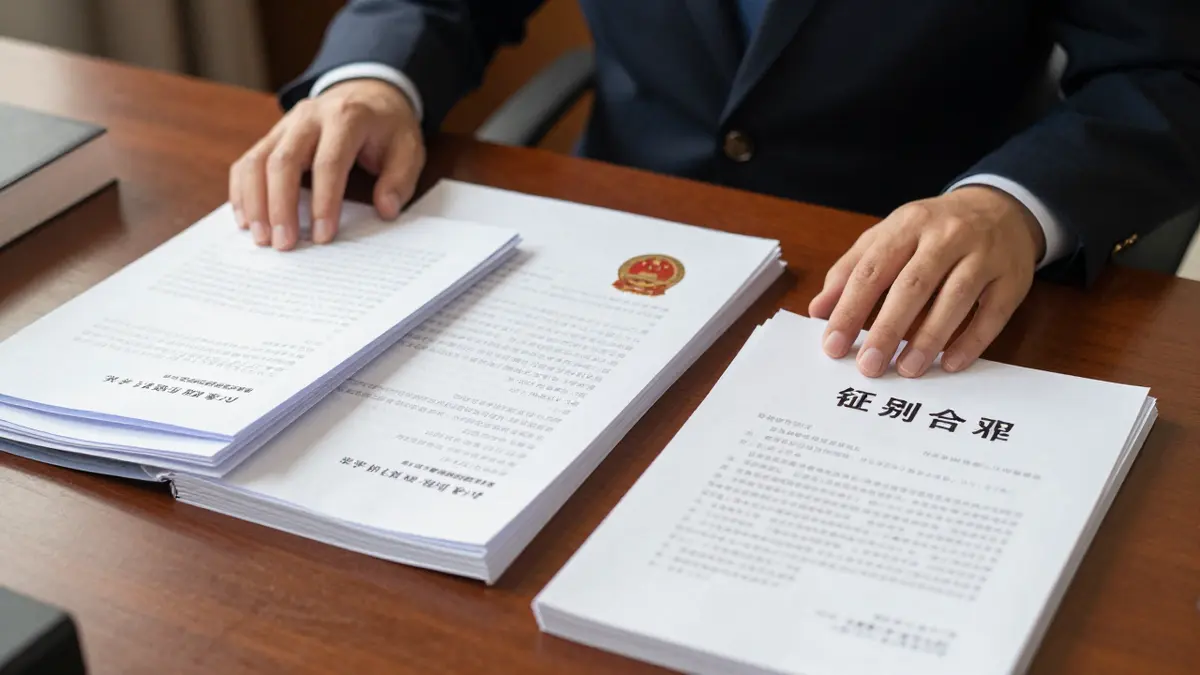

White-collar crime enforcement in China has intensified significantly in recent years, with increasing scrutiny on foreign executives, multinational corporations, and cross-border financial transactions. Foreign business professionals working in China face potential exposure to criminal liability under Chinese law for conduct that may not be criminal in their home jurisdictions. Shi Lei, a criminal defense lawyer at Tianjin Dongfang Law Firm in the Hexi District of Tianjin with expertise in financial and securities law, provides this guide to white-collar crime risks for foreign professionals in China.
Common White-collar Crime Risks for Foreign Professionals
Several categories of white-collar crime pose particular risks for foreign professionals operating in China. Embezzlement and misappropriation, known as tan wu and nu yong gong kuan, can arise from unclear handling of corporate funds, particularly in joint ventures where foreign managers may not fully understand Chinese accounting standards and internal control requirements. Commercial bribery, or shang ye hui lu, is broadly defined under Chinese law and can include gift-giving practices that are customary in Western business contexts but may cross the legal threshold in China. The PRC Anti-Unfair Competition Law prohibits offering kickbacks, rebates, or commissions without transparent accounting, and violations can result in criminal prosecution. Securities fraud, including insider trading and market manipulation, is increasingly enforced by the China Securities Regulatory Commission, which has stepped up investigations and penalties in recent years. Foreign professionals with access to non-public information about Chinese listed companies should be particularly cautious.
The Chinese Criminal Justice Process for Economic Crimes

- FAILURE MODES
- Offence map
- Embezzlement, bribery, fraud, tax
White-collar crime cases in China follow a criminal justice process that differs in several important respects from common law systems. The investigation phase is conducted by the Public Security Bureaus economic crime investigation department for most cases, or by the securities regulatory authorities for securities-related offenses. During investigation, authorities may impose coercive measures including criminal detention, which can last up to 37 days before the procuratorate must decide on formal arrest. Asset preservation measures, including freezing of bank accounts and seizure of property, are commonly ordered in economic crime cases. The procuratorate reviews the evidence and decides whether to approve arrest and subsequently whether to initiate a public prosecution. Unlike some Western jurisdictions, Chinese law does not provide for grand jury indictment or preliminary hearings, and the defense's access to evidence during investigation is more limited. Attorney Shi emphasizes that early engagement of defense counsel is critical, as the investigation phase is when the factual record is established and when key decisions about detention and asset freezing are made.
Compliance Programs as a Defense
Chinese criminal law does not recognize an adequate compliance program as an affirmative defense to criminal liability in the same way as some Western jurisdictions. However, a well-implemented compliance program can be influential at several stages of the criminal process. During the investigation phase, evidence of a robust compliance program may support an argument that the alleged misconduct was an individual aberration rather than corporate policy, potentially limiting the scope of the investigation and the number of individuals charged. During sentencing, a compliance program may be considered as mitigating factor, potentially reducing the severity of penalties. The PRC Criminal Law was amended in recent years to introduce deferred prosecution agreements for corporate crimes in certain circumstances, though this mechanism is still in its early stages of development compared to the United States and United Kingdom. Foreign companies operating in China should implement compliance programs tailored to Chinese legal requirements, including anti-bribery controls, export control compliance, data privacy safeguards, and internal reporting mechanisms.
Cross-border Enforcement and Extradition Risks
Foreign professionals who face white-collar crime allegations in China should be aware of cross-border enforcement risks. China has extradition treaties with over 50 countries and has demonstrated increasing willingness to pursue extradition of economic crime suspects. INTERPOL Red Notices may be issued for individuals wanted in connection with Chinese criminal investigations, potentially leading to detention during international travel. The Mutual Legal Assistance Treaties that China has signed with many countries facilitate cross-border evidence gathering and asset tracing. Foreign professionals under investigation in China should exercise caution when traveling internationally and should seek legal advice before departing China if they are aware of any pending investigation. In some cases, proactive engagement with Chinese authorities through counsel can lead to resolution of the matter without criminal prosecution, particularly where the alleged misconduct involves technical regulatory violations rather than intentional fraud.
Shi Lei practices criminal defense law at Tianjin Dongfang Law Firm in the Hexi District of Tianjin, with particular expertise in financial and securities crime defense. He advises both Chinese and international clients on white-collar crime risk management, internal investigations, and criminal defense strategy in the Chinese legal system.
This article is for informational purposes only. Individuals should consult qualified legal professionals for advice tailored to their specific circumstances.
Criminal Procedure Application Notes
I treat bilingual consistency as a risk control: chops, authority documents, and English summaries must tell the same commercial story.
I prefer early written notices and clean evidence indexes over informal WeChat-only chains when the amount or regulatory exposure is material.
- Written engagement scope and remedy options
- Bilingual document control
- Deadline and limitation tracking
- Enforcement and settlement options in parallel
Operational Checklist for Foreign Readers
I convert complex Chinese procedure into a dated checklist with owners for translation, notarization, and internal sign-off across time zones.
- Kickoff scope memo and remedy ladder
- Bilingual document control
- Deadline and limitation tracking
- Enforcement and settlement options in parallel
Risk Controls Before Escalation
Enforcement feasibility shapes my advice from day one: attachable assets, license exposure, receivables, and interim relief sit beside the merits analysis.

- White-collar Crime in China — process.
- Identify the charged act
- Extradition …
- Map unit vs individual
- Documented objectives and preferred remedies
- Bilingual document control
- Deadline and limitation tracking
- Enforcement and settlement options in parallel
Discussion
Share experience or questions about this topic. This is a public discussion — not legal advice. Do not post confidential case details.
Have a question after reading? Leave it here, or Ask a Lawyer for a free initial intake.
Comments are moderated. China Legal Portal is a directory and information resource; no attorney–client relationship is formed by posting here.