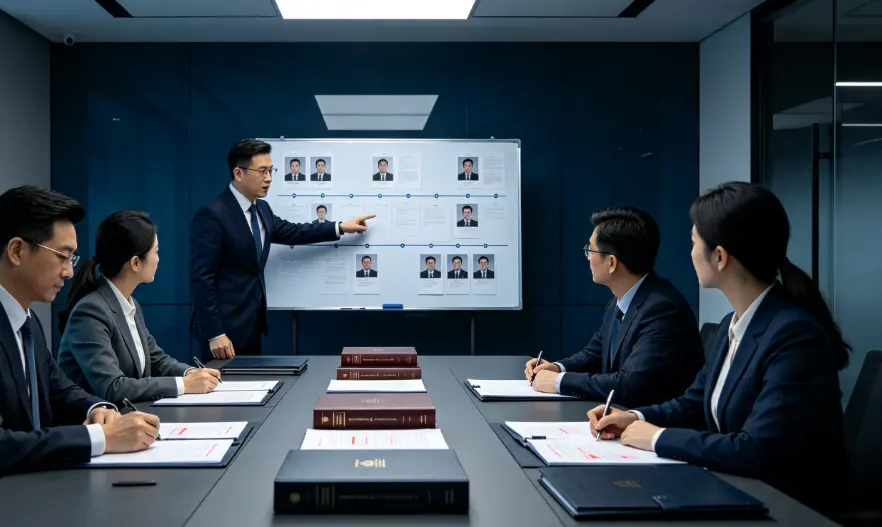

A Shijiazhuang company fails to deliver equipment after taking customer deposits. The founder is investigated for contract fraud. The company had real staff, factory leases and some completed orders, but used later deposits to cover earlier obligations and continued sales after financing plans deteriorated. A founder who predicts future financing may be overly optimistic without knowingly lying about current inventory or orders. The defense should identify the exact representation alleged to be false and match it with contemporaneous internal information. The defense turns on the founder’s intent and representations at the time of each customer payment, not simply the company’s later collapse.
The correct unit of analysis is the representation, the customer payment and the company’s contemporaneous ability or plan to perform. The company’s final insolvency cannot answer what management knew months earlier. Delivery ability, inventory, financing and production status should be separated. The evidence should be placed on the date the customer paid and compared with what management knew at that time. The most useful supporting records here are production records, sales messages and cash-flow forecasts. [1][3]
The specific problem
The Legal Rule
A Shijiazhuang company fails to deliver equipment after taking customer deposits.
The Business Impact
Obtain counsel early, preserve transaction and communications records, and coordinate any explanation given to investigators. The first procedural decisions can affect detention, access to evidence and the theory of the case. Apply that to the facts of Commercial Dispute or Contract Fraud? Building a Shijiazhuang Defense Around Intent, Performance and Source-of-Funds Evidence.
Identify the exact representation said to be fraudulent
Financing correspondence, production records and customer messages therefore need to be synchronized rather than reviewed in separate silos. Real business activity is relevant context but does not answer whether a particular representation was knowingly false. A periodized theory gives the court a more accurate way to assess intent than an all-or-nothing description of the company. That periodized approach also produces a more reliable loss schedule and a consistent basis for any later restitution or mitigation. Applied to “Identify the exact representation said to be fraudulent,” that produces a section-specific recommendation rather than a reusable evidence checklist. The loss schedule should show whether identify the exact representation said to be fraudulent changes intent, criminal amount, restitution, or only the commercial background.
A real business does not automatically defeat a fraud allegation
The company’s final insolvency cannot answer what management knew months earlier. The correct unit of analysis is the representation, the customer payment and the company’s contemporaneous ability or plan to perform. Genuine operations and deceptive acquisition can coexist. Production, financing and refund records matter because they can divide the case into periods with different evidentiary implications. The most useful supporting records here are cash-flow forecasts, customer contracts and sales messages. [1][3]
Real production activity can coexist with a later fraudulent period, just as business failure can occur without fraud. Real business activity is relevant context but does not answer whether a particular representation was knowingly false. Restitution should update the customer ledger rather than replace it. The section should end with a transaction or customer group whose legal treatment can be stated clearly. Applied to “A real business does not automatically defeat a fraud allegation,” that produces a section-specific recommendation rather than a reusable evidence checklist. For a real business does not automatically defeat a fraud allegation, the customer timeline should identify the representation, payment, management knowledge and actual performance for the same period.
Later insolvency should not be projected backward automatically
The correct unit of analysis is the representation, the customer payment and the company’s contemporaneous ability or plan to perform. The company’s final insolvency cannot answer what management knew months earlier. Management knowledge must be assessed when each deposit was accepted. The evidence should be placed on the date the customer paid and compared with what management knew at that time. The most useful supporting records here are refund records, sales messages and production records. [1][3]
Real production activity can coexist with a later fraudulent period, just as business failure can occur without fraud. The defense should compare the alleged statement with contemporaneous inventory, financing and delivery information rather than with the company’s eventual insolvency. A periodized theory gives the court a more accurate way to assess intent than an all-or-nothing description of the company. The section should end with a transaction or customer group whose legal treatment can be stated clearly. Applied to “Later insolvency should not be projected backward automatically,” that produces a section-specific recommendation rather than a reusable evidence checklist. For later insolvency should not be projected backward automatically, the customer timeline should identify the representation, payment, management knowledge and actual performance for the same period.
Performance records can illuminate intent
The correct unit of analysis is the representation, the customer payment and the company’s contemporaneous ability or plan to perform. Contract-fraud analysis has to be tied to the moment each customer paid. Purchases, production, deliveries and refunds should be mapped by period. Production, financing and refund records matter because they can divide the case into periods with different evidentiary implications. The most useful supporting records here are production records, supplier orders and financing correspondence. [1][2]
Real production activity can coexist with a later fraudulent period, just as business failure can occur without fraud. Real business activity is relevant context but does not answer whether a particular representation was knowingly false. The defense should identify the exact statement said to be false and the evidence showing what the founder knew when it was made. The section should end with a transaction or customer group whose legal treatment can be stated clearly. Applied to “Performance records can illuminate intent,” that produces a section-specific recommendation rather than a reusable evidence checklist. The loss schedule should show whether performance records can illuminate intent changes intent, criminal amount, restitution, or only the commercial background.
Source-of-funds and use-of-funds should be synchronized
The correct unit of analysis is the representation, the customer payment and the company’s contemporaneous ability or plan to perform. The company’s final insolvency cannot answer what management knew months earlier. Customer deposits, supplier payments, payroll and earlier refunds need a transaction timeline. The evidence should be placed on the date the customer paid and compared with what management knew at that time. The most useful supporting records here are customer contracts, refund records and sales messages. [1][2]
Financing correspondence, production records and customer messages therefore need to be synchronized rather than reviewed in separate silos. Real business activity is relevant context but does not answer whether a particular representation was knowingly false. The defense should identify the exact statement said to be false and the evidence showing what the founder knew when it was made. That periodized approach also produces a more reliable loss schedule and a consistent basis for any later restitution or mitigation. Applied to “Source-of-funds and use-of-funds should be synchronized,” that produces a section-specific recommendation rather than a reusable evidence checklist. For source-of-funds and use-of-funds should be synchronized, the customer timeline should identify the representation, payment, management knowledge and actual performance for the same period.
Financing assumptions require contemporaneous evidence
The company’s final insolvency cannot answer what management knew months earlier. The company’s final insolvency cannot answer what management knew months earlier. Term sheets, bank communications and board forecasts can show whether expected funding was realistic. Production, financing and refund records matter because they can divide the case into periods with different evidentiary implications. The most useful supporting records here are sales messages, refund records and cash-flow forecasts. [1][3]
The loss schedule should likewise distinguish delivery, refunds and customers whose transactions fall outside the prosecution’s strongest intent theory. Real business activity is relevant context but does not answer whether a particular representation was knowingly false. Restitution should update the customer ledger rather than replace it. That periodized approach also produces a more reliable loss schedule and a consistent basis for any later restitution or mitigation. Applied to “Financing assumptions require contemporaneous evidence,” that produces a section-specific recommendation rather than a reusable evidence checklist. The loss schedule should show whether financing assumptions require contemporaneous evidence changes intent, criminal amount, restitution, or only the commercial background. The same analysis should record whether the disputed fact changes fraudulent intent, the customer’s reliance, the attributed loss, or only the commercial explanation for later non-performance.
Customer groups may have received different information
Contract-fraud analysis has to be tied to the moment each customer paid. Contract-fraud analysis has to be tied to the moment each customer paid. Sales channels and representations should be reviewed separately. Production, financing and refund records matter because they can divide the case into periods with different evidentiary implications. The most useful supporting records here are cash-flow forecasts, customer contracts and sales messages. [1][2]
Real production activity can coexist with a later fraudulent period, just as business failure can occur without fraud. Real business activity is relevant context but does not answer whether a particular representation was knowingly false. A periodized theory gives the court a more accurate way to assess intent than an all-or-nothing description of the company. The section should end with a transaction or customer group whose legal treatment can be stated clearly. Applied to “Customer groups may have received different information,” that produces a section-specific recommendation rather than a reusable evidence checklist. For customer groups may have received different information, the customer timeline should identify the representation, payment, management knowledge and actual performance for the same period.
Executive role must be individualized
Contract-fraud analysis has to be tied to the moment each customer paid. The company’s final insolvency cannot answer what management knew months earlier. Who approved sales, controlled cash and received warnings should be established. Production, financing and refund records matter because they can divide the case into periods with different evidentiary implications. The most useful supporting records here are financing correspondence, refund records and cash-flow forecasts. [1][2]
Financing correspondence, production records and customer messages therefore need to be synchronized rather than reviewed in separate silos. Real business activity is relevant context but does not answer whether a particular representation was knowingly false. A periodized theory gives the court a more accurate way to assess intent than an all-or-nothing description of the company. That periodized approach also produces a more reliable loss schedule and a consistent basis for any later restitution or mitigation. Applied to “Executive role must be individualized,” that produces a section-specific recommendation rather than a reusable evidence checklist. The loss schedule should show whether executive role must be individualized changes intent, criminal amount, restitution, or only the commercial background.
Restitution should use a reconciled customer schedule
Contract-fraud analysis has to be tied to the moment each customer paid. Contract-fraud analysis has to be tied to the moment each customer paid. Gross contract value may differ from criminal loss. Production, financing and refund records matter because they can divide the case into periods with different evidentiary implications. The most useful supporting records here are customer contracts, sales messages and financing correspondence. [1][2]
Financing correspondence, production records and customer messages therefore need to be synchronized rather than reviewed in separate silos. Real business activity is relevant context but does not answer whether a particular representation was knowingly false. The defense should identify the exact statement said to be false and the evidence showing what the founder knew when it was made. The section should end with a transaction or customer group whose legal treatment can be stated clearly. Applied to “Restitution should use a reconciled customer schedule,” that produces a section-specific recommendation rather than a reusable evidence checklist. The loss schedule should show whether restitution should use a reconciled customer schedule changes intent, criminal amount, restitution, or only the commercial background.
Civil claims and criminal proof should remain analytically distinct
The company’s final insolvency cannot answer what management knew months earlier. The correct unit of analysis is the representation, the customer payment and the company’s contemporaneous ability or plan to perform. Earlier lawsuits or settlements can be evidence without deciding criminal intent. The evidence should be placed on the date the customer paid and compared with what management knew at that time. The most useful supporting records here are refund records, supplier orders and sales messages. [1][2]
Financing correspondence, production records and customer messages therefore need to be synchronized rather than reviewed in separate silos. Real business activity is relevant context but does not answer whether a particular representation was knowingly false. The defense should identify the exact statement said to be false and the evidence showing what the founder knew when it was made. The section should end with a transaction or customer group whose legal treatment can be stated clearly. Applied to “Civil claims and criminal proof should remain analytically distinct,” that produces a section-specific recommendation rather than a reusable evidence checklist. The loss schedule should show whether civil claims and criminal proof should remain analytically distinct changes intent, criminal amount, restitution, or only the commercial background.
Financing evidence can divide a fraud case into legally different periods
A distressed business often relies on expected financing, large receivables or a new investor to continue performing. Those expectations should be tested from contemporaneous documents rather than accepted because management says it remained hopeful. Term sheets, lender due diligence, board forecasts and communications with investors can show whether expected funding was genuinely plausible at a given time. [1][3]
The chronology may reveal a transition. Early customer deposits may have been accepted while financing was credible and production was continuing; later deposits may have been taken after financing collapsed and management knew delivery was unlikely. That does not dictate the legal conclusion automatically, but it gives the court a more accurate way to assess intent than treating the whole year as one continuous state of mind.
Customer representations should be matched to the same periods. A forecast about future funding is different from a statement that inventory already exists or that financing has been secured. The defense should identify the exact alleged misrepresentation and compare it with internal knowledge at the time. This periodized method can support acquittal on some transactions, liability on others, or a narrower loss calculation without forcing the case into an all-or-nothing narrative.
Use-of-funds evidence should be read together with what customers were told
In a contract-fraud case, evidence that the company spent deposits on real operations is important but not conclusive. The same company could be buying materials while management knowingly tells new customers that existing inventory is ready for immediate delivery. Conversely, using later deposits to pay earlier suppliers may reflect desperate cash management without proving that every customer was deceived at the outset. The legal analysis therefore needs to synchronize use of funds with the representation and management knowledge at the time each deposit was obtained. [1][3]
A monthly timeline can make this visible. It can show deposits received, production purchases, deliveries, refunds, financing milestones and internal warnings. The timeline should also identify which manager approved continued sales after a serious cash-flow deterioration. Where the founder relied on a credible financing process or major receivable, the documents should establish that expectation rather than relying on later testimony.
This method helps with criminal loss as well. Customers who received substantial performance, full refunds or contracts outside the strongest intent period should not disappear inside a gross-deposit number. A customer-level reconciliation can support a narrower amount even where the court ultimately finds criminal liability for some transactions. It also creates a consistent basis for restitution, avoiding a situation in which the defense argues one financial story on the merits and a different one at sentencing. The customer schedule should preserve the reason for each refund as well as the amount. A refund made because the company could not perform may have different evidentiary significance from a routine commercial return. The record should therefore show timing and context rather than treating every refund as an undifferentiated reduction of loss.
Case study: applying the framework
Assume the company accepted RMB 15 million in deposits over one year. It delivered RMB 7 million of equipment, refunded RMB 1 million and used RMB 3 million of later deposits to pay earlier suppliers. Internal forecasts became severely negative four months before sales stopped.
The four-month period before sales stopped is likely to be the most contested. If financing correspondence shows that a credible lender was still conducting due diligence during the first two months, earlier deposits may require a different intent analysis from later deposits accepted after that process collapsed. Customer communications should also be grouped by what was promised. Some buyers may have been told delivery was delayed, while others may have received statements that inventory already existed. A transaction schedule should reconcile each deposit, delivery and refund. This allows the defense to argue from contemporaneous performance and knowledge rather than from the broad proposition that a real factory existed or, conversely, that insolvency proves all prior sales were fraudulent.
The defense would divide customers into time periods matching the company’s changing financial condition. Early customers who received substantial performance would be analyzed separately from later customers whose deposits arrived after financing failed. Internal forecasts and lender correspondence would be synchronized with sales messages. This lets the court see whether alleged deception existed throughout the year or arose only later. Restitution would be added customer by customer so the loss schedule remains current and transparent. The schedule would preserve supporting invoices and delivery records so completed performance is visible alongside unpaid customer claims.
Conclusion
Contract-fraud analysis should be periodized around the representations and knowledge existing when customers paid. A real operating company may later cross into criminally significant conduct, while eventual insolvency cannot prove that earlier transactions were fraudulent. Production, financing and refund evidence should be synchronized with customer communications. The resulting customer-level schedule gives the court a sounder basis for intent, criminal loss and restitution than either a gross-deposit figure or a broad claim that the dispute was merely commercial.
Legal and regulatory sources
[1] Criminal Law of the People’s Republic of China — [official source](https://gongbao.court.gov.cn/Details/96fea4e0b9e00def2295a1e598666f.html) [2] Criminal Procedure Law of the People’s Republic of China — [official source](https://gongbao.court.gov.cn/Details/f0b554c8af1a1ed9dbaa58bb9e62c3.html) [3] SPC/SPP Interpretation on Criminal Cases of Fraud — [official source](https://www.court.gov.cn/zixun/xiangqing/2472.html) [4] SPC/SPP/MPS Provisions on Electronic Data in Criminal Cases — [official source](https://www.court.gov.cn/fabu/xiangqing/26431.html) [5] 2026 Five-Authority Guidance on Leniency for Confession and Acceptance of Punishment — [official source](https://www.court.gov.cn/zixun/xiangqing/506411.html)
General legal information only; not legal advice for a specific matter.
Discussion
Share experience or questions about this topic. This is a public discussion — not legal advice. Do not post confidential case details.
Have a question after reading? Leave it here, or Ask a Lawyer for a free initial intake.
Comments are moderated. China Legal Portal is a directory and information resource; no attorney–client relationship is formed by posting here.