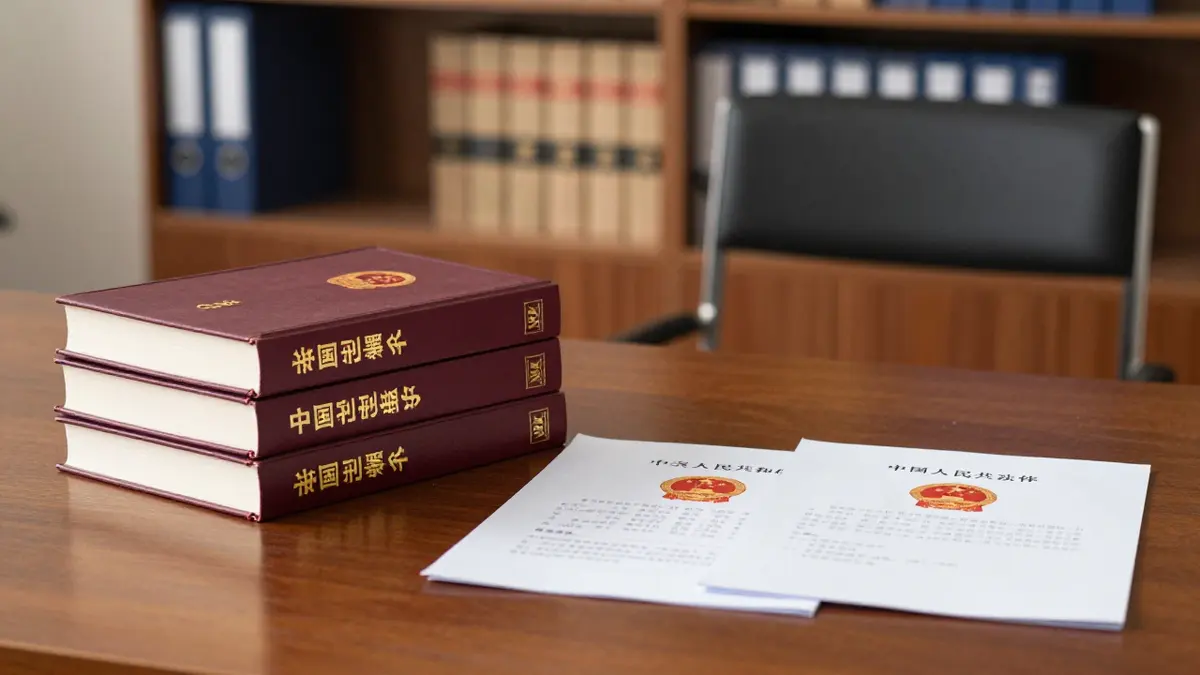

Many criminal defendants and their families in China hold a fixed misconception: causing a minor injury (Grade 1 minor injury, or qingshang yiji) in an assault automatically means prison time and a criminal record. In practice, Chinese courts regularly grant suspended sentences in minor injury cases when certain conditions are met. Understanding these conditions is essential for anyone facing such charges.
The Legal Foundation
Under Article 234 of the PRC Criminal Law, intentional infliction of minor injury carries a penalty of up to three years imprisonment, criminal detention, or public surveillance. The maximum sentence of three years is significant because it falls within the scope of China's probation system. Article 72 of the Criminal Law provides that a suspended sentence may be granted when the sentence imposed is three years or less and the defendant meets certain criteria. The court evaluates both the nature of the offense and the defendant's personal circumstances, including whether there is a risk of re-offending and whether the suspension would have a negative impact on the community.
Four Key Conditions for Probation
First, the defendant must be a first-time offender with no criminal record. Courts have significant discretion to grant probation to individuals who have no prior convictions and whose offense was situational rather than premeditated. Second, the defendant must voluntarily confess guilt and accept punishment. Signing a confession and acceptance of punishment statement and demonstrating sincere remorse are important mitigating factors. Third, the defendant must reach a settlement with the victim and obtain a letter of forgiveness. Compensation for medical expenses, lost income, and emotional distress, followed by a formal forgiveness letter from the victim, significantly increases the likelihood of probation.
Additional Conditions and Judicial Considerations

- FAILURE MODES
- Minor injury and the charged article
Fourth, the court considers whether the defendant has complied with all pre-trial conditions, including bail restrictions and court appearances. Fifth, the nature and circumstances of the offense matter: cases where the victim provoked the altercation, or where the defendant acted in self-defense or with excessive self-defense, are more likely to receive a suspended sentence. Chinese courts also examine the defendant's community ties, employment status, and family responsibilities when deciding whether probation is appropriate. Under Article 74 of the Criminal Law, recidivists and leaders of criminal groups are expressly excluded from probation eligibility, regardless of the sentence length.
Sentencing Guidelines and Case Examples
The Supreme People's Court sentencing guidelines for minor injury cases provide a structured framework for judges. For Grade 1 minor injury, the baseline sentence is 6 to 18 months imprisonment. Mitigating factors such as victim forgiveness, full compensation, and first-offender status can reduce the sentence by 20 to 50 percent, often bringing it within the three-year threshold for probation eligibility. Aggravating factors such as use of a weapon, assault on a vulnerable person, or commission of the offense in a public place can increase the baseline by 10 to 30 percent. In representative cases from Hubei courts, defendants who promptly compensated victims and obtained written forgiveness received suspended sentences in approximately 60 percent of minor injury cases where no weapon was used and the victim sustained Grade 1 injuries.
Strategic Defense Approach
Defense counsel should begin working on these conditions immediately after taking the case. Early confession, proactive compensation, and victim reconciliation are the most effective strategies for avoiding a custodial sentence. The compensation negotiation should be handled through formal channels with proper documentation, as courts require written settlement agreements and notarized forgiveness letters. Defense counsel should also prepare a comprehensive sentencing submission addressing each of the Article 72 criteria, supported by character references, employment records, and evidence of community ties. Sun Yubo at Hubei Shennong Law Firm in Suizhou has extensive experience in criminal defense, including minor injury cases, bail applications, and pretrial detention review. His practice includes guiding clients through the victim compensation process and preparing the documentation needed to support a probation application before the court.
Criminal Procedure Application Notes
I prefer early written notices and clean evidence indexes over informal WeChat-only chains when the amount or regulatory exposure is material.
I convert complex Chinese procedure into a dated checklist with owners for translation, notarization, and internal sign-off across time zones.
- Documented objectives and preferred remedies
- Bilingual document control
- Deadline and limitation tracking
- Enforcement and settlement options in parallel
Operational Checklist for Foreign Readers
I build the strategy around collection and interim leverage first—assets, licenses, receivables, and protective measures—so a paper win is not the only end state.
- Mandate letter covering scope and outcomes
- Bilingual document control
- Deadline and limitation tracking
- Enforcement and settlement options in parallel
Risk Controls Before Escalation
Enforcement feasibility shapes my advice from day one: attachable assets, license exposure, receivables, and interim relief sit beside the merits analysis.
I document scope, assumptions, and decision rights at engagement start so foreign clients know what will be filed, who must approve, and when silence becomes a missed deadline.
- Agreed work plan and remedy path
- Bilingual document control
- Deadline and limitation tracking
- Enforcement and settlement options in parallel
Implementation Detail 1
I treat collectability and interim protection as core design inputs, not afterthoughts, so counsel work supports outcomes that can be executed in China.
- Written engagement scope and remedy options
- Bilingual document control
- Deadline and limitation tracking
- Enforcement and settlement options in parallel
Investigation-Stage Priorities
The Legal Rule
In China, treat avoiding prison time for minor injury charges as a question of four conditions for probation. Naming the city does not replace the papers, approvals or forum that actually control the outcome.
The Business Impact
In China, confirm the documents, authority and local filings for this avoiding prison time for minor injury charges matter before you pay, transfer or sue. The city name is not a substitute for the file.

- Avoiding Prison Time for Minor Injury Charges in China: Four Conditions for Probation — process. Avoiding Prison Time for Minor Injury Charges in China: Four Conditions for Probation —; sequence; Criminal Procedure Application Notes; Test the four conditions; Document compensation; Counsel-led submissions.
- Avoiding Prison Time for Minor Injury Charges in China: Four Conditions for Probation — process.
- Seek a suspended sentence
- Early days decide detention risk and narrative shape more than later eloquence.
- Unplanned written statements can fill gaps for investigators; counsel should structure cooperation.
- Company cases need clarity on who is a witness versus a suspect.
- Parallel civil and regulatory tracks should be mapped immediately.
- Foreign nationals need border-risk and bilingual family briefings.
What Families Should Send First
Any summons or detention notice, known investigating authority, suspected legal provisions if stated, a short timeline, and contact details for trial counsel if already retained.
This section is provided to help readers convert general legal information into an action list. It is not a substitute for advice on a specific matter; local procedure, evidence quality and counterparties’ positions can change the correct next step.
Discussion
Share experience or questions about this topic. This is a public discussion — not legal advice. Do not post confidential case details.
Have a question after reading? Leave it here, or Ask a Lawyer for a free initial intake.
Comments are moderated. China Legal Portal is a directory and information resource; no attorney–client relationship is formed by posting here.