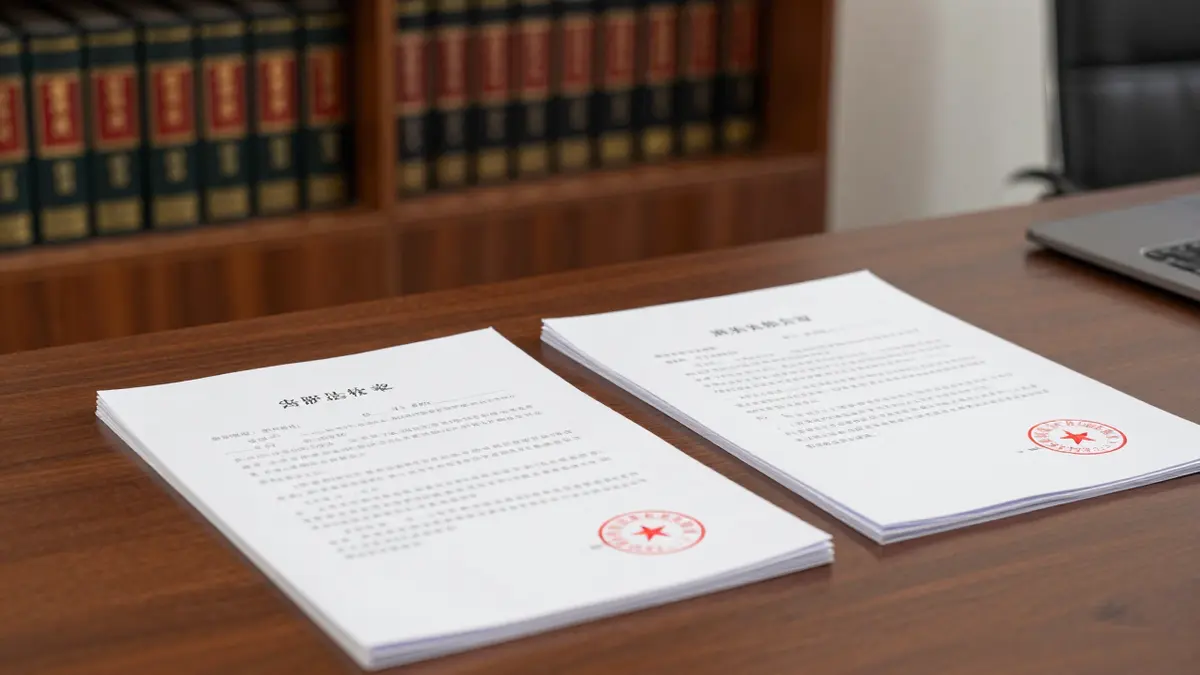

Civil litigation in Chinese courts follows a structured procedure that differs in important respects from common law jurisdictions. Understanding the court hierarchy, filing requirements, evidence rules, and timeline of a civil lawsuit is essential for anyone who may need to resolve commercial or personal disputes through the Chinese judicial system.
Court Hierarchy and Jurisdiction
The Legal Rule
Understanding the court hierarchy, filing requirements, evidence rules, and timeline of a civil lawsuit is essential for anyone who may need to resolve commercial or personal disputes through the Chinese judicial system.
The Business Impact
Preserve contemporaneous documents, confirm forum and limitation timing, and decide early whether asset or evidence preservation is needed. Delay can remove procedural options even when the underlying claim remains strong. Apply that to the facts of Civil Litigation Procedure in Chinese Courts.
China has a four-tier court system consisting of the Supreme People's Court, 31 High People's Courts at the provincial level, approximately 400 Intermediate People's Courts, and over 3,000 Basic People's Courts. Most civil cases begin at the Basic People's Court level, which has jurisdiction over claims up to 5 million yuan in most jurisdictions, though this threshold varies by province. Intermediate People's Courts handle cases above the threshold, foreign-related disputes, intellectual property cases, and cases where the subject matter spans multiple Basic Court jurisdictions. Parties may agree on jurisdiction through a contractual choice of court clause, provided the chosen court has a connection to the dispute and the clause does not violate mandatory exclusive jurisdiction rules.
Certain matters, such as real estate disputes, are subject to exclusive jurisdiction at the court where the property is located. Filing in the wrong court will result in the complaint being rejected or transferred, causing significant delays. Foreign parties should pay careful attention to jurisdiction clauses in their contracts and ensure that the designated court is both accessible and has the capacity to handle foreign-related cases. Some Basic People's Courts in smaller cities may have limited experience with foreign-related litigation, making an Intermediate People's Court in a major city a more practical choice for disputes involving foreign parties.
The Litigation Process

- FAILURE MODES
- Jurisdiction and exclusive clauses
A civil lawsuit in China begins with the plaintiff filing a complaint and supporting evidence with the court. The court reviews the filing within seven days and either accepts the case or issues a written ruling of rejection that can be appealed. After acceptance, the court serves the complaint on the defendant, who has 15 days to file a written defense. The court then schedules a pre-trial conference or mediation session, followed by the trial itself. Chinese civil procedure follows an inquisitorial rather than adversarial model, meaning the judge plays an active role in examining evidence and questioning witnesses. Trials consist of a court investigation phase where evidence is presented, followed by a court debate phase where parties present legal arguments.
Most civil trials do not involve juries, with cases heard by a single judge or a collegial panel of three judges. Witness testimony is generally given less weight than documentary evidence in Chinese courts, making written contracts, receipts, and official records critical to any case. The court encourages mediation throughout the process, and a mediated settlement agreement has the same enforceability as a court judgment. Mediation can occur at any stage of the proceedings, and many judges actively encourage parties to explore settlement before proceeding to trial. A mediated settlement can save significant time and costs compared to a fully litigated judgment.
Evidence Rules and Discovery
Chinese civil procedure does not have broad pre-trial discovery as in common law jurisdictions. Each party submits their evidence with their initial pleadings or at a court-directed evidence exchange session. Evidence must be submitted within a specified time limit set by the court, typically 30 days from acceptance. Late-submitted evidence may be rejected unless the party can show good cause. Types of evidence recognized include documentary evidence, physical evidence, audio-visual recordings, electronic data, witness testimony, expert conclusions, and inspection records. Electronic evidence, including emails, WeChat messages, and electronic contracts, is explicitly recognized under Chinese law since the 2019 amendments to the Civil Procedure Law.
Electronic evidence must be authenticated, and courts may require the party presenting it to demonstrate integrity through notarization or forensic examination. WeChat chat records should be presented with sender profile information and complete chat history to be admissible. Foreign parties should be aware that documents originally in English must be translated into Chinese by a certified translator and the translations notarized to be admissible in Chinese courts. The party submitting the translation must also submit the original foreign-language document alongside the translation. This process adds time and cost to litigation preparation and should be factored into the litigation timeline and budget.
Timeline, Costs, and Appeals
Civil litigation in China is generally faster than in many Western jurisdictions. A case applying ordinary procedure should be concluded within six months, extendable by another six months with court approval. Summary procedure cases must be concluded within three months. The first-instance judgment may be appealed to the next higher court within 15 days of service, and the appeal court must issue its decision within three months. Court costs are relatively low, calculated as a percentage of the claim amount on a sliding scale, with the losing party typically bearing the costs. Attorney fees are not automatically recoverable from the losing party unless the contract specifically provides for it.
Enforcement of judgments is handled through attachment of bank accounts, seizure of property, and freezing of assets. China's social credit enforcement system imposes travel restrictions and other penalties on judgment debtors who fail to comply with court orders, creating a powerful incentive for voluntary compliance. Judgment debtors may be placed on a blacklist that prevents them from purchasing airline or high-speed train tickets, obtaining bank loans, or registering property transfers. These enforcement measures have made Chinese court judgments increasingly effective in practice, particularly against Chinese companies and individuals who depend on these services for their business and personal activities.
Dispute Resolution Application Notes
My case plan tests enforceability early—asset location, license pressure points, receivable chains, and interim tools—before heavy spend on pure merits briefing.
I document scope, assumptions, and decision rights at engagement start so foreign clients know what will be filed, who must approve, and when silence becomes a missed deadline.

- Civil Litigation Procedure in Chinese Courts — process.
- Pick forum and defendants
- Apply interim measures
- Serve correctly
- Trial on the record
- Kickoff scope memo and remedy ladder
- Bilingual document control
- Deadline and limitation tracking
- Enforcement and settlement options in parallel
Operational Checklist for Foreign Readers
I treat bilingual consistency as a risk control: chops, authority documents, and English summaries must tell the same commercial story.
- Documented objectives and preferred remedies
- Bilingual document control
- Deadline and limitation tracking
- Enforcement and settlement options in parallel
Risk Controls Before Escalation
I prefer early written notices and clean evidence indexes over informal WeChat-only chains when the amount or regulatory exposure is material.
- Mandate letter covering scope and outcomes
- Bilingual document control
- Deadline and limitation tracking
- Enforcement and settlement options in parallel
Discussion
Share experience or questions about this topic. This is a public discussion — not legal advice. Do not post confidential case details.
Have a question after reading? Leave it here, or Ask a Lawyer for a free initial intake.
Comments are moderated. China Legal Portal is a directory and information resource; no attorney–client relationship is formed by posting here.