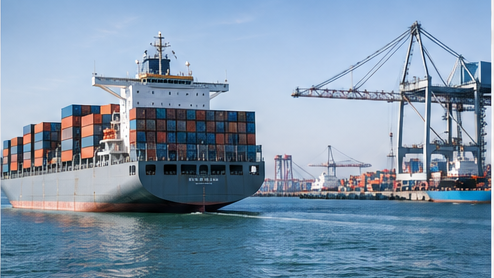

A cargo owner has a USD 4 million claim arising from damage to project cargo. The charterparty and carriage documents point to arbitration outside mainland China, but the vessel is scheduled to call at Xiamen for only forty-eight hours. The claimant is concerned that an eventual arbitral award will be difficult to enforce because the shipowner has few other visible assets. China’s Maritime Procedure Law creates specialized maritime preservation procedures, including vessel arrest, and the Supreme People’s Court has issued detailed rules on arrest and judicial sale.[1][2] The existence of a foreign arbitration clause does not necessarily prevent a Chinese maritime court from granting preservation in support of the claim. But vessel arrest is powerful and risky: the claimant must establish a qualifying maritime claim, select the correct ship and court, provide security where required, and accept potential liability if the arrest is wrongful. The decision therefore needs to be made before the vessel arrives, not while it is already preparing to depart.
The specific problem
The Legal Rule
China’s Maritime Procedure Law creates specialized maritime preservation procedures, including vessel arrest, and the Supreme People’s Court has issued detailed rules on arrest and judicial sale.
The Business Impact
Check the clause, institution or seat, service mechanics and likely enforcement assets before the dispute matures. A strong claim can still lose leverage if the forum clause is defective or the award has nowhere practical to land. Apply that to the facts of Arresting a Vessel in China to Secure a Maritime Claim Before Foreign Arbitration: Jurisdiction, Security and Wrongful-Arrest Risk.
Qualifying maritime claims, vessel identity and jurisdiction
The first step is legal classification. The Maritime Procedure Law identifies categories of maritime claims for which vessel arrest can be sought.[1] The claimant should map the factual demand to the statutory category rather than assume that every debt owed by a shipowner justifies arrest. Cargo damage, charterparty liabilities, shipbuilding, salvage, collision, certain services and other maritime relationships can fall within the framework depending on the facts. The underlying contract and identity of the liable party matter. Counsel should prepare a concise claim memorandum showing the contract, event, amount, legal basis and connection between the respondent and the vessel. If the claim is against a charterer rather than the registered owner, the statutory rules on which vessel may be arrested become especially important. The applicant should also confirm whether the claim is already secured by a P&I club undertaking, bank guarantee or other security. Arrest is generally a means of obtaining security, not a mechanism for imposing unnecessary commercial pressure after adequate security has already been provided.
Shipping structures are often layered. The vessel may be owned by a single-purpose company, managed by another entity and chartered by the contractual counterparty. The claimant needs current evidence of: The main points are registered owner, bareboat charter status, vessel name and IMO number, expected port and arrival time, relevant mortgages, and relationship to the liable party. The Maritime Procedure Law contains specific conditions governing which vessels can be arrested for particular maritime claims.[1] An arrest application built on an outdated database entry can fail or create wrongful-arrest exposure. Bareboat charter cases deserve particular attention. The Supreme People’s Court’s arrest rules address circumstances in which a vessel may be arrested for claims for which the bareboat charterer is responsible and the implications for later judicial sale.[2] Counsel should obtain fresh registry and port information and avoid relying solely on commercial vessel-tracking platforms. The ship can change name or ownership, and the legal identity—not only the physical vessel—is decisive.
China has specialized maritime courts. The arrest application must be directed to a maritime court with the relevant statutory territorial basis, commonly connected to the vessel’s location or expected location under the Maritime Procedure Law.[1] Timing is operational. If the ship will call at Xiamen, local counsel should prepare the filing before arrival so that documents, translations, powers of attorney and applicant security are ready. the claimant needs to provide accurate estimated arrival and departure data. A court cannot effectively arrest a vessel that has already sailed beyond its jurisdiction. Foreign claimants also need to plan corporate authorization and evidence formalities. Depending on the documents and procedural requirements, notarization, legalization or apostille-related steps may need attention. The team should not discover those requirements on the morning of the port call.
The maritime court’s preservation jurisdiction should be distinguished from the forum deciding the merits. A claimant can seek security in China while maintaining the foreign arbitration agreed by the parties, subject to the procedural rules and the specifics of the case.
Applicant security and release security
The Supreme People’s Court’s 2015 provisions state that a maritime claimant applying for vessel arrest generally must provide security, with specified exceptions for certain crew and personal-injury claims where the facts and rights are clear.[2] The purpose is to protect the shipowner against losses if the arrest proves wrongful. The required amount can reflect vessel-maintenance costs, schedule loss and expenses associated with providing release security. The court may require additional security if the original amount becomes insufficient.[2] A claimant should therefore determine before filing: The analysis turns on available bank guarantee or insurer security, cash requirements, expected arrest duration, vessel daily earning exposure, and cost of maintaining the ship. A commercially valid claim can still be a poor arrest candidate if the applicant cannot provide acceptable security in time.
The legal team should also estimate downside exposure. An arrest that prevents a high-value vessel from performing a charter can generate substantial claimed losses. At that stage, the claimant can be confident in both legal entitlement and factual identification before taking that risk. The purpose of arrest is usually to obtain security for the maritime claim. The shipowner may offer a bank guarantee, P&I club letter of undertaking or other security to secure release. The claimant should decide its acceptance criteria before negotiations begin. Key terms include: The critical items are amount, currency, guarantor, governing law, expiry, covered claim and interest, forum for enforcement, and relationship to arbitration. A poorly drafted letter of undertaking can create a second dispute. The security should not expire before the arbitration and enforcement process can reasonably conclude. The amount should also be proportionate. A claimant cannot assume it is entitled to security for every speculative consequential loss. The demand should reflect the pleaded maritime claim, interest and reasonable costs.
Once adequate agreed security is provided, continued detention can increase wrongful-arrest risk and commercial pressure without adding legal value. An arbitration clause should be reviewed before the arrest application is drafted. The application should make clear that the claimant seeks maritime preservation rather than a merits determination inconsistent with the arbitration agreement. Chinese procedural law and maritime practice recognize court support for arbitration through preservation measures in appropriate cases.[1] counsel needs to ensure that pleadings in China do not accidentally waive or contradict the arbitration position abroad. The arbitration should also be commenced within any contractual or statutory time limits. Arrest is not a substitute for pursuing the merits. Counsel should coordinate the Chinese preservation file with arbitration counsel so that the claim amount, factual theory and responsible parties are described consistently. A large discrepancy between the arrest affidavit and arbitration pleading can be exploited by the respondent.
Where several contracts contain different arbitration clauses, the claimant needs to identify which claim is being secured and avoid using one vessel arrest to obtain security for unrelated disputes.
Foreign arbitration, wrongful-arrest risk and evidence preservation
Vessel arrest can exert significant pressure because delay is expensive. That does not mean the procedure should be used primarily to force settlement of a weak or unrelated claim. The applicant should test at least four risks: The sequence is the claim is not a qualifying maritime claim; the wrong vessel or owner is targeted; the claimed amount is materially overstated; and the arrest continues after adequate security is offered. The respondent may seek compensation for losses caused by an improper arrest under applicable law and procedure. The applicant security exists partly to protect against that outcome. Internal emails should therefore avoid language suggesting that the purpose is simply to “trap the ship until they pay.” The decision paper should record the legal basis, enforcement concern and proportionality of the arrest. A well-founded arrest is a security measure. Treating it as commercial punishment increases both legal and reputational risk.
Assume a Chinese project company ships specialized machinery under a voyage charter. Heavy weather and alleged stowage failures cause damage. The charterparty provides Singapore arbitration. The owner’s vessel later schedules a Xiamen call. The claimant estimates repair and delay losses at USD 4 million. Before filing, Xiamen counsel should verify the vessel’s registered ownership, establish the maritime nature of the cargo claim, collect survey and carriage documents, prepare applicant security and coordinate the claim description with Singapore arbitration counsel. If the court arrests the vessel and the owner offers a reputable bank guarantee for an agreed amount covering principal, interest and reasonable costs, At that stage, the claimant can evaluate release promptly. The claimant should not use the arrest to demand security for unrelated disputes with another company in the same shipping group. The arbitration then decides liability and quantum while the Chinese security protects eventual enforcement. Maritime preservation works best as a planned process. the claimant needs to maintain a ready file containing:
The core diligence set covers contracts and bills of lading, survey evidence, claim calculation, respondent corporate information, vessel data, power of attorney, translations, applicant security documents, and draft release-security terms. The operational team should monitor the vessel’s port schedule but legal filing should rely on authoritative information where available. If a vessel call is cancelled, At that stage, the claimant can reassess rather than rush to arrest a different vessel without statutory basis. The decision to arrest should be reviewed again immediately before filing because ownership, security offers and arbitration developments can change.
Sister ships, P&I undertakings and substitute security
A claimant may discover that the ship directly connected with the dispute is not calling China, while another ship associated with the same commercial group is in port. It is tempting to treat the second ship as equivalent security. That assumption can be dangerous. The Maritime Procedure Law contains specific rules concerning the vessels that may be arrested for a maritime claim.[1] Corporate affiliation, common management or shared branding does not automatically mean that any vessel in the group can be detained. Counsel should identify the legal owner at the time the claim arose and at the time of arrest, the relationship of the liable party to the vessel and whether the statutory conditions for arrest of another vessel are satisfied. Shipping groups frequently use separate single-purpose owning companies. A claimant that ignores those entities can expose itself to wrongful-arrest claims.
The internal arrest memorandum should therefore state why the identified ship—not merely the group—is legally arrestable. If the statutory basis is uncertain, the claimant should consider other assets or preservation routes rather than rely on corporate-group appearance. In maritime practice, a protection and indemnity club may offer a letter of undertaking to secure release of the vessel. the claimant needs to not reject a reputable club undertaking merely because it prefers cash, but it should review the wording carefully. Important points include: The most important elements are identity and financial standing of issuer, maximum amount, interest and costs, law and jurisdiction, automatic adjustment if claim increases, duration, and conditions for payment. The undertaking should secure the same dispute that will proceed in arbitration. If the arbitration clause covers several contracts, the security wording should avoid unnecessary ambiguity. At that stage, the claimant can also understand whether the undertaking is conditional on a final award, settlement or other event and whether it remains effective during set-aside or enforcement proceedings.
Negotiating the LOU is often the commercially decisive stage of a vessel arrest. The shipowner wants release; the claimant wants dependable security. Both sides benefit from precise language because continued detention is expensive. A cargo or vessel dispute may require survey, inspection or document preservation while the ship is present. The claimant should consider whether maritime evidence preservation or other court-supported measures are needed in addition to arrest under the Maritime Procedure Law.[1] Potential evidence includes: The practical focus is on logbooks, cargo records, stowage plans, maintenance records, electronic data, and damaged cargo or equipment. The legal team can more effectively define exactly what evidence is relevant and why it may be lost. Overbroad requests can delay action and increase resistance. Independent surveyors should be coordinated with counsel so that chain of custody and expert methodology are defensible.
Where foreign arbitration will decide the merits, the evidence preserved in China should be collected in a form that arbitration counsel can use. The Chinese court application and arbitration evidence strategy should therefore be coordinated before the ship leaves.
Judicial sale, enforcement economics and international recovery
If the vessel owner cannot or will not provide security and the arrest continues, the claimant may eventually consider judicial sale under the maritime procedure framework. The Supreme People’s Court rules address arrest, management and sale, including distribution priorities.[2] Judicial sale is much more consequential than obtaining temporary security. The vessel may have mortgages, maritime liens, crew claims and other creditors. A claimant should assess: The main points are vessel market value, mortgage debt, ranking claims, arrest costs, likely sale proceeds, and competing arrests. The first arresting claimant is not necessarily the first economic beneficiary. Distribution follows legal priority, and a heavily mortgaged vessel may provide less security than its headline value suggests. Before seeking sale, counsel should obtain registry and creditor information and estimate net recovery. In some cases, accepting reasonable security or settling can produce a better outcome than forcing a sale that attracts multiple higher-ranking claims.
Shipping and project contracts should identify the parties accurately, including registered company names and addresses. A claimant cannot easily arrest assets when the contract uses only a trade name that obscures the real owner or charterer. The contract should also contain a clear arbitration clause, service details and security provisions where commercially appropriate. Some agreements provide that a party receiving a maritime claim must furnish reasonable security without forcing arrest. Such a clause can reduce disruption, though its enforceability and interaction with local procedure should be reviewed. Companies that frequently charter vessels or ship project cargo should maintain counterparty ownership records and monitor changes in the operating group. Those records make emergency preservation faster. Arrest strategy begins with contract and counterparty diligence long before a dispute. A vessel is a visible and valuable asset, but arrest is not always the cheapest or safest way to secure a claim. the claimant needs to ask whether the respondent has:
The analysis turns on bank accounts, cargo, receivables, insurance security, and another agreed form of guarantee. If a reliable asset can be preserved with less disruption, the claimant may reduce wrongful-arrest exposure and security cost. The decision should consider the vessel’s charter status and daily earnings. Detaining a high-value liner or project vessel can create much greater claimed loss than arresting a lower-earning asset. A written preservation comparison is especially useful for corporate claimants and insurers because it shows that vessel arrest was selected for enforcement reasons rather than as punitive leverage.
Operational arrest readiness and release procedure
At that stage, the claimant can decide how the eventual arbitral award will be converted into payment. If the security is a China-law bank guarantee, enforcement may differ from enforcement of the foreign award itself. If it is a club undertaking governed by English law, the claimant should understand the payment mechanism and forum. The arbitration team should also preserve the New York Convention enforcement route if assets beyond the security later become relevant. Security negotiations should therefore include counsel who understands the merits forum and the enforcement instrument. A vessel arrest can solve the asset problem only if the substitute security is itself dependable. Once security is agreed, the vessel may need to sail immediately. Release communications should therefore identify the case, vessel, accepted security and authority of the person instructing release. the claimant needs to confirm that the guarantee or undertaking is effective before consenting to release. Drafts, unsigned PDFs or conditional bank messages should not be treated as final security.
The file should preserve the court order, release request, executed security and confirmation that the vessel was released. If a later dispute arises about whether the claimant delayed release after receiving acceptable security, those timestamps can become important. Maritime preservation is therefore a two-stage process: obtaining security and relinquishing the ship promptly once the agreed substitute security is actually in place. A final practical issue is ownership change while arrest preparations are underway. Vessel ownership and charter status can change quickly in international shipping. Counsel should refresh registry and port information immediately before filing and again before any request for judicial sale. If a transaction involving the ship has occurred, the statutory arrest analysis may change. At that stage, the claimant can also preserve the historical ownership evidence relevant to the time the maritime claim arose, because the legal connection between claimant, debtor and vessel can depend on both past and current status.
The claimant should also coordinate arrest strategy with insurers and financiers that may have subrogation or security interests in the claim. If a cargo insurer has paid part of the loss, the parties should identify who has standing to seek security and how any recovery will be allocated. Conflicting claims by insured and insurer can complicate both the arrest application and later arbitration if they are not clarified before filing.
Conclusion
Vessel arrest in China can be an effective way to secure a maritime claim that will ultimately be decided in foreign arbitration. China’s Maritime Procedure Law provides the preservation framework, while the Supreme People’s Court’s arrest rules address applicant security, management and judicial sale.[1][2] The power of arrest makes preparation essential. The claimant needs a qualifying maritime claim, the correct vessel, a court able to act while the vessel is present, acceptable applicant security and a clear plan for release security. The decisive point is: prepare the arrest as an enforcement-security project before the ship arrives, and preserve the foreign arbitration by keeping the Chinese application focused on property rather than merits.
Legal and regulatory sources
[1] Maritime Procedure Law of the People’s Republic of China, including the maritime claim preservation and vessel-arrest provisions: https://www.gqb.gov.cn/node2/node3/node5/node9/node110/userobject7ai1383.html [2] Supreme People’s Court, Provisions on Several Issues Concerning the Application of Law in Arrest and Judicial Sale of Ships, effective March 1, 2015: https://www.court.gov.cn/fabu/xiangqing/13551.html
General legal information only; not legal advice for a particular maritime claim.
Discussion
Share experience or questions about this topic. This is a public discussion — not legal advice. Do not post confidential case details.
Have a question after reading? Leave it here, or Ask a Lawyer for a free initial intake.
Comments are moderated. China Legal Portal is a directory and information resource; no attorney–client relationship is formed by posting here.