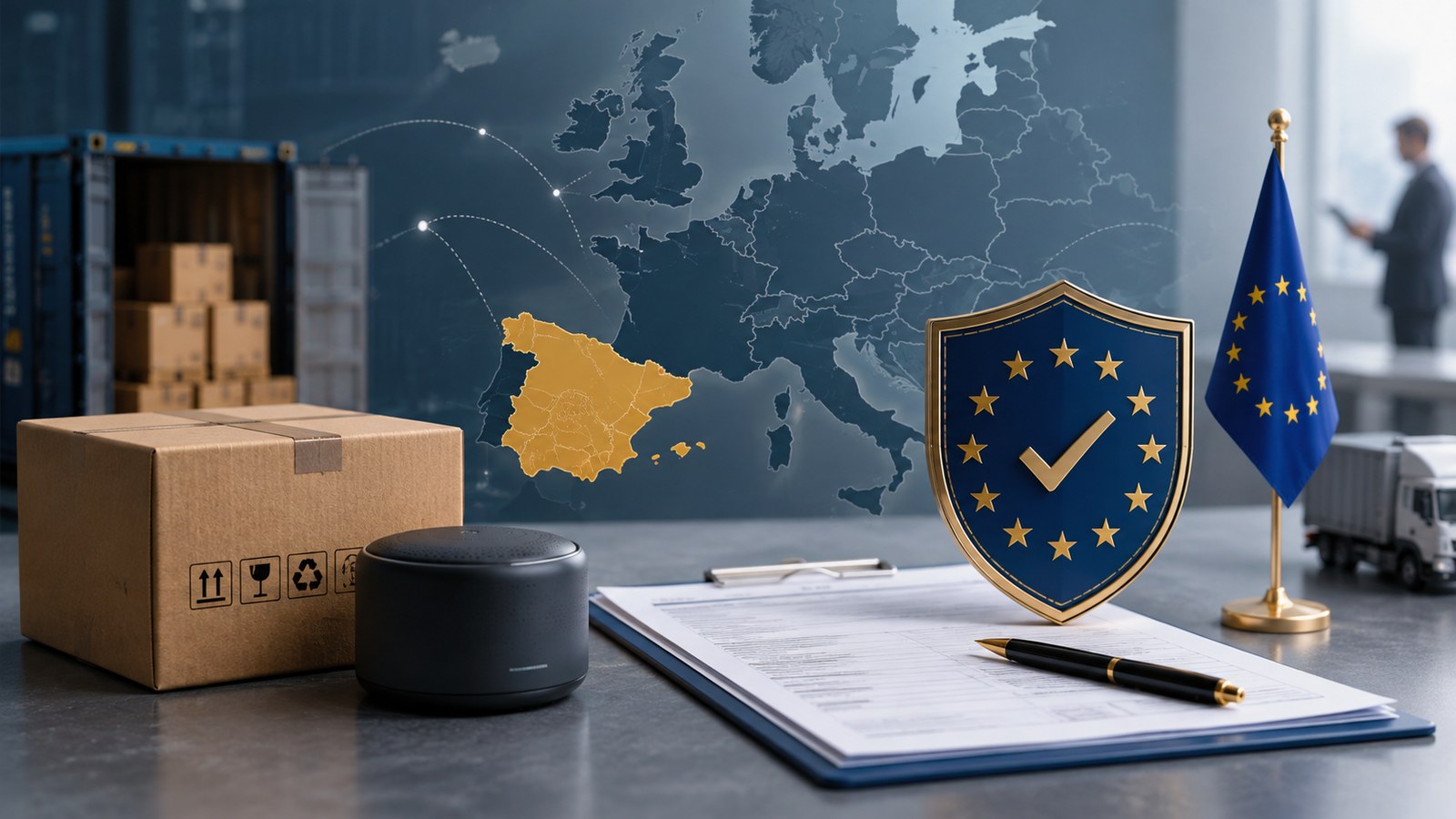

Turkey's e-commerce import regime requires foreign sellers to comply with customs classification, product safety documentation, and consumer protection obligations under Law No. 6563. Chinese marketplace sellers must navigate simplified clearance for low-value consignments while maintaining full compliance with documentation requirements for regulated product categories.
Turkish Customs Procedures for E-Commerce Imports
The Legal Rule
Turkey's e-commerce import regime requires foreign sellers to comply with customs classification, product safety documentation, and consumer protection obligations under Law No.
The Business Impact
Confirm classification, origin evidence, the preference claim and importer-side formalities. Pricing the deal on an assumed tariff rate is risky if the documentary conditions are not met at clearance. Apply that to the facts of Cross-Border E-Commerce Customs Clearance in Turkey for Chinese Sellers.
Turkey applies a simplified customs clearance regime for e-commerce consignments valued under EUR 1,500, requiring only a customs declaration and commercial invoice without full customs broker representation. However, product safety documentation requirements apply regardless of value, and regulated products including electronics, cosmetics, toys, and food contact materials require conformity assessment certificates even for low-value consignments. The Turkish Ministry of Trade requires cross-border e-commerce operators to appoint a legal representative in Turkey, maintain transaction records for three years, and comply with consumer protection rules regarding withdrawal rights, product guarantees, and dispute resolution. Non-compliance can result in access blocking orders and administrative fines calculated on the value of non-compliant transactions.
Chinese e-commerce sellers must ensure correct tariff classification under the Turkish Customs Tariff Schedule, consistent valuation methodology, and complete product documentation for each consignment. Classification errors are the most common customs compliance issue found in e-commerce imports, resulting in clearance delays, additional duty assessments, and administrative penalties. Mr. Yilmaz advises Chinese clients on establishing consistent classification practices and maintaining the documentation required to support their declared classifications during customs audits.
Market Entry Strategy and Platform Compliance
Chinese e-commerce sellers entering the Turkish market should establish a structured market entry framework addressing customs compliance, product certification, consumer protection obligations, and logistics arrangements before listing products on Turkish marketplace platforms. Turkish marketplaces including Hepsiburada, Trendyol, and n11.com impose their own compliance requirements on foreign sellers, including mandatory Turkish-language product descriptions, local customer service availability during business hours, and compliance with Turkish distance selling regulations. Mr. Yilmaz provides market entry advisory services that include platform compliance assessment, customs brokerage arrangements, and logistics partner due diligence.

- trade-and-customs-blog · article 1872
- TRADE / CUSTOMS MAP
- ENTRY FAILS
Consumer Protection Compliance for E-Commerce
Turkish consumer protection law grants consumers a 14-day withdrawal right for distance purchases without any justification, applicable to all e-commerce transactions including cross-border purchases from Chinese sellers. Sellers must provide clear information about the withdrawal right, a withdrawal form template, and instructions for returning goods. The seller must reimburse the full purchase price including delivery costs within 14 days of receiving the withdrawal notice. Non-compliance with the withdrawal obligation can result in administrative fines and negative marketplace platform ratings that affect sales performance. Mr. Yilmaz advises Chinese e-commerce sellers on implementing compliant withdrawal procedures, including Turkish-language withdrawal forms, return logistics arrangements with Turkish fulfillment providers, and reimbursement process documentation.
Cross-Border E-Commerce Taxation and Customs Valuation
Turkish customs authorities assess customs duty, VAT, and any applicable special consumption taxes on e-commerce imports based on the declared customs value of the goods. The customs value for e-commerce consignments is typically the transaction value reflected in the commercial invoice, subject to adjustments for shipping and insurance costs. Turkish VAT at the standard rate of 20% applies to the customs value plus duty amount. Chinese sellers must ensure that their commercial invoices accurately reflect the transaction value, shipping costs, and product classification to avoid customs clearance delays and post-clearance valuation adjustments.
Conclusion: Market Entry Strategy
Chinese e-commerce sellers entering the Turkish market should establish a structured market entry framework addressing customs compliance, product certification, consumer protection obligations, and logistics arrangements before listing products on Turkish marketplace platforms. The framework should include correct tariff classification under the Turkish Customs Tariff Schedule, complete product documentation for regulated product categories, compliant withdrawal procedures under Turkish distance selling regulations, and established customs brokerage and logistics arrangements. Mr. Yilmaz provides comprehensive market entry advisory services covering customs compliance review, platform compliance assessment, and logistics partner selection, ensuring that Chinese sellers enter the Turkish market with a clear understanding of their regulatory obligations and a structured plan for maintaining compliance as their sales volumes grow.
Cross-border e-commerce sellers should also understand the Turkish personal data protection requirements under Law No. 6698 on Protection of Personal Data, which applies to processors of Turkish residents' personal data regardless of where the processor is established. E-commerce platforms must register with the Turkish Data Protection Authority, maintain data processing records, and implement data security measures for customer information. Chinese sellers collecting personal data from Turkish customers through their marketplace operations should ensure compliance with Turkish data protection requirements including data processing consent, data retention limitations, and data breach notification obligations.
Logistics and Fulfillment for E-Commerce
Chinese e-commerce sellers should establish logistics arrangements with Turkish fulfillment partners who understand the customs clearance requirements for e-commerce consignments and can manage the product return process required under Turkish consumer protection law. Turkish customs brokers specializing in e-commerce imports can provide customs clearance services for individual consignments or consolidated shipments, managing the documentation and clearance procedures for efficient delivery to Turkish customers. Mr. Yilmaz maintains a network of vetted logistics partners and customs brokers who specialize in e-commerce imports from China. He advises Chinese sellers on the selection of logistics partners based on their product categories, shipment volumes, and delivery speed requirements.
The logistics partner should provide real-time shipment tracking, customs clearance status updates, and delivery confirmation that enable Chinese sellers to monitor their Turkish operations and respond promptly to customer inquiries. Fulfillment partners based in Istanbul's e-commerce logistics hubs can manage warehousing, order picking, and last-mile delivery for Chinese sellers who maintain inventory in Turkey, reducing delivery times and improving the customer experience.

- Process flow: Cross-Border E-Commerce Customs Clearance in Turkey for Chinese Sellers.
Chinese e-commerce sellers should also understand the Turkish Competition Authority's oversight of marketplace platform practices affecting foreign sellers. The Competition Authority has investigated marketplace platforms for practices that may disadvantage foreign sellers including search ranking algorithms, advertising fees, and return policy requirements that differ from those applicable to domestic sellers. Mr. Yilmaz monitors competition enforcement developments affecting cross-border e-commerce and advises Chinese sellers on their rights and obligations under Turkish competition law. Sellers who believe they have been subjected to anti-competitive practices by marketplace platforms may file complaints with the Competition Authority or seek private remedies through the Turkish courts for damages resulting from competition law violations.
The Turkish e-commerce market continues to grow rapidly, driven by increasing internet penetration, mobile commerce adoption, and consumer demand for imported products. Chinese sellers who establish compliant operations in the Turkish market can access a growing consumer base of over 60 million internet users with increasing purchasing power and appetite for quality imported goods across electronics, fashion, home goods, and specialty products categories.
Turkish customs authorities continue to modernize their e-commerce import procedures through digital platforms enabling electronic submission of customs declarations and real-time clearance tracking. Chinese sellers who invest in understanding these digital systems achieve clearance times of 24-48 hours for properly documented low-value consignments. Mr. Yilmaz advises Chinese clients on digital customs procedures and coordinates with Turkish customs brokers specializing in electronic clearance processing.
The Turkish e-commerce market presents substantial growth opportunities for Chinese sellers who invest in regulatory compliance and market-specific operational capabilities. The combination of a young digitally native population of over 60 million internet users and Turkeys strategic location creates a compelling market entry opportunity for Chinese e-commerce businesses.
Chinese e-commerce sellers who establish compliant Turkish operations position themselves to benefit from the rapid growth of cross-border e-commerce in the region. Turkey import regulations continue to evolve with digital trade expansion, creating new compliance requirements that sellers must understand to maintain smooth operations.
Discussion
Share experience or questions about this topic. This is a public discussion — not legal advice. Do not post confidential case details.
Have a question after reading? Leave it here, or Ask a Lawyer for a free initial intake.
Comments are moderated. China Legal Portal is a directory and information resource; no attorney–client relationship is formed by posting here.