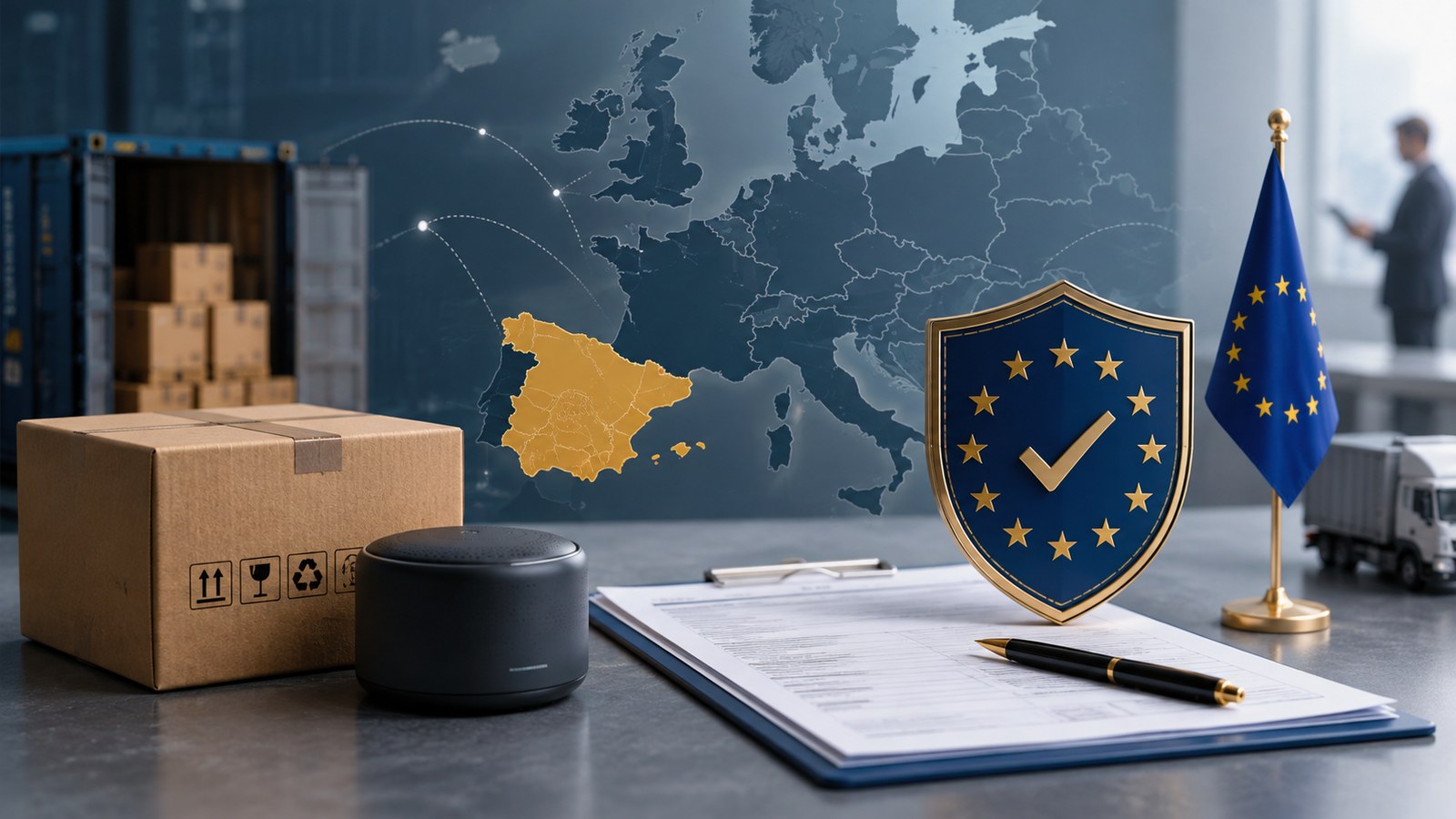

Cross-border e-commerce has become a major channel for international trade in Fujian, with the province's strategic location on the southeastern coast making it an ideal gateway for cross-border commerce. The regulatory framework governing cross-border e-commerce in China has evolved rapidly, creating both opportunities and compliance challenges for businesses operating through this channel. Understanding the customs procedures, tariff structures, and regulatory requirements applicable to cross-border e-commerce is essential for businesses based in Ningde and throughout Fujian.
The Regulatory Framework for Cross-Border E-Commerce
The Legal Rule
In Fujian, treat cross-border e-commerce regulations as a question of customs clearance, tariffs, and compliance. Naming the city does not replace the papers, approvals or forum that actually control the outcome.
The Business Impact
In Fujian, confirm the documents, authority and local filings for this cross-border e-commerce regulations matter before you pay, transfer or sue. The city name is not a substitute for the file.
Cross-border e-commerce in China is governed by a comprehensive regulatory framework involving multiple government agencies. The Ministry of Commerce issues policies on cross-border e-commerce development and regulation, the General Administration of Customs oversees clearance procedures and tariff collection, the State Administration of Taxation determines tax treatment, and the State Administration for Market Regulation enforces product safety and consumer protection standards. The regulatory framework distinguishes between cross-border e-commerce retail imports, also known as B2C imports, and cross-border e-commerce retail exports, or B2C exports. Each channel has its own regulatory requirements, tariff treatment, and operational procedures.
The cross-border e-commerce retail import model allows consumers in China to purchase goods from overseas sellers through approved cross-border e-commerce platforms. Goods imported through this channel must be included on the Cross-Border E-Commerce Retail Import Positive List, which specifies the product categories eligible for the simplified clearance procedure. The positive list covers a wide range of consumer goods, including food, cosmetics, clothing, electronics, household appliances, and personal care products. Products not on the positive list cannot be imported through the cross-border e-commerce retail channel and must be imported through traditional trade channels with full customs clearance and tariff payment.
Customs Clearance and Tariff Treatment
Goods imported through the cross-border e-commerce retail channel benefit from preferential tariff treatment. For qualifying transactions, the tariff rate is reduced to 0% for goods valued under the personal use threshold, and the import VAT and consumption tax are levied at 70% of the statutory rate. This preferential treatment applies to single transactions not exceeding 5,000 RMB and annual cumulative purchases not exceeding 26,000 RMB per individual consumer. Transactions exceeding these limits are subject to full duties and taxes through the traditional trade channel.

- FAILURE MODES
- Tariff: 0% for qualifying cross-border e-commerce retail imports
- VAT: 70% of statutory rate (typically 9% or 13%)
- Consumption tax: 70% of statutory rate for taxable goods
- Single transaction cap: 5,000 RMB per order
| Channel | Duties | Single Limit | Annual Limit |
|---|---|---|---|
| Cross-border retail import | 0% tariff + 70% VAT/CT | 5,000 RMB | 26,000 RMB |
| Traditional trade import | Full duties + full VAT/CT | No limit | No limit |
The Ningde Cross-Border E-Commerce Advantage
Ningde has emerged as an important hub for cross-border e-commerce in Fujian, supported by its growing port infrastructure and the development of the Ningde bonded logistics center. The Ningde Customs District has implemented streamlined clearance procedures for cross-border e-commerce shipments, including paperless declaration, electronic payment of duties and taxes, and expedited clearance for low-risk shipments. The Ningde Municipal Government has established a cross-border e-commerce industrial park that provides warehousing, logistics, and compliance support services for e-commerce businesses.
The cross-border e-commerce bonded import model is particularly well-suited to Ningde's logistics infrastructure. Under this model, goods are shipped in bulk to bonded warehouses in Ningde, where they are stored without payment of duties or taxes until individual consumer orders are placed. When an order is received, the goods are cleared through customs individually, duties and taxes are calculated and paid, and the goods are dispatched for delivery to the consumer. This model significantly reduces shipping times and costs compared to direct shipment from overseas warehouses, as goods are already positioned within China and can be delivered within 2 to 5 days of the order being placed.
Compliance Obligations for Cross-Border E-Commerce Operators
Cross-border e-commerce operators face comprehensive compliance obligations under Chinese law. Platform operators must register with the customs authorities, maintain transaction records for at least three years, implement systems to verify the authenticity of goods, and cooperate with customs in the clearance process. Merchants selling through cross-border e-commerce platforms must ensure that their products comply with Chinese product quality and safety standards, including obtaining the China Compulsory Certification for products in regulated categories. Foreign sellers without a legal presence in China must appoint a Chinese agent or representative to handle customs clearance, tax compliance, and product liability matters.
Data privacy compliance is an increasingly important consideration for cross-border e-commerce operators. The Personal Information Protection Law imposes strict requirements on the collection, storage, processing, and transfer of personal information of Chinese consumers. Cross-border e-commerce operators that collect personal information of Chinese consumers must implement data protection measures, obtain consumer consent for data collection, and conduct a security assessment before transferring personal information outside of China. Attorney Wu advises Ningde businesses engaged in cross-border e-commerce to implement comprehensive compliance programs that address customs clearance, product safety, consumer protection, and data privacy requirements, and to conduct regular compliance audits to identify and address regulatory gaps before they result in enforcement action or customs penalties.
Trade Law Application Notes
I treat bilingual consistency as a risk control: chops, authority documents, and English summaries must tell the same commercial story.
I prefer early written notices and clean evidence indexes over informal WeChat-only chains when the amount or regulatory exposure is material.
- Written engagement scope and remedy options
- Bilingual document control
- Deadline and limitation tracking
- Enforcement and settlement options in parallel
Operational Checklist for Foreign Readers
I convert complex Chinese procedure into a dated checklist with owners for translation, notarization, and internal sign-off across time zones.
- Kickoff scope memo and remedy ladder
- Bilingual document control
- Deadline and limitation tracking
- Enforcement and settlement options in parallel
Risk Controls Before Escalation
Enforcement feasibility shapes my advice from day one: attachable assets, license exposure, receivables, and interim relief sit beside the merits analysis.

- Cross-Border E-Commerce Regulations in Fujian: Customs Clearance, Tariffs, and Compliance — process. Cross-Border E-Commerce Regulations in Fujian: Customs Clearance, Tariffs, and Compliance; — sequence; Choose the channel; Obtain licence/recordal; Declare correctly; Set platform rules.
- Cross-Border E-Commerce Regulations in Fujian: Customs Clearance, Tariffs, and Compliance — process.
- Reconcile returns
- Documented objectives and preferred remedies
- Bilingual document control
- Deadline and limitation tracking
- Enforcement and settlement options in parallel
Discussion
Share experience or questions about this topic. This is a public discussion — not legal advice. Do not post confidential case details.
Have a question after reading? Leave it here, or Ask a Lawyer for a free initial intake.
Comments are moderated. China Legal Portal is a directory and information resource; no attorney–client relationship is formed by posting here.