
Every week, it seems, another client in Guangzhou sits across from me and asks some version of the same question: "If I use an AI assistant such as Doubao to generate an image, a paragraph of copy, or a product concept, am I infringing someone's copyright?" The honest answer is that the act of generation alone is rarely the problem. The risk lives in what goes into the tool and, more importantly, in what you do with what comes out. Under the Copyright Law of the People's Republic of China, whether AI-generated content infringes turns on a small set of concrete factors: the originality of the output, the rights of third parties in the underlying material, and the purpose and manner of the use. This article maps those factors in the context of the current Chinese legal framework, so that creators, technology companies, and content businesses can use generative tools with their eyes open.
Using an AI Tool Is Not Itself an Act of Infringement
Chinese courts have consistently treated the mere generation of content through a machine as a neutral technical act. Prompting a model to produce text or an image does not, in itself, amount to the copying, distribution, or communication that the copyright law reserves to a rightsholder. Article 10 of the Copyright Law enumerates the exclusive rights of a copyright owner, including the rights of reproduction, distribution, exhibition, performance, and information network dissemination. None of those rights is triggered merely by entering a prompt and receiving a response. In practice, therefore, someone who uses Doubao or a similar service to generate original-looking content for private or non-commercial purposes, without imitating an existing work, will generally not be found to have infringed any third-party right.
Infringement becomes plausible only when the generated output embodies protected expression that belongs to someone else, or when the output is used in a way that intrudes on a rightsholder's exclusive sphere. Two situations deserve particular attention. The first is where the user steers the tool to imitate or copy an existing work: instructing a model to replicate a photographer's composition, a designer's style, an illustrator's characters, or a brand's visual identity can produce output that is substantially similar to a protected work, and the user who commissions or publishes that output may bear liability. The second is where the user takes an output generated by someone else and puts it to work without permission. In both cases, the question is no longer about the tool at all; it is about the use, and the use is judged by ordinary copyright principles.
When Unauthorized Use Crosses the Line

- technology-ai-law-blog
- AI COPYRIGHT MAP
- Training data legality
The clearest exposure arises when a person uses a copyrighted image, whether AI-generated or made by human hands, without the owner's authorization. The copyright owner holds the exclusive right to reproduce, distribute, exhibit, and disseminate the work through information networks under Article 10 of the Copyright Law. Anyone who exercises those acts without a licence commits infringement unless a statutory defence applies, and the unauthorized commercial use of an AI-generated image is a textbook example of such exposure. It is a common misconception that machine-made images are ownerless; in law, they are not.
This is not a theoretical risk. In the landmark 2023 ruling of the Beijing Internet Court, widely discussed among IP practitioners as the first Chinese judgment to recognize copyright in an AI-generated image, the plaintiff had invested genuine creative effort in the process: selecting a model, composing prompts and negative prompts, adjusting parameters, and choosing among outputs. The court held the resulting image protectable as a work of fine art and recognized the plaintiff as its author. The defendant, who had taken the image from an online platform and used it to illustrate an article, removing the watermark in the process, was ordered to cease the infringement, apologize, and pay damages. The lesson for businesses is direct: an AI-generated image can be someone's property, and treating it as free content is precisely the mistake the law punishes.
Commercial use raises the stakes further. Using AI-generated images in advertising, product packaging, or corporate branding without verifying the provenance of the material, and without the licence that commercial exploitation requires, materially increases both the likelihood of an infringement finding and the quantum of damages. By contrast, private, non-commercial use that does not collide with the legitimate interests of a rightsholder is far less likely to attract liability. The same act, carried out for profit, is judged by a different and much stricter standard. When advising clients, I always begin by asking two questions: where did the material come from, and what are you going to do with it? The answers determine almost everything that follows.
What the Law Protects: Originality and Fixation
The threshold for protection is lower than many clients assume. Article 3 of the Copyright Law defines a work as an original intellectual achievement in the fields of literature, art, and science that can be expressed in a certain form. Two requirements are essential. The first is originality: the achievement must be independently created and must reflect the author's own intellectual choices, judgments, and arrangements. The second is fixation: the achievement must be capable of being reproduced in some tangible form, whether on paper, on a server, or in pixels. Both requirements are factual, not formal.
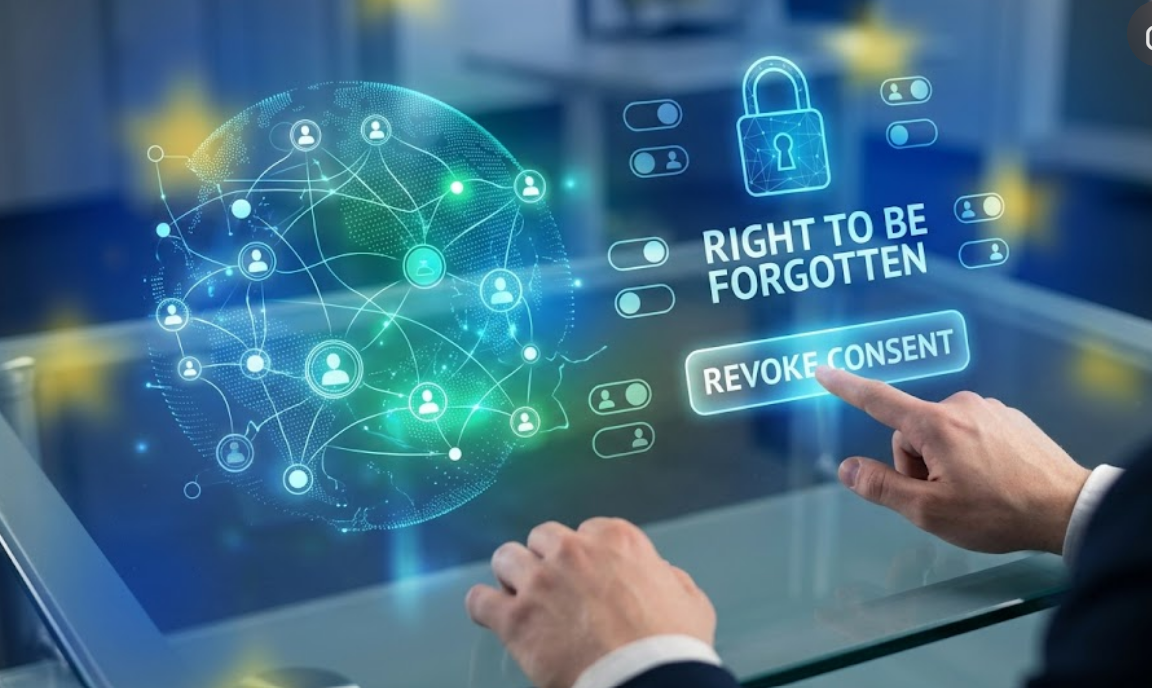
It follows that the law does not condition protection on registration or on any qualification certificate. In China, copyright arises automatically upon creation; the voluntary registration system exists to provide evidence of ownership, not as a precondition of protection. The same logic governs data and compilations. A dataset that is independently assembled and that exhibits originality in its selection and arrangement is eligible for protection as a compilation work without any certificate, provided it is fixed in a tangible form. This point matters directly for the AI industry. Training corpora and databases are not merely inputs to a model; they can themselves be protected assets of the business that assembled them. By the same token, if a corpus was assembled from protected works without authorization, it can be the source of liability for the business that built it.
The Three Hard Questions Courts Are Wrestling With
The first hard question is the ambiguity of the creative subject. Copyright law assumes an author who is a natural person or, in certain cases, a legal entity; a machine is neither. When a user exercises meaningful creative control over the process, through prompts, parameters, iteration, and selection, courts have treated the user as the author, as in the 2023 Beijing Internet Court case. When the output is effectively one-click, with negligible human input, courts have reached the opposite conclusion; a Xinjiang court in 2025 declined to protect a one-click generated image on the ground that it lacked originality. The developer of the model, for its part, is generally not regarded as the author of any particular output, because the developer does not direct the creation of that specific expression. Authorship, in other words, is determined by human intellectual contribution, case by case.
The second hard question is the complexity of infringement determination. When an AI output resembles an existing work, how similar is too similar? Substantial similarity analysis, long used in traditional copyright disputes, must now be applied to outputs that are statistically assembled rather than directly copied. And how should the law treat intention? A machine has no subjective intent, so courts analyse the conduct and knowledge of the human actors behind the use: what did the user instruct the tool to do, what did the user know about the provenance of the material, and what did the user do with the result? The Supreme People's Court has articulated a human-centred approach in its judicial policy and case guidance, directing courts to distinguish the creative contribution of human beings from the mechanical function of machines, and to decide each case on that distinction.
The third hard question is the pressure that generative AI places on the copyright system itself. The categories of works in Article 3, the exclusive rights in Article 10, and the limitations in Article 24 were all designed for a world in which human beings were the only authors. Training on protected works, machine-generated expression, and mass production of near-identical outputs all strain the assumptions of that design. The response in China, as in other jurisdictions, has been incremental rather than revolutionary: case law is being built case by case, administrative rules such as the Interim Measures for the Management of Generative Artificial Intelligence Services have set minimum standards, and legislative and academic debate continues on questions of training-data licensing and collective management. The system is adapting, but it is adapting in public, one ruling at a time.
The Training Data Question and Platform Responsibility
The deepest unresolved risk sits upstream of generation. A model is only as lawful as the material it was trained on, and lawsuits have been filed in Chinese courts against model developers over training data allegedly containing protected illustrations, photographs, and audiovisual works. Courts are still working through the central question of whether ingesting works for training constitutes infringing reproduction or a use that should be permitted in the interest of technological development. The Interim Measures for the Management of Generative Artificial Intelligence Services, effective since August 2023, have already imposed a regulatory floor: service providers must use data and base models from lawful sources, respect intellectual property rights, and protect personal information when training and fine-tuning models. That floor applies to anyone offering generative services to the Chinese public, domestic or foreign.

- Map training sources
- Licensed vs scraped
- Contract data warranties
- Providers and customers
Platform responsibility is the second layer. Under the general framework of Chinese law, platforms that host content are expected to act upon notices from rightsholders, to remove infringing content, and to exercise reasonable care within the scope of what they know or should know. In the AI context, this has been extended to the operation of image-generation and content-generation services, where providers may be held accountable for failing to supervise obviously infringing uses. Users, too, carry obligations: the Interim Measures prohibit exploiting generative AI services to infringe the lawful rights and interests of others, and providers are required to label AI-generated content so that the public can distinguish it. For a business deploying generative tools, the practical consequence is that responsibility is shared across the chain, from the developer who builds the model to the user who deploys the output, and each link must be able to document the lawfulness of its own conduct.
Practical Steps for Creators and Businesses
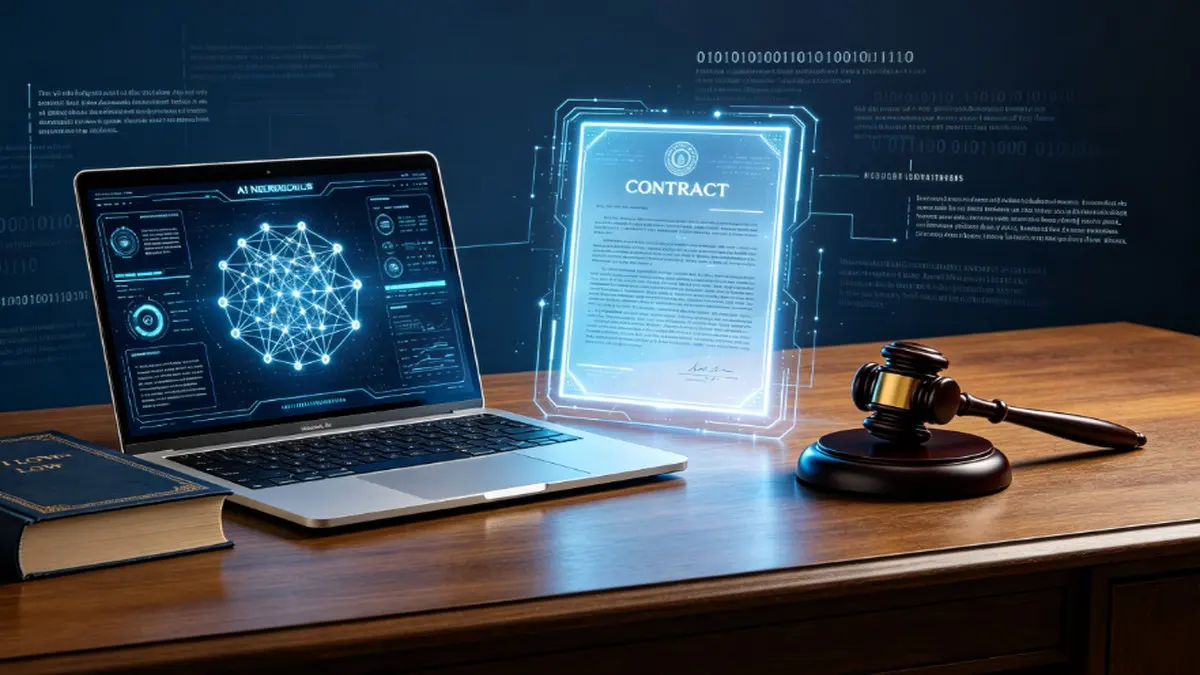
Against this background, I recommend that clients adopt a simple compliance discipline. First, document the creative process: retain prompts, parameters, iterations, and selection records, because this trail of human intellectual input may be decisive if the protectability of an output is ever challenged. Second, licence the inputs: verify the provenance of any image, text, or music used in commercial work, and secure written licences for training data and for third-party content fed into models. Third, screen the outputs: before publishing AI-generated material commercially, compare it against likely originals, and never instruct a tool to imitate a specific existing work by a named artist or brand. Fourth, respect attribution: do not strip watermarks or remove credit from AI-generated content that belongs to another user, as the Beijing Internet Court case illustrates. Fifth, allocate responsibility in contracts: ownership of outputs, warranties of lawfulness, and indemnities should be expressly addressed in commissioning agreements, developer agreements, and platform terms, because the law is still settling and the contract is the one document the parties fully control.
Finally, stay current. The judicial policy of the Supreme People's Court, the case guidance issued by the internet courts, and the administrative rules governing generative AI are all moving quickly, and the difference between lawful and unlawful use can shift as they develop. What was defensible in 2023 may not be in 2026, and vice versa.
Conclusion
The message of the law is not that generative AI is dangerous, but that rights survive the arrival of machines. Generating content with Doubao or any other tool is lawful in itself; what the law polices is the unauthorized use of protected expression, the imitation of existing works, and the unlicensed commercial exploitation of outputs that may belong to someone else. Chinese courts have moved quickly, from denying protection to purely mechanical output in 2019, to recognizing the user's authorship in 2023, to drawing the line at one-click generation in 2025, and the human-centred principle that runs through this case law gives businesses a usable compass. Use the tools, by all means; but know what you put in, what you take out, and what you are licensed to do with it. That discipline is what separates lawful innovation from costly litigation, and it is the advice I give every client who asks whether their next AI-generated campaign will land them in court.
The Legal Rule
In China, treat generative ai and copyright as a question of where the boundaries of infringement lie. Naming the city does not replace the papers, approvals or forum that actually control the outcome.
The Business Impact
In China, confirm the documents, authority and local filings for this generative ai and copyright matter before you pay, transfer or sue. The city name is not a substitute for the file.
Discussion
Share experience or questions about this topic. This is a public discussion — not legal advice. Do not post confidential case details.
Have a question after reading? Leave it here, or Ask a Lawyer for a free initial intake.
Comments are moderated. China Legal Portal is a directory and information resource; no attorney–client relationship is formed by posting here.