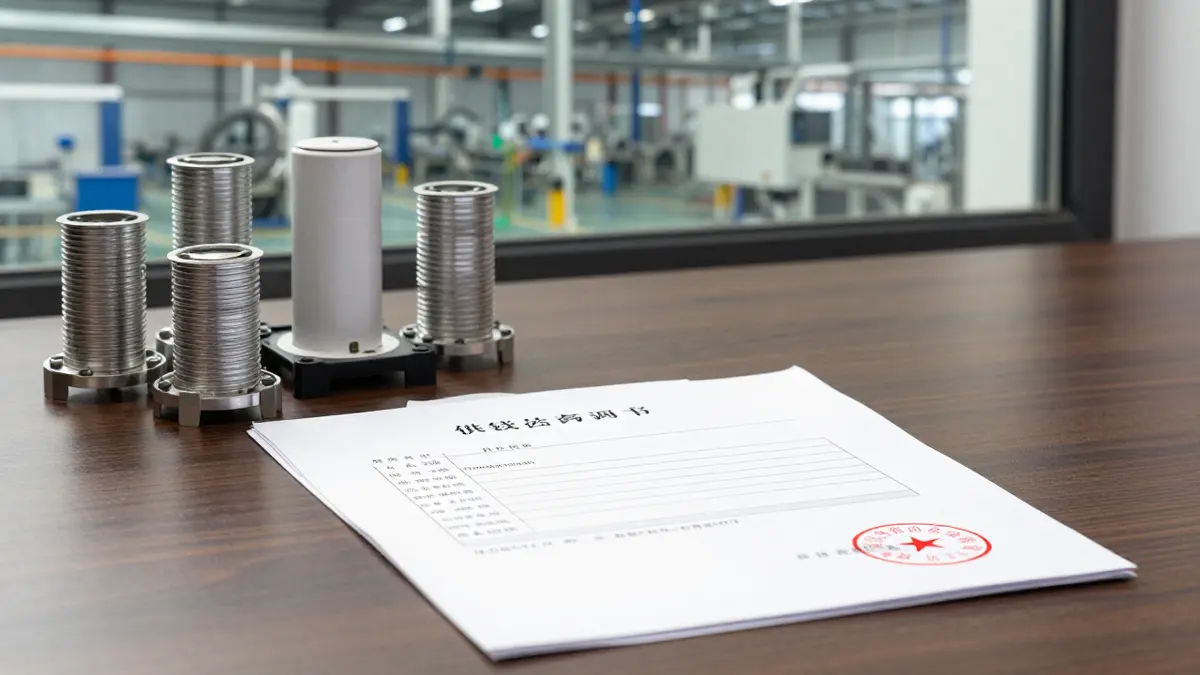

Disputes over equipment supply contracts frequently involve questions about the legal distinction between deposits and penalty clauses, and whether a party may recover both simultaneously. Under the PRC Civil Code, the relationship between deposit forfeiture and liquidated damages is governed by specific rules that prevent double recovery while ensuring that the non-defaulting party receives adequate compensation. Understanding how Chinese courts analyze these issues is essential for businesses engaged in equipment procurement, installation, and maintenance contracts.
Deposit vs. Liquidated Damages Under the Civil Code
Article 586 of the PRC Civil Code permits parties to agree on a deposit as security for performance, with the amount not exceeding 20 percent of the contract value. Article 587 establishes the deposit penalty rule: if the party giving the deposit defaults, it forfeits the deposit without right of return; if the party receiving the deposit defaults, it must return double the amount. Article 588 addresses the overlap between deposits and liquidated damages by giving the non-defaulting party an election: it may choose either to enforce the deposit penalty or to claim liquidated damages, but cannot recover both for the same breach. However, if the deposit is insufficient to compensate for actual losses, the non-defaulting party may also claim additional damages under Article 588, provided that the total recovery does not exceed the actual loss suffered.
Court Analysis in Equipment Contract Disputes
Chinese courts apply a structured analysis to equipment contract disputes involving deposits and penalties. The court first determines whether the payment in question qualifies as a deposit under Articles 586-588, examining whether it was expressly designated as a deposit in a written contract. If the payment is not a valid deposit, it is treated as an advance payment that must be returned. The court then assesses whether the party claiming forfeiture or double return has established a breach by the other party. Evidence of breach may include delivery delays, quality deficiencies, installation failures, or payment defaults, documented through written correspondence and inspection reports. When both deposit forfeiture and liquidated damages are claimed, the court requires the non-defaulting party to elect one remedy. In practice, courts often guide parties toward the more appropriate remedy based on the actual losses suffered.

- FAILURE MODES
- Character
Litigation Strategy and Evidence Preparation
Parties involved in equipment contract disputes should take proactive steps to preserve evidence and protect their legal position. Written correspondence, including emails, letters, and meeting minutes documenting delivery schedules, quality specifications, and acceptance testing results, should be preserved. Photographs and video recordings of equipment conditions at delivery and installation sites serve as important visual evidence. Third-party inspection reports from recognized testing agencies carry significant evidentiary weight. Wang Keqiang at Hubei Yuanlai Law Firm in Qianjiang has extensive experience handling equipment contract disputes, including complex cases involving multiple delivery tranches, milestone payment schedules, and cross-province enforcement against defaulting parties. His practice includes advising clients on deposit and penalty clause drafting, pre-litigation negotiation strategies, and courtroom representation in equipment-related commercial disputes.
Real Property Application Notes
I convert complex Chinese procedure into a dated checklist with owners for translation, notarization, and internal sign-off across time zones.
I align forum and pleading choices with what can actually be enforced: assets, licenses, cash flows, and available interim measures under PRC procedure.
- Agreed work plan and remedy path
- Bilingual document control
- Deadline and limitation tracking
- Enforcement and settlement options in parallel
Operational Checklist for Foreign Readers
Strategy starts with what can be secured or collected: counterpart assets, licenses, receivables, and interim measures, then builds merits work around that path.
I document scope, assumptions, and decision rights at engagement start so foreign clients know what will be filed, who must approve, and when silence becomes a missed deadline.
- Written engagement scope and remedy options
- Bilingual document control
- Deadline and limitation tracking
- Enforcement and settlement options in parallel
Risk Controls Before Escalation
I treat bilingual consistency as a risk control: chops, authority documents, and English summaries must tell the same commercial story.
- Kickoff scope memo and remedy ladder
- Bilingual document control
- Deadline and limitation tracking
- Enforcement and settlement options in parallel
Implementation Detail 1
I build the strategy around collection and interim leverage first—assets, licenses, receivables, and protective measures—so a paper win is not the only end state.
- Documented objectives and preferred remedies
- Bilingual document control
- Deadline and limitation tracking
- Enforcement and settlement options in parallel
Implementation Detail 2
I prefer early written notices and clean evidence indexes over informal WeChat-only chains when the amount or regulatory exposure is material.
- Mandate letter covering scope and outcomes
- Bilingual document control
- Deadline and limitation tracking
- Enforcement and settlement options in parallel
Evidence Discipline Before Outreach
Preserve contracts, amendments, invoices, logistics records and chat exports early. Later reconstructions are weaker and invite authenticity fights.

- Equipment Contract Disputes in China: How Courts Apply the Deposit Penalty Rule in Cross-Provincial Transactions — process. Equipment Contract Disputes in China: How Courts Apply the Deposit Penalty Rule in; Cross-Provincial Transactions — sequence; Real Property Application Notes; Test 定金 vs 订金; Apply the 20% cap; Identify the defaulting party.
- Equipment Contract Disputes in China: How Courts Apply the Deposit Penalty Rule in Cross-Provincial Transactions — process.
- Claim double return or forfeiture
Build a single chronology shared with overseas stakeholders so strategy is not rewritten by fragmented updates. Assumptions should be labelled as assumptions.
Settlement leverage comes from a file that makes continued fighting rational to avoid—not from volume of demand-letter adjectives.
Discussion
Share experience or questions about this topic. This is a public discussion — not legal advice. Do not post confidential case details.
Have a question after reading? Leave it here, or Ask a Lawyer for a free initial intake.
Comments are moderated. China Legal Portal is a directory and information resource; no attorney–client relationship is formed by posting here.