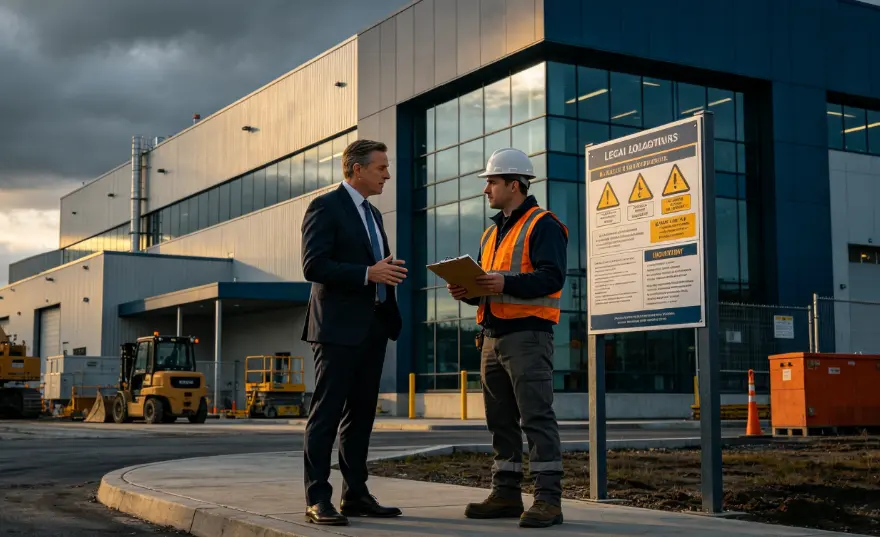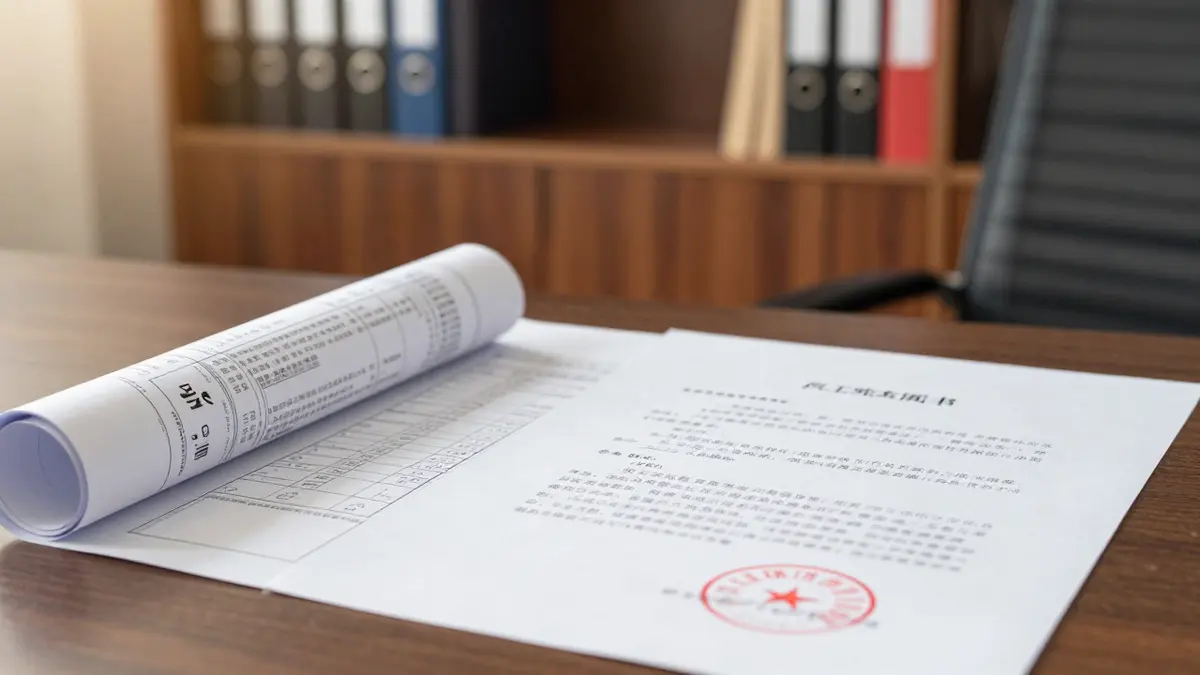

In 2026, China's Supreme People's Court issued a new judicial interpretation on construction project disputes that significantly changes the legal landscape for unlicensed contractors, known as baogongtou in Chinese practice. These independent project leaders, who operate under the name of licensed construction companies by paying management fees, have historically faced immense difficulty recovering payment for completed work. The new rules change this dynamic by establishing three specific circumstances where a direct lawsuit is permitted, providing long-overdue legal protection for the workers who actually perform construction labor.
Condition One: The Client Paid, but the Company Withholds
Under the 2026 interpretation, when the project owner has paid the full amount to the construction company, yet the company refuses to forward the payment to the unlicensed contractor without legitimate cause, the contractor may sue the company directly. This is the most straightforward scenario and the one with the highest success rate. Article 3 of the new interpretation provides clear legal basis for this claim. Courts will order the company to disgorge the funds, and the primary evidentiary burden on the unlicensed contractor is to demonstrate through bank records, payment receipts, or the licensed contractor's own accounting entries that the upstream payment was received. The new interpretation expressly provides that the licensed contractor's records may be subpoenaed for this purpose, removing a significant evidentiary hurdle that previously prevented unlicensed contractors from proving their claims.
Condition Two: The Company Refuses to Cooperate with Debt Collection

- FAILURE MODES
When the project owner is delinquent on payment and the construction company refuses to assist in collection, by declining to affix its official seal to demand letters, withholding necessary settlement documents, or allowing the claim to exceed the statute of limitations, the unlicensed contractor may bring a direct action. The new interpretation provides that where the construction company's refusal to cooperate materially impedes the unlicensed contractor's ability to collect the debt, the unlicensed contractor may bypass the construction company entirely and sue the company for the unpaid amount. In severe cases where the licensed contractor allows the limitation period to expire or actively colludes with the project owner to avoid payment, the unlicensed contractor may also exercise a subrogation right, effectively stepping into the licensed contractor's position to pursue the project owner directly.
Condition Three: Company Debts Freeze the Contractor's Funds
Where the construction company's own financial troubles, including pending lawsuits, debt enforcement actions, or insolvency proceedings, cause the unlicensed contractor's project payments to be frozen or seized by third-party creditors, the contractor may sue the company for full compensation. The 2026 interpretation provides that the unlicensed contractor may assert a priority claim against the frozen funds to the extent of the value of the work actually performed, taking priority over the claims of the construction company's general unsecured creditors with respect to specific project funds. This represents a significant expansion of the rights of unlicensed workers in Chinese insolvency proceedings. Foreign companies engaging licensed construction contractors in China should conduct basic due diligence on the contractor's financial health before entering into a construction agreement, as a contractor facing creditor pressures may expose the foreign project owner to direct litigation from unlicensed subcontractors. Shi Peng at Hubei Jingli Law Firm in Shiyan has extensive experience advising on construction contracts, project payment disputes, and the new 2026 legal framework.
Real Property Application Notes
I prefer early written notices and clean evidence indexes over informal WeChat-only chains when the amount or regulatory exposure is material.
I convert complex Chinese procedure into a dated checklist with owners for translation, notarization, and internal sign-off across time zones.
- Documented objectives and preferred remedies
- Bilingual document control
- Deadline and limitation tracking
- Enforcement and settlement options in parallel
Operational Checklist for Foreign Readers
I treat collectability and interim protection as core design inputs, not afterthoughts, so counsel work supports outcomes that can be executed in China.
- Mandate letter covering scope and outcomes
- Bilingual document control
- Deadline and limitation tracking
- Enforcement and settlement options in parallel
Risk Controls Before Escalation
My case plan tests enforceability early—asset location, license pressure points, receivable chains, and interim tools—before heavy spend on pure merits briefing.
I document scope, assumptions, and decision rights at engagement start so foreign clients know what will be filed, who must approve, and when silence becomes a missed deadline.
- Agreed work plan and remedy path
- Bilingual document control
- Deadline and limitation tracking
- Enforcement and settlement options in parallel
Implementation Detail 1
I align forum and pleading choices with what can actually be enforced: assets, licenses, cash flows, and available interim measures under PRC procedure.
- Written engagement scope and remedy options
- Bilingual document control
- Deadline and limitation tracking
- Enforcement and settlement options in parallel
Practical Takeaways for Foreign Parties
The Legal Rule
The new rules change this dynamic by establishing three specific circumstances where a direct lawsuit is permitted, providing long-overdue legal protection for the workers who actually perform construction labor.
The Business Impact
Preserve the contract, orders, delivery records, invoices, payment history and acknowledgements before escalation. The evidence chain can determine whether a demand, preservation application or lawsuit converts the receivable into cash. Apply that to the facts of 2026 China Construction Rules: Unlicensed Contractor Payment Claims.
- Confirm which Chinese authority or court has power over your facts before you spend on a strategy built for the wrong forum.
- Preserve contracts, payment records, chat logs and notices early; later reconstructions are weaker and more expensive.
- Separate negotiation leverage from legal entitlement. Many matters settle, but only after the file is strong enough that settlement is rational for both sides.
- Build a bilingual chronology for headquarters stakeholders so decisions are made on shared facts rather than fragmented updates.
- Ask counsel for a staged plan with deadlines: interim measures, filings, evidence collection and settlement windows.

- New 2026 Construction Rules in China: When Unlicensed Contractors Can Sue Construction Companies Directly — process. New 2026 Construction Rules in China: When Unlicensed Contractors Can Sue Construction; Companies Directly — sequence; Real Property Application Notes; Test the 2026 recovery rule; Prove completed work; Value the quantum.
- New 2026 Construction Rules in China: When Unlicensed Contractors Can Sue Construction Companies Directly — process.
- File against the contracting owner
Document Checklist
As a starting set, gather the operative agreements and amendments, invoices or payment proofs, key correspondence (including WeChat exports where relevant), corporate authority documents, and any notices already received from counterparties or authorities. Perfect organisation is not required; a partial package with a short chronology is enough to begin triage.
This section is provided to help readers convert general legal information into an action list. It is not a substitute for advice on a specific matter; local procedure, evidence quality and counterparties’ positions can change the correct next step.
Discussion
Share experience or questions about this topic. This is a public discussion — not legal advice. Do not post confidential case details.
Have a question after reading? Leave it here, or Ask a Lawyer for a free initial intake.
Comments are moderated. China Legal Portal is a directory and information resource; no attorney–client relationship is formed by posting here.