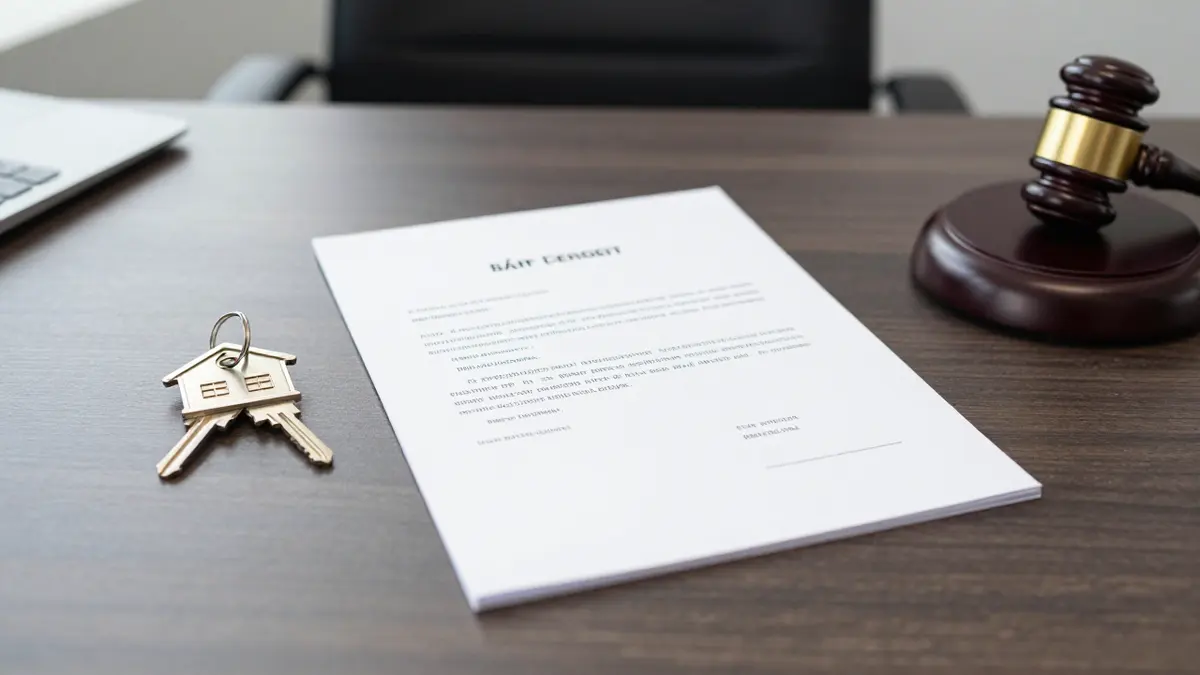

A recent landmark court decision from Jilin Province has clarified an important principle of Chinese property law with significant implications for property owners and financial institutions: parents cannot use their minor child's real property as collateral for their own or others' business loans. The case provides critical guidance for families purchasing property for children in China and for banks accepting property as loan security. This ruling reinforces the principle that guardianship rights under Chinese law are constrained by the best interests of the minor ward, and that financial institutions have a duty to verify that transactions involving minor property serve the child's welfare.
The Case: Father Mortgages Son's Property for a Friend's Loan
In March 2023, a borrower named Jin applied for a 1.2 million RMB business loan from a commercial bank. To secure the loan, Jin's friend Zhang offered the property registered in the name of Zhang's minor son, Zhang Xiaoxiao, as collateral. Zhang, acting as the child's legal guardian and statutory agent, signed the maximum mortgage contract on behalf of his son and completed the mortgage registration with the relevant real estate authority. When Jin defaulted on the loan due to business difficulties, the bank filed a lawsuit seeking to foreclose on the minor's property through auction or sale, claiming priority compensation from the proceeds.
The Court's Decision: Mortgage Invalid
The Siping City Tiexi District Court in Jilin Province examined the validity of the mortgage contract and reached a clear conclusion: the mortgage was invalid. Although Zhang was the child's legal guardian with statutory authority to represent his son in legal matters, the Civil Code imposes strict limits on guardians' powers to dispose of a minor's property. Under Article 35 of the PRC Civil Code, guardians must act in accordance with the principle of acting in the best interests of the ward. A guardian may not dispose of a ward's property except for the benefit of the ward. Using a child's property to guarantee an adult's commercial loan is manifestly not for the child's benefit. The court further held that the bank, as a professional financial institution, should have known that accepting a minor's property as collateral for a business loan raised serious legal questions. The Intermediate People's Court of Siping City affirmed this decision on appeal.

- LEGAL TESTS
- FAILURE MODES
- Registered in the minor's name
Legal Analysis: Article 35 of the Civil Code in Practice
Article 35 of the PRC Civil Code establishes three core principles for guardianship of minor property. First, guardians must act in the best interests of the ward. Second, guardians may not dispose of a ward's property except for the benefit of the ward. Third, guardians who cause losses through improper disposal are liable for compensation. The Siping court's application of these principles is consistent with prior Supreme People's Court guidance. In a 2019 guiding case, the Supreme People's Court held that a parent's mortgage of a minor child's property for personal business debts was invalid, establishing that the burden of proving the transaction benefits the child falls on both the guardian and the counterparty. Article 35 imposes a substantive burden on guardians to demonstrate that any disposition of minor property produces a concrete, quantifiable benefit. Courts apply a strict scrutiny standard: the benefit must be direct, not incidental, and must outweigh the risk. In mortgages, the benefit is especially hard to establish since the guarantor receives no direct consideration.
What This Means for Foreign Property Buyers
This case has significant implications for foreign families who purchase property in China and register it in their minor children's names. Such property enjoys strong legal protection under Chinese law. No creditor can validly take that property to satisfy parents' business debts, and no mortgage granted by parents for their own benefit will be enforceable against the property. Any mortgage or sale of a minor's property must demonstrably benefit the child, such as funding urgent medical treatment, education expenses, or other needs directly related to the child's welfare. Banks must exercise heightened due diligence when the mortgagor is a minor. Weisheng Liang at Hunan Xiangjiang Law Firm in Xiangtan has extensive experience in real property and family law, including disputes over minors' property rights under the PRC Civil Code.
Real Property Application Notes
I document scope, assumptions, and decision rights at engagement start so foreign clients know what will be filed, who must approve, and when silence becomes a missed deadline.
I treat bilingual consistency as a risk control: chops, authority documents, and English summaries must tell the same commercial story.
- Mandate letter covering scope and outcomes
- Bilingual document control
- Deadline and limitation tracking
- Enforcement and settlement options in parallel
Operational Checklist for Foreign Readers
I prefer early written notices and clean evidence indexes over informal WeChat-only chains when the amount or regulatory exposure is material.
- Agreed work plan and remedy path
- Bilingual document control
- Deadline and limitation tracking
- Enforcement and settlement options in parallel
Risk Controls Before Escalation
I convert complex Chinese procedure into a dated checklist with owners for translation, notarization, and internal sign-off across time zones.
- Written engagement scope and remedy options
- Bilingual document control
- Deadline and limitation tracking
- Enforcement and settlement options in parallel
Cross-Border Family Procedure Notes
The Legal Rule
A recent landmark court decision from Jilin Province has clarified an important principle of Chinese property law with significant implications for property owners and financial institutions: parents cannot use their minor child's real property as collateral for their own or others' business loans.
The Business Impact
Check title/registration, permitted use, approvals, payment conditions and disclosed defects before committing funds. Contract wording can allocate risk, but it cannot create a missing property right or make an unusable site fit for purpose. Apply that to the facts of Can Parents Mortgage Property Registered in Their Minor Child's Name? Court Says No.
- Jurisdiction and recognition questions should be mapped before anyone relocates a child or moves major assets.
- Parenting proposals need operational detail—schooling, holidays, travel consent—not only percentages of time.
- Safety allegations require contemporaneous evidence; post-hoc narratives alone rarely carry interim applications.
- Property division depends on registries, bank records and corporate filings more than on verbal contribution stories.
- Settlement paper should be enforceable: payment security, default clauses and registration cooperation.

- sequence
- Confirm the registered owner
- Test benefit to the child
- Refuse a third-party mortgage if no
- benef…
What to Prepare for the First Consult
Bring marriage and birth certificates, any prior judgments or mediation agreements, property registry extracts if available, and a two-page chronology. Flag any urgent dates (hearings, travel, school terms) in the first message.
This section is provided to help readers convert general legal information into an action list. It is not a substitute for advice on a specific matter; local procedure, evidence quality and counterparties’ positions can change the correct next step.
Discussion
Share experience or questions about this topic. This is a public discussion — not legal advice. Do not post confidential case details.
Have a question after reading? Leave it here, or Ask a Lawyer for a free initial intake.
Comments are moderated. China Legal Portal is a directory and information resource; no attorney–client relationship is formed by posting here.