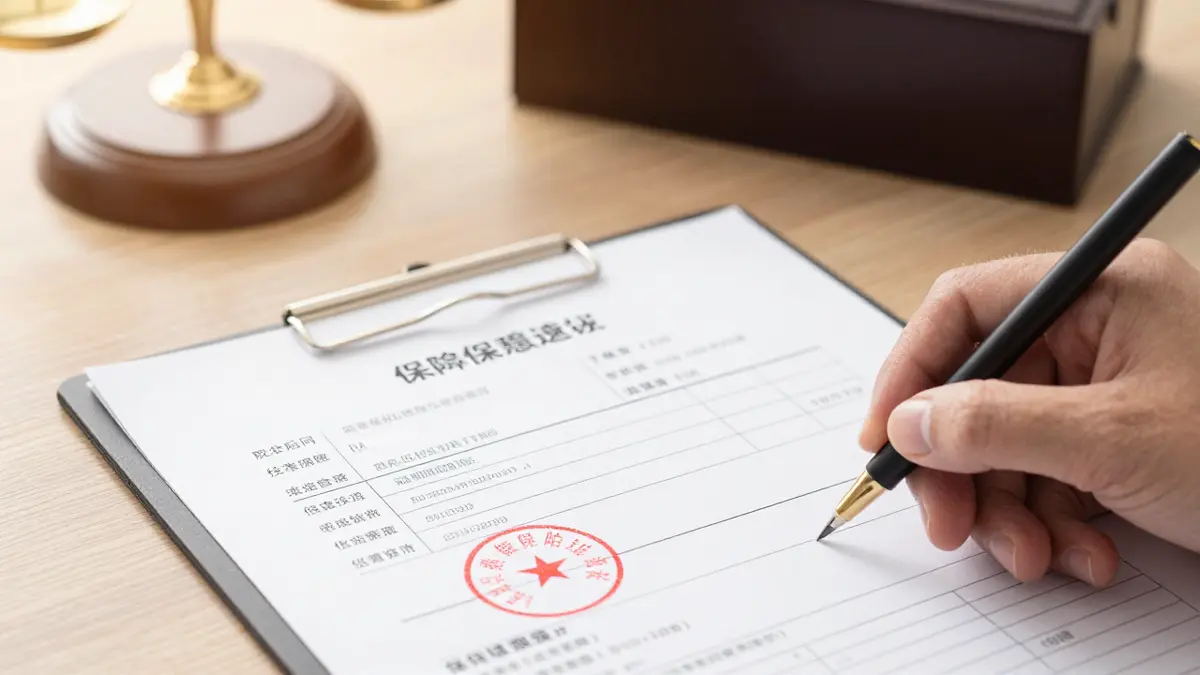

Insurance companies in China frequently deny claims on the basis that the policyholder's claim falls within a waiting period, also known as a elimination period or qualification period. Under the PRC Insurance Law, waiting periods are a standard feature of health insurance, critical illness insurance, and certain types of property insurance. However, not all waiting period denials are legally valid. Policyholders who understand their rights under Chinese insurance law can successfully challenge improper denials and recover compensation they are entitled to.
The Legal Framework for Waiting Periods
Under Article 13 of the PRC Insurance Law, an insurance contract is formed when the policyholder makes an application and the insurer accepts it. The terms and conditions of the contract, including any waiting period provisions, are binding on both parties once the contract is concluded. However, Article 17 of the same law requires insurers to clearly explain exemption clauses to policyholders at the time of contract formation. Exemption clauses that are not clearly explained are legally unenforceable. The Supreme People's Court has confirmed in its judicial interpretations that waiting period clauses may constitute exemption clauses requiring clear explanation, particularly when the waiting period is longer than the industry standard or when it excludes coverage for conditions that manifest during the waiting period.
When Waiting Period Denials Can Be Challenged
There are several circumstances in which a waiting period denial can be successfully challenged in Chinese courts. First, if the insurer did not provide a clear written explanation of the waiting period clause and obtain the policyholder's acknowledgment, the clause may be found unenforceable under Article 17 of the Insurance Law. Second, if the waiting period is unreasonably long compared to industry standards for the same type of policy, a court may find the clause unconscionable. Third, if the policyholder's medical condition had its onset before the policy was issued but was diagnosed during the waiting period, the insurer must prove that the condition was not newly occurring to deny coverage. Fourth, if the insurer's claims adjuster made representations at the time of sale that differed from the written policy terms, the insurer may be estopped from enforcing the waiting period.

- FAILURE MODES
- Waiting-period text and scope
Practical Steps for Policyholders
Policyholders facing a waiting period denial should take several steps to protect their rights. First, request a written explanation of the denial from the insurer, citing the specific policy provision relied upon. Second, gather all medical records documenting when symptoms first appeared, as this may establish that the condition arose after the waiting period expired. Third, review the original policy application and sales materials for any representations made by the insurance agent regarding waiting periods. Fourth, file a formal complaint with the insurer's internal appeals department. If the internal appeal is unsuccessful, the policyholder may file a complaint with the National Financial Regulatory Administration or initiate litigation in the People's Court. Zhou Xueqin at Hubei Yangzhong Law Firm in Xianning has extensive experience handling insurance claim disputes, including waiting period denials, policy interpretation issues, and subrogation actions. Her practice includes representing policyholders in negotiations with insurance companies and litigating disputed claims before Hubei courts.
Product Liability Application Notes
Strategy starts with what can be secured or collected: counterpart assets, licenses, receivables, and interim measures, then builds merits work around that path.
I document scope, assumptions, and decision rights at engagement start so foreign clients know what will be filed, who must approve, and when silence becomes a missed deadline.
- Kickoff scope memo and remedy ladder
- Bilingual document control
- Deadline and limitation tracking
- Enforcement and settlement options in parallel
Operational Checklist for Foreign Readers
I treat bilingual consistency as a risk control: chops, authority documents, and English summaries must tell the same commercial story.
- Documented objectives and preferred remedies
- Bilingual document control
- Deadline and limitation tracking
- Enforcement and settlement options in parallel
Risk Controls Before Escalation
I prefer early written notices and clean evidence indexes over informal WeChat-only chains when the amount or regulatory exposure is material.
- Mandate letter covering scope and outcomes
- Bilingual document control
- Deadline and limitation tracking
- Enforcement and settlement options in parallel
Implementation Detail 1
- Agreed work plan and remedy path
- Bilingual document control
- Deadline and limitation tracking
- Enforcement and settlement options in parallel
Practical Takeaways for Foreign Parties
The Legal Rule
In China, treat insurance waiting period denials as a question of when courts rule against insurance companies. Naming the city does not replace the papers, approvals or forum that actually control the outcome.
The Business Impact
In China, confirm the documents, authority and local filings for this insurance waiting period denials matter before you pay, transfer or sue. The city name is not a substitute for the file. Apply that to the facts of Insurance Waiting Period Denials in China: When Courts Rule Against Insurance Companies.
- Confirm which Chinese authority or court has power over your facts before you spend on a strategy built for the wrong forum.
- Preserve contracts, payment records, chat logs and notices early; later reconstructions are weaker and more expensive.
- Separate negotiation leverage from legal entitlement. Many matters settle, but only after the file is strong enough that settlement is rational for both sides.
- Build a bilingual chronology for headquarters stakeholders so decisions are made on shared facts rather than fragmented updates.
- Ask counsel for a staged plan with deadlines: interim measures, filings, evidence collection and settlement windows.
Document Checklist
As a starting set, gather the operative agreements and amendments, invoices or payment proofs, key correspondence (including WeChat exports where relevant), corporate authority documents, and any notices already received from counterparties or authorities. Perfect organisation is not required; a partial package with a short chronology is enough to begin triage.
This section is provided to help readers convert general legal information into an action list. It is not a substitute for advice on a specific matter; local procedure, evidence quality and counterparties’ positions can change the correct next step.

- Insurance Waiting Period Denials in China: When Courts Rule Against Insurance Companies — process. Insurance Waiting Period Denials in China: When Courts Rule Against Insurance Companies —; sequence; Get the policy and proposal; Check explanation of the exclusion; Product Liability Application Notes; Gather medical chronology.
- Insurance Waiting Period Denials in China: When Courts Rule Against Insurance Companies — process.
- Demand payment or sue
Discussion
Share experience or questions about this topic. This is a public discussion — not legal advice. Do not post confidential case details.
Have a question after reading? Leave it here, or Ask a Lawyer for a free initial intake.
Comments are moderated. China Legal Portal is a directory and information resource; no attorney–client relationship is formed by posting here.