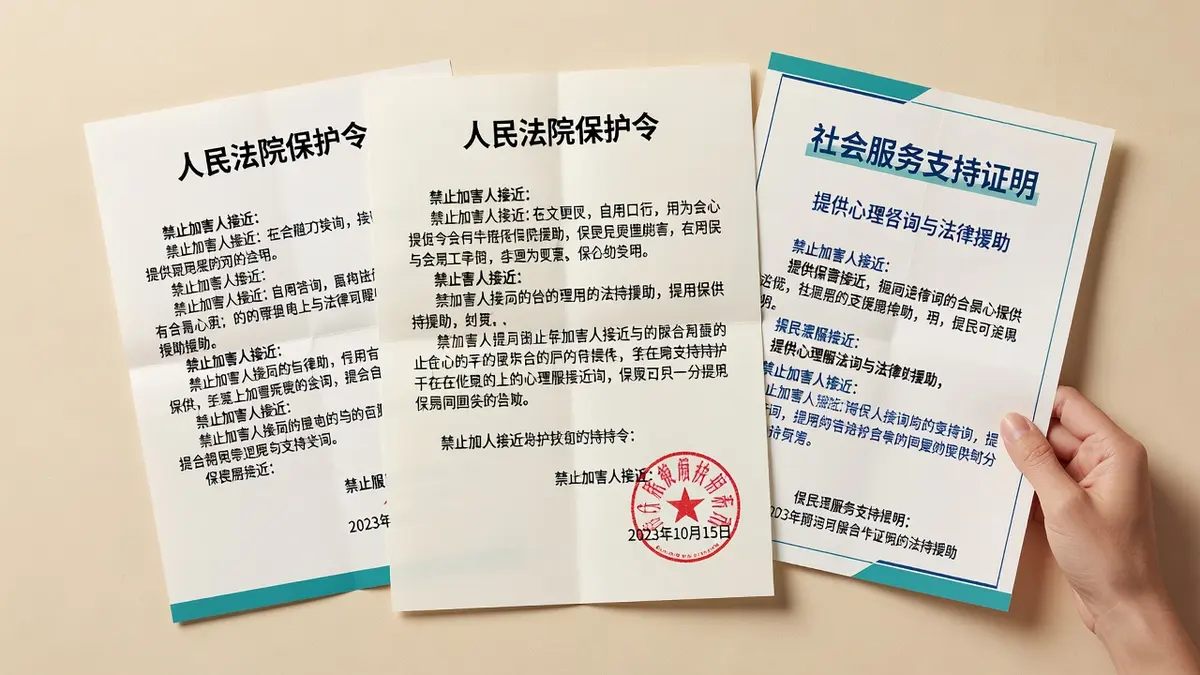

Domestic violence and the need for protective orders are serious concerns for individuals in any country, including foreign nationals living in China. Wang Genyu, director of Tianjin Hefeixin Law Firm in the Nankai District of Tianjin and an experienced family law attorney, provides this guide to restraining orders and domestic violence protections in China for foreign spouses and partners.
Legal Framework for Domestic Violence Protection in China
China enacted its first comprehensive domestic violence law, the PRC Anti-Domestic Violence Law, which took effect on March 1, 2016. This landmark legislation provides a legal framework for protecting victims of domestic violence, including spouses, partners, and other family members living together. The law defines domestic violence broadly to include physical, psychological, and sexual abuse inflicted by a family member. It also recognizes non-physical forms of abuse, such as economic control, isolation, and verbal threats as forms of domestic violence. Under the law, victims may apply for a personal safety protection order, known as ren shen an quan bao hu ling, from the Peoples Court. The court must issue a ruling within 72 hours of receiving the application, or within 24 hours if the circumstances are urgent. The protection order can include measures such as prohibiting the abuser from further acts of violence, ordering the abuser to move out of the shared residence, prohibiting the abuser from harassing, stalking, or contacting the victim, and ordering the abuser to pay the victims medical expenses and temporary living costs. The protection order is valid for up to six months and may be extended upon application. Violation of a protection order may result in fines, detention, or criminal prosecution.
Applying for a Protection Order as a Foreign National

- FAILURE MODES
- Personal-safety protection order
Foreign nationals who are victims of domestic violence in China have the same rights under the Anti-Domestic Violence Law as Chinese citizens. To apply for a personal safety protection order, the victim must file an application with the Peoples Court in the district where the victim resides, where the abuser resides, or where the domestic violence occurred. The application must include evidence of the domestic violence, such as medical reports from hospital examinations documenting injuries, photographs of injuries, police reports from the local Public Security Bureau, witness statements from neighbors or family members, recordings or messages containing threats or abuse, and written statements from social workers or community officials. Courts in China have become more proactive in issuing protection orders since the law came into effect, and foreign nationals should not hesitate to seek protection if they are experiencing domestic violence. The application process does not require the victim to file for divorce simultaneously, and a protection order can be obtained independently of any family law proceedings. Attorney Wang advises foreign victims to contact the local Womens Federation, known as fu lian, which provides support services for domestic violence victims, including legal aid, temporary shelter, and counseling.
Foreign Spouses and Immigration Considerations
Foreign spouses of Chinese citizens or foreign nationals residing in China face unique challenges when seeking protection from domestic violence. A foreign national who holds a residence permit based on their family relationship may be concerned that leaving an abusive relationship will affect their immigration status. Under Chinese immigration regulations, a foreign national who divorces their Chinese spouse may need to change their residence permit to another valid category within a specified period, typically 30 to 60 days, to maintain legal residence in China. However, domestic violence victims may be eligible for humanitarian extensions of their residence permit or may qualify for a residence permit based on other grounds, such as employment or study. The Public Security Bureaus Entry and Exit Administration department is responsible for residence permit matters, and victims can request a consultation about their specific situation without immediately making any changes to their immigration status. Foreign spouses should also be aware that domestic violence may have implications for child custody and visitation arrangements if there are children of the marriage. Chinese courts will consider domestic violence as a factor in custody determinations and may restrict the abusers visitation rights to protect the childs safety.
Criminal Prosecution for Domestic Violence
Domestic violence may also constitute a criminal offense under Chinese law. The PRC Criminal Law provides several criminal provisions that apply to domestic violence, including the crime of intentional injury, which can result in criminal detention for minor injuries or fixed-term imprisonment for serious injuries; the crime of, which applies to maltreatment of family members who are unable to care for themselves; and the crime of forcible indecency or rape, which applies to sexual violence within a domestic relationship. Domestic violence cases may be prosecuted as private prosecutions initiated by the victim or as public prosecutions initiated by the procuratorate in cases involving serious injury or death. The standard of proof in criminal cases is beyond a reasonable doubt, which is higher than the standard for obtaining a civil protection order. Criminal proceedings may result in incarceration of the abuser, which can provide long-term protection for the victim. Attorney Wang advises victims to report domestic violence to the police immediately, as the police report will serve as crucial evidence in both civil protection order proceedings and any subsequent criminal case. The police may also issue a warning letter to the abuser, which can serve as a basis for imposing penalties if the abuse continues.
Support Services and Resources for Foreign Victims
Several support services are available to foreign victims of domestic violence in China. The national domestic violence hotline, 12338, operated by the All-China Womens Federation, provides counseling and referral services in Chinese. Foreign victims may also contact their embassy or consulate in China, which can provide a list of local lawyers, assist with communication with Chinese authorities, and in some cases provide emergency financial assistance. International organizations such as the United Nations Population Fund and various non-governmental organizations operate helplines and support services in major cities. In Tianjin, the Tianjin Womens Federation provides legal aid and counseling services for domestic violence victims. Foreign victims should also consider consulting a Chinese family law attorney who has experience representing foreign clients and can provide guidance throughout the legal process. Attorney Wang recommends that foreign victims prepare an emergency plan that includes a safe place to go, copies of important documents such as passport and residence permit, emergency contact numbers, and a bag with essential items, in case they need to leave their home quickly.

- Restraining Orders and Domestic Violence Protection in China — process.
- Preserve evidence
- Apply protection order
- Notify police if needed
- File divorce/custody if required
Wang Genyu has been practicing law since 2008 and holds a Master of Laws degree. As director of Tianjin Hefeixin Law Firm in the Nankai District of Tianjin, he specializes in family law matters including divorce, inheritance, restraining orders, and domestic violence protection, serving clients throughout the Tianjin area.
This article is for informational purposes only. Individuals should consult qualified legal professionals for advice tailored to their specific circumstances.
Family Law Application Notes
I prefer early written notices and clean evidence indexes over informal WeChat-only chains when the amount or regulatory exposure is material.
I convert complex Chinese procedure into a dated checklist with owners for translation, notarization, and internal sign-off across time zones.
- Documented objectives and preferred remedies
- Bilingual document control
- Deadline and limitation tracking
- Enforcement and settlement options in parallel
Operational Checklist for Foreign Readers
I treat collectability and interim protection as core design inputs, not afterthoughts, so counsel work supports outcomes that can be executed in China.
- Mandate letter covering scope and outcomes
- Bilingual document control
- Deadline and limitation tracking
- Enforcement and settlement options in parallel
Risk Controls Before Escalation
My case plan tests enforceability early—asset location, license pressure points, receivable chains, and interim tools—before heavy spend on pure merits briefing.
I document scope, assumptions, and decision rights at engagement start so foreign clients know what will be filed, who must approve, and when silence becomes a missed deadline.
- Agreed work plan and remedy path
- Bilingual document control
- Deadline and limitation tracking
- Enforcement and settlement options in parallel
The Legal Rule
Domestic violence and the need for protective orders are serious concerns for individuals in any country, including foreign nationals living in China.
The Business Impact
Gather the marriage, identity, asset, income and child-related records that determine jurisdiction and relief before filing or negotiating. Cross-border facts can change both the available order and whether it will be practical to enforce. Apply that to the facts of Restraining Orders and Domestic Violence Protection in China for Foreign Spouses.
Discussion
Share experience or questions about this topic. This is a public discussion — not legal advice. Do not post confidential case details.
Have a question after reading? Leave it here, or Ask a Lawyer for a free initial intake.
Comments are moderated. China Legal Portal is a directory and information resource; no attorney–client relationship is formed by posting here.