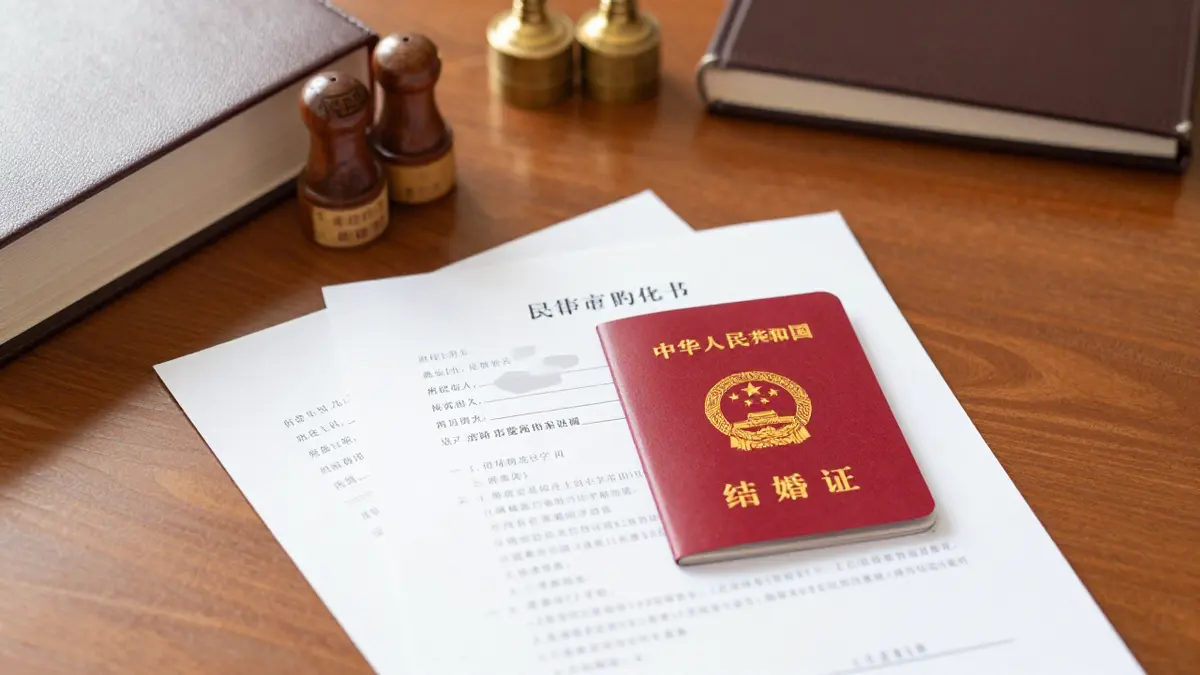
Divorce can be a vulnerable time, particularly for spouses who have been financially dependent or who face an uncooperative partner. China's legal framework provides several important protections designed to ensure fairness throughout the divorce process — from property division and child custody to domestic violence prevention and legal representation. Understanding these protections before you begin is essential.
The Civil Code of the People's Republic of China, together with judicial interpretations issued by the Supreme People's Court, establishes a comprehensive set of protective mechanisms for spouses undergoing divorce. These protections apply whether the divorce is consensual (by mutual agreement at the marriage registration authority) or contested (by litigation in the People's Court). Understanding them before entering the divorce process allows you to protect your interests effectively from the very outset of the proceedings.
Property Division Protections
Article 1087 of the Civil Code provides the cornerstone rule for property division upon divorce: the community property of the spouses shall be partitioned by agreement, or, where no agreement is reached, adjudicated by the People's Court "in light of the actual state of the property and in compliance with the principle of favouring the rights and interests of their children, the wife, and the no-fault party." This is a critical provision that goes well beyond simple equal division. Chinese courts are expressly directed to tilt the division of marital property in favour of the economically weaker spouse — typically the wife in a traditional marriage — and the party who was not at fault for the marriage breakdown. In practice, this can mean a 60-40 or even 70-30 split in favour of the protected spouse, depending on the circumstances.

- FAILURE MODES
- Preservation of community assets
Community property generally includes income earned during the marriage, assets purchased with marital funds, and returns on premarital assets that resulted from active management by either spouse during the marriage. Separate property — assets owned before marriage, personal injury compensation, and items acquired by inheritance or gift expressly designated for one spouse alone — is excluded from division. The January 2025 Judicial Interpretation II on the Marriage and Family Section introduced important clarifications regarding property transferred to children during divorce, fraudulent transfers intended to evade fair division, and new issues such as whether one spouse's spending on live-streaming platform gifts without the other's consent constitutes squandering of community property that must be compensated from the spender's share. The interpretation also addressed the growing problem of spouses who use divorce as a vehicle to evade legitimate debts — creditors may now invoke the right of revocation under the Civil Code to challenge property division clauses in divorce agreements that unfairly prejudice their interests.
One particularly important protection under Chinese law is the unequal division principle. Even in cases where both parties appear to have contributed equally to the marriage, a court may award a substantially larger share of marital property to the spouse who has primary custody of the children, or to the spouse who can demonstrate that the other party's misconduct — such as infidelity, domestic violence, or abandonment — contributed to the breakdown of the marriage. This is not automatic, but it is a meaningful protection that gives judges the discretion to achieve a fair outcome in cases where a strictly equal split would be unjust.
Domestic Violence Protection and Economic Assistance
China's Anti-Domestic Violence Law, in force since March 2016, provides a robust mechanism for protection during and after divorce. A victim may apply to the People's Court for a personal safety protection order, which can prohibit the abuser from harassing, following, or contacting the victim, and may require the abuser to vacate the shared residence. Courts must rule on applications within 72 hours — or within 24 hours in emergencies — making this a genuinely accessible and swift protection for those in immediate danger. The April 2024 Supreme People's Court guideline extended these protections specifically to children involved in family disputes, directing courts to issue protection orders whenever improper or violent means are used by one parent to interfere with the other parent's relationship with the child. This is a significant development that strengthens the legal shield around children in high-conflict divorces. While China does not have a formal alimony system comparable to Western jurisdictions, Article 1090 of the Civil Code provides that if one spouse is in financial difficulty at the time of divorce, the other spouse — if able — shall provide appropriate economic assistance. This assistance is typically time-limited and calculated based on the receiving spouse's demonstrated needs and the paying spouse's financial capacity. When combined with the unequal division of marital property and ongoing child support obligations, these protections create a comprehensive safety net for economically vulnerable spouses.
Legal Representation, Mediation, and the Cooling-Off Period
Every party to a divorce proceeding has the right to legal representation. While Chinese civil procedure does not require a lawyer, the complexity of property division, custody arrangements, and cross-border issues makes professional legal advice highly advisable in all but the simplest uncontested cases. Chinese courts actively encourage mediation as a first step — if mediation succeeds, the agreement can be incorporated into a court judgment and is directly enforceable. For consensual divorces, a mandatory 30-day cooling-off period applies during which either party may unilaterally withdraw. While controversial, this mechanism was designed to reduce impulsive divorces and provide a window for genuine reconciliation or for reconsideration of the terms of separation.
Family Law Application Notes
- Agreed work plan and remedy path
- Bilingual document control
- Deadline and limitation tracking
- Enforcement and settlement options in parallel
Operational Checklist for Foreign Readers
- Written engagement scope and remedy options
- Bilingual document control
- Deadline and limitation tracking
- Enforcement and settlement options in parallel
Risk Controls Before Escalation
- Kickoff scope memo and remedy ladder
- Bilingual document control
- Deadline and limitation tracking
- Enforcement and settlement options in parallel
Property Division Realities for Cross-Border Marriages
The Legal Rule
Divorce can be a vulnerable time, particularly for spouses who have been financially dependent or who face an uncooperative partner.
The Business Impact
Gather the marriage, identity, asset, income and child-related records that determine jurisdiction and relief before filing or negotiating. Cross-border facts can change both the available order and whether it will be practical to enforce. Apply that to the facts of Legal Protections During the Divorce Process in China.

- Divorce Process Protections — Property, Safety, Children — process.
- Apply to preserve assets
- Apply for a protection order if
- facts exi…
- Seek interim support
Marital property fights in China are document cases. Registry extracts, bank flows, company filings and gift or inheritance records decide characterisation more reliably than verbal contribution stories. Transfers near separation invite scrutiny.
Equity interests in private companies raise valuation and transfer-restriction issues. A settlement that forces hostile co-ownership is often worse than a staged buyout with security. Foreign-situs assets need a recognition and enforcement plan, not only a Beijing or Shanghai judgment narrative.
Tax consequences of property transfers should be flagged for the client’s tax adviser. A deal that ignores tax can erase nominal gains and create a second dispute after the divorce file closes.
Discussion
Share experience or questions about this topic. This is a public discussion — not legal advice. Do not post confidential case details.
Have a question after reading? Leave it here, or Ask a Lawyer for a free initial intake.
Comments are moderated. China Legal Portal is a directory and information resource; no attorney–client relationship is formed by posting here.