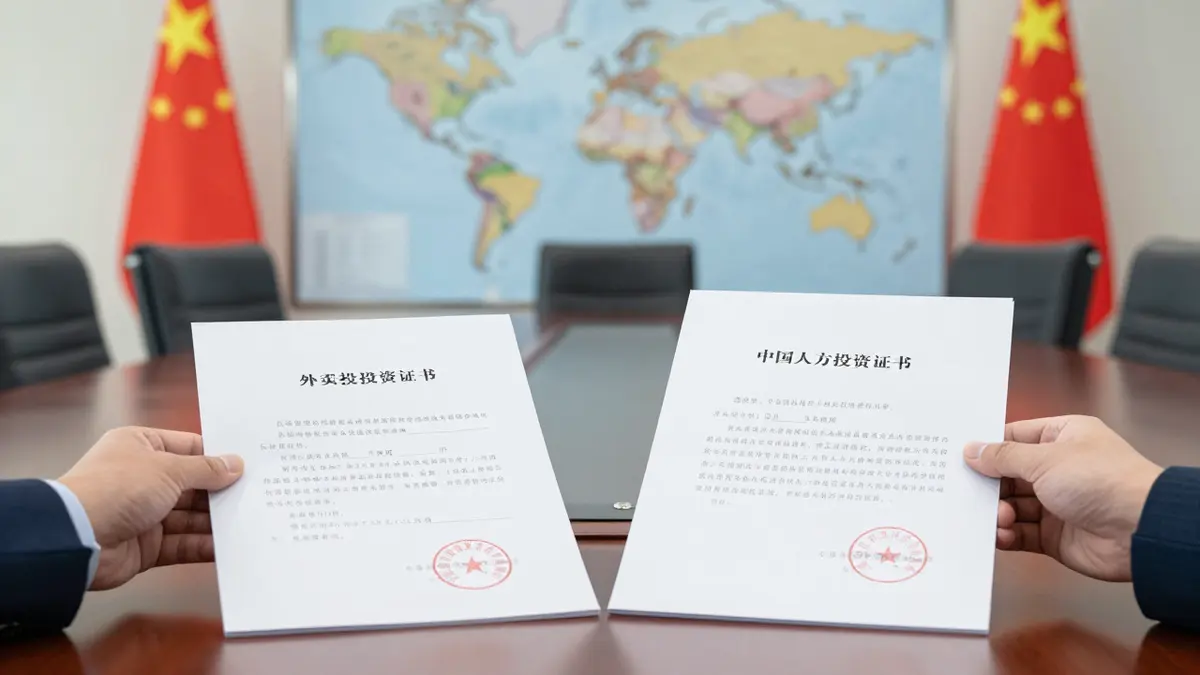

Setting up a foreign-invested company in China requires navigating a complex but increasingly streamlined regulatory landscape. The Foreign Investment Law of 2020 provides the unified legal framework for foreign investment, replacing the previous three separate laws governing wholly foreign-owned enterprises, equity joint ventures, and cooperative joint ventures. This reform has significantly simplified the company formation process and improved legal certainty for foreign investors.
The most common form of foreign-invested enterprise is the Wholly Foreign-Owned Enterprise (WFOE), which allows a foreign investor to own 100 percent of the company's equity. A WFOE offers maximum operational flexibility, protects proprietary technology and business methods, and allows for direct management control. Other options include equity joint ventures with Chinese partners, which may be required or advantageous in certain regulated industries, and contractual joint ventures, where profits are distributed according to contractual agreement rather than equity proportion. The choice of investment vehicle depends on the industry sector, investment scale, business objectives, and regulatory requirements under the Special Administrative Measures (Negative List) for foreign investment.
The company registration process involves multiple steps across several government agencies. The Foreign Investment Law replaced the previous approval-based system with a filing system for most industries, meaning that foreign investors in non-restricted sectors no longer need prior approval from the Ministry of Commerce. Instead, they register directly with the local Administration for Market Regulation. The process begins with name pre-approval through the online registration system, followed by preparation of constitutional documents including the articles of association, which must comply with the PRC Company Law and its 2023 amendments. After submitting the registration application with required documents including the certificate of incorporation of the foreign investor, the company's business license is typically issued within 5 to 15 working days. Post-license registrations include tax registration, social insurance registration, company seal registration with the public security bureau, and foreign exchange registration for capital account transactions. The entire process from start to finish typically takes 4 to 8 weeks when all documents are properly prepared.

- FAILURE MODES
- Negative list; FI information report
For investors looking to establish in Sichuan Province, several incentives and advantages are available. The Chengdu High-Tech Zone and other development zones offer preferential policies including reduced corporate income tax rates of 15 percent for encouraged industries under the Western Development Strategy, customs duty exemptions on imported equipment used in production, research and development expense super-deductions, and streamlined administrative procedures through one-stop service centers. Sichuan has positioned itself as a hub for electronics manufacturing, biomedicine, aerospace, and modern logistics, with well-developed industrial parks and supply chain infrastructure. Foreign investors in these sectors may qualify for additional subsidies, rent reductions, and talent recruitment support.
Capital contribution requirements under the Company Law have been amended by the 2023 revision. The minimum registered capital requirement has been abolished for most industries, and the capital contribution period has been set at five years from the establishment of the company. Foreign investors may contribute capital in the form of cash, equipment, intellectual property, or other tangible or intangible assets, subject to valuation requirements. Capital contributions must be converted into RMB at the prevailing exchange rate and deposited into a designated capital account at a bank authorized to handle foreign exchange business. Proper documentation of capital contributions is essential for tax purposes and for repatriating profits and capital in the future. Engaging local legal counsel and accounting professionals familiar with both Sichuan's local practices and China's foreign investment regulations is strongly recommended for a smooth and compliant setup process.
Company Formation Application Notes
I prefer early written notices and clean evidence indexes over informal WeChat-only chains when the amount or regulatory exposure is material.
I convert complex Chinese procedure into a dated checklist with owners for translation, notarization, and internal sign-off across time zones.
- Documented objectives and preferred remedies
- Bilingual document control
- Deadline and limitation tracking
- Enforcement and settlement options in parallel
Operational Checklist for Foreign Readers
Strategy starts with what can be secured or collected: counterpart assets, licenses, receivables, and interim measures, then builds merits work around that path.
- Mandate letter covering scope and outcomes
- Bilingual document control
- Deadline and limitation tracking
- Enforcement and settlement options in parallel
Risk Controls Before Escalation
I build the strategy around collection and interim leverage first—assets, licenses, receivables, and protective measures—so a paper win is not the only end state.
I document scope, assumptions, and decision rights at engagement start so foreign clients know what will be filed, who must approve, and when silence becomes a missed deadline.
- Agreed work plan and remedy path
- Bilingual document control
- Deadline and limitation tracking
- Enforcement and settlement options in parallel
Implementation Detail 1
Enforcement feasibility shapes my advice from day one: attachable assets, license exposure, receivables, and interim relief sit beside the merits analysis.
- Written engagement scope and remedy options
- Bilingual document control
- Deadline and limitation tracking
- Enforcement and settlement options in parallel
Governance and Authority Reality Checks
The Legal Rule
In Sichuan, treat setting up a foreign-invested company as a question of legal requirements. Naming the city does not replace the papers, approvals or forum that actually control the outcome.
The Business Impact
In Sichuan, confirm the documents, authority and local filings for this setting up a foreign-invested company matter before you pay, transfer or sue. The city name is not a substitute for the file.
- Chop and board authority problems sink more China deals than headline price disagreements.
- Joint-venture deadlock and information rights need operable mechanisms under local company law.
- Licensing and industry access must match the operating company, not only the holding chart.
- Related-party transactions should be documented contemporaneously.
- Legal holds on email and chat reduce narrative rewriting when relationships deteriorate.
Diligence Starter Set
Business licence and articles, beneficial ownership chart, material contracts, pending litigation list, IP registrations, and employment headcount with key contracts for founders and senior managers.
This section is provided to help readers convert general legal information into an action list. It is not a substitute for advice on a specific matter; local procedure, evidence quality and counterparties’ positions can change the correct next step.

- Setting Up a Foreign-Invested Company in Sichuan: Legal Requirements — process.
- Legalise controller docs
- File SAMR / FI report
- Open bank / SAFE
- Inject capital on time
Discussion
Share experience or questions about this topic. This is a public discussion — not legal advice. Do not post confidential case details.
Have a question after reading? Leave it here, or Ask a Lawyer for a free initial intake.
Comments are moderated. China Legal Portal is a directory and information resource; no attorney–client relationship is formed by posting here.