

Business & Contract · Counsel brief · 6 min · Updated 14 Jul 2026

China's 2026 Criminal Record Sealing Pilot Program: A Second Chance for Minor Offenses

Changhu Feng explains China's 2026 criminal record sealing pilot program now in 15 cities, eligibility criteria, and implications for employers conducting background checks.

Key takeaways
  1. China's 2026 criminal record sealing pilot program represents a significant reform of the country's criminal record system.
  2. The program, implemented in select cities, allows certain convicted individuals to have their criminal records sealed from public access after meeting specified conditions.
  3. The observation period is typically five years from the date the sentence is fully completed for most offenses and three years for juvenile offenders.
Cite this article
Article
China's 2026 Criminal Record Sealing Pilot Program: A Second Chance for Minor Offenses
Author
Changhu Feng
Last updated
14 Jul 2026
Publisher
China Legal Portal

Changhu Feng. “China's 2026 Criminal Record Sealing Pilot Program: A Second Chance for Minor Offenses.” China Legal Portal, updated 14 Jul 2026. https://chinalegalportal.com/lawyer-blog/business-and-contract-blog/1358-china-2026-criminal-record-sealing-program

China's 2026 criminal record sealing pilot program represents a significant reform of the country's criminal record system. The program, implemented in select cities, allows certain convicted individuals to have their criminal records sealed from public access after meeting specified conditions. For individuals who committed minor offenses and have demonstrated rehabilitation, the program offers a pathway to move beyond their criminal history and rebuild their lives without the stigma of a permanent criminal record.

Scope and Eligibility

The pilot program applies to individuals convicted of crimes carrying a maximum sentence of less than three years imprisonment, who have completed their sentence, paid all fines and restitution, and have not re-offended during a specified observation period. The observation period is typically five years from the date the sentence is fully completed for most offenses and three years for juvenile offenders. Certain categories of crimes are excluded from the program, including national security offenses, terrorist activities, organized crime offenses, serious violent crimes, and sexual offenses against minors. The final determination of eligibility rests with the court that issued the original judgment, which reviews each application on a case-by-case basis.

Application Process

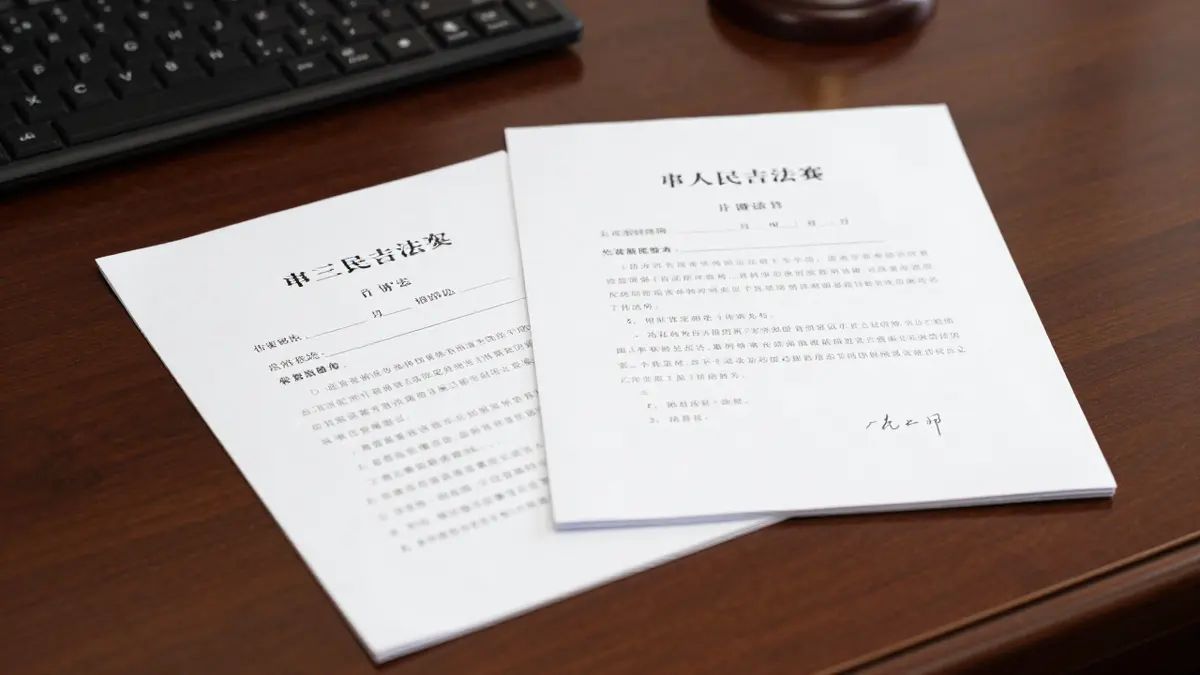
Eligible individuals must file a written application with the original trial court, accompanied by supporting documentation including proof of sentence completion, proof of fine and restitution payment, certificate of no re-offense from local police, and character references from employers or community organizations. The court reviews the application within 30 days and may hold a hearing if necessary. If approved, the court issues a sealing order directing the relevant police departments, prosecution authorities, and other record-keeping agencies to seal the criminal records. Sealed records remain accessible to courts and prosecutors for purposes of subsequent criminal proceedings but are not disclosed to employers, landlords, or the general public.

Contract Law Application Notes

Diagram in text
  • LEGAL TESTS
  • FAILURE MODES
  • Offence class and sentence ceiling

I treat collectability and interim protection as core design inputs, not afterthoughts, so counsel work supports outcomes that can be executed in China.

I document scope, assumptions, and decision rights at engagement start so foreign clients know what will be filed, who must approve, and when silence becomes a missed deadline.

  • Kickoff scope memo and remedy ladder
  • Bilingual document control
  • Deadline and limitation tracking
  • Enforcement and settlement options in parallel

Operational Checklist for Foreign Readers

I treat bilingual consistency as a risk control: chops, authority documents, and English summaries must tell the same commercial story.

  • Documented objectives and preferred remedies
  • Bilingual document control
  • Deadline and limitation tracking
  • Enforcement and settlement options in parallel

Risk Controls Before Escalation

I prefer early written notices and clean evidence indexes over informal WeChat-only chains when the amount or regulatory exposure is material.

  • Mandate letter covering scope and outcomes
  • Bilingual document control
  • Deadline and limitation tracking
  • Enforcement and settlement options in parallel

Implementation Detail 1

  • Agreed work plan and remedy path
  • Bilingual document control
  • Deadline and limitation tracking
  • Enforcement and settlement options in parallel

Implementation Detail 2

I convert complex Chinese procedure into a dated checklist with owners for translation, notarization, and internal sign-off across time zones.

My case plan tests enforceability early—asset location, license pressure points, receivable chains, and interim tools—before heavy spend on pure merits briefing.

  • Written engagement scope and remedy options
  • Bilingual document control
  • Deadline and limitation tracking
  • Enforcement and settlement options in parallel

Implementation Detail 3

  • Kickoff scope memo and remedy ladder
  • Bilingual document control
  • Deadline and limitation tracking
  • Enforcement and settlement options in parallel

Investigation-Stage Priorities

China's 2026 criminal record sealing pilot program represents a significant reform of the country's criminal record system.

The Business Impact

Use “China's 2026 Criminal Record Sealing Pilot Program: A Second Chance for Minor Offenses” to stress-test the point most likely to fail in performance, then allocate evidence and remedies around that risk. The practical cost of a contract problem usually comes from proving breach and collecting a remedy, not from spotting the clause after the event.

  • Early days decide detention risk and narrative shape more than later eloquence.
  • Unplanned written statements can fill gaps for investigators; counsel should structure cooperation.
  • Company cases need clarity on who is a witness versus a suspect.
  • Parallel civil and regulatory tracks should be mapped immediately.
  • Foreign nationals need border-risk and bilingual family briefings.

What Families Should Send First

Any summons or detention notice, known investigating authority, suspected legal provisions if stated, a short timeline, and contact details for trial counsel if already retained.

This section is provided to help readers convert general legal information into an action list. It is not a substitute for advice on a specific matter; local procedure, evidence quality and counterparties’ positions can change the correct next step.

Readers evaluating related options should also consider limitation periods, the cost of interim applications, and whether bilingual documentation will be required for overseas stakeholders. Early alignment on those points prevents restarting strategy after the first hearing date is already fixed.

Appeals and Expectation Management

Appellate work is a dossier discipline: legal error, evidence problems and sentencing benchmarks—not a second emotional trial by slogan.

Diagram in text
  • Diary the waiting period
  • Assemble the file
  • Apply to the competent organ
  • Track the decision

Families should receive plain-language triage of issues worth an appellate panel’s time versus complaints unlikely to move the file.

Collateral consequences—licences, travel, civil follow-on—belong on the same calendar as the criminal stages.

Investigation-Stage Priorities — Applied Notes

Early days often decide detention risk and narrative shape more than later eloquence. Who may speak, what devices are at risk, and how internal communications are controlled should be decided quickly.

Unplanned written statements can fill gaps for investigators. Structured cooperation differs from freelancing explanations under pressure.

Company matters need clarity on witnesses versus suspects and how unit-crime theories may land on managers. Dual-track civil and regulatory exposure should be mapped immediately.

Evidence, Mitigation and Parallel Tracks

Document and fund-flow reconstruction should begin before devices are seized where still possible. Family members deleting shared chats in panic creates hard-to-unwind destruction narratives.

Mitigation packages—restitution plans, compliance reforms, character materials—must be verifiable. Empty future promises rarely help.

Foreign nationals need border-risk briefings and bilingual family updates. Travel should not be improvised once an inquiry is live.

Action List for Readers Facing a Live Matter

  • Write a one-page chronology with dates, parties, amounts and locations tied to: China's 2026 Criminal Record Sealing Pilot Program: A Second Chance for Minor Offenses
  • List the top ten documents you can produce within 48 hours, and the gaps you cannot fill yet.
  • Identify every fixed deadline already running (notices, hearings, limitation periods, platform clocks).
  • Confirm who inside your organisation may settle, pay, or make public statements.
  • Ask counsel for a staged plan: interim measures, filing options, settlement window and evidence workstream.

This expansion is practical orientation for cross-border readers. It is not a substitute for advice on your specific facts; procedure, evidence and counterparty incentives can change the correct next step.

READER DISCUSSION

Discussion

Share experience or questions about this topic. This is a public discussion — not legal advice. Do not post confidential case details.

Have a question after reading? Leave it here, or Ask a Lawyer for a free initial intake.

Comments are moderated. China Legal Portal is a directory and information resource; no attorney–client relationship is formed by posting here.


End of brief

Changhu Feng, Business & Contract lawyer

Author

Changhu Feng

Hunan Junjian Law Firm · Business & Contract

Hunan Junjian Law Firm · Verified listing. This insight is educational and does not create an attorney–client relationship.

View lawyer profile

Business & Contract

Need a next step?

Take a focused intake, or browse listed business & contract practitioners.

Submit an initial enquiry Find listed counsel

In the library

Go deeper on this topic

Educational information only — not legal advice. Laws change; consult qualified counsel for your situation. No attorney–client relationship is formed by using this site.

Disclaimer Editorial policy AI content policy