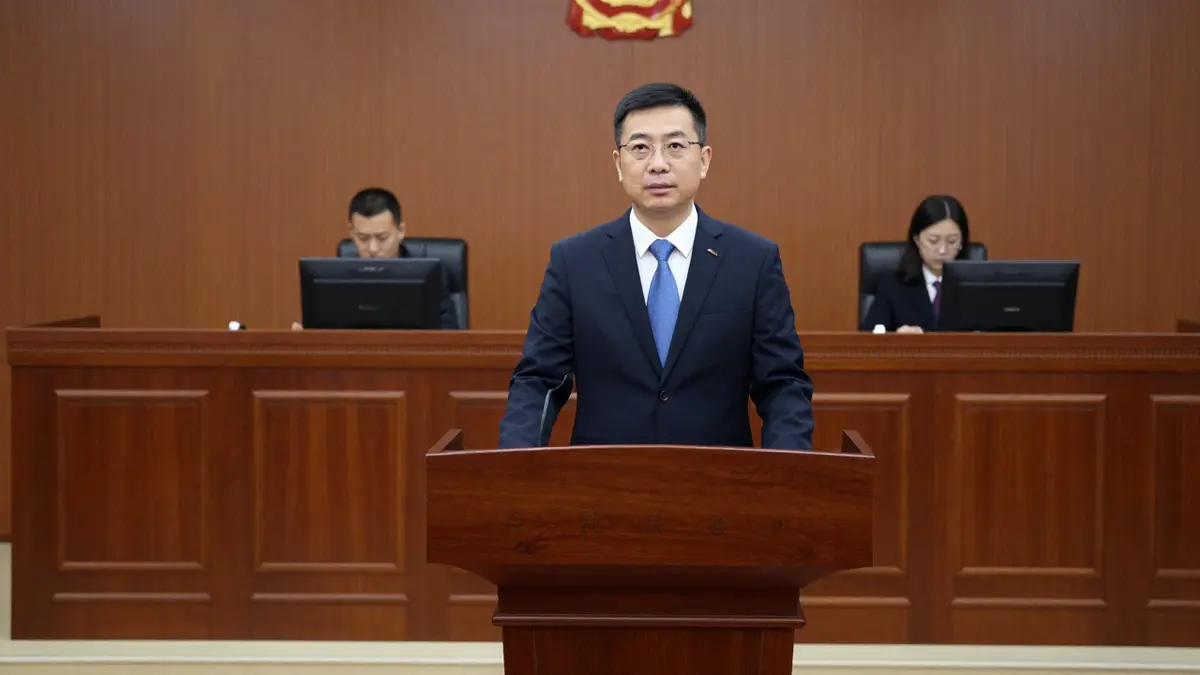

The Role of Chinese Lawyers in Domestic and International Arbitration
The Legal Rule
The Role of Chinese Lawyers in Domestic and International Arbitration Arbitration has become an increasingly important method of dispute resolution in China, offering parties an alternative to traditional litigation that is often faster, more flexible, and more confidential.
The Business Impact
Identify the commercial assumption the contract must protect—counterparty, performance standard, payment trigger, licence, acceptance or exit—and make the evidence trail match it. Remedies are far easier to use when the operational record supports the drafting. Apply that to the facts of The Role of Chinese Lawyers in Domestic and International Arbitration.
Arbitration has become an increasingly important method of dispute resolution in China, offering parties an alternative to traditional litigation that is often faster, more flexible, and more confidential. The role of Chinese lawyers in the arbitration process, both domestic and international, has evolved significantly over the past decade as China has positioned itself as a leading venue for commercial dispute resolution. Understanding these roles is essential for any foreign company doing business in China.
In domestic arbitration proceedings, the Chinese lawyer's role closely parallels that of a litigator in court. The lawyer serves as an identifier, selector, and marshaller of evidence, working to reconstruct the historical facts of the dispute in a manner most favorable to their client. One legal scholar aptly described litigators as historians, noting that the majority of time in any case is spent gathering and presenting evidence rather than arguing about points of law. This evidence-centric approach is equally applicable in the arbitration context.
Risk assessment forms a fundamental part of the arbitration lawyer's advisory function. Throughout the dispute resolution process, the lawyer must evaluate the risks associated with various courses of action, considering both the probability of success and the potential costs of failure. Where the stakes are high, the lawyer must work to minimize risk through strategic decisions about evidence presentation, witness selection, and legal argumentation. Where the costs of failure are low, the client may be willing to accept a higher degree of risk.
The number of Chinese lawyers practicing in the field of international arbitration remains relatively small, though it is growing steadily. These practitioners must navigate the intersection of Chinese legal procedures and international arbitration norms, which can present unique challenges. Their roles vary significantly depending on the context in which they function. In domestic arbitration, Chinese lawyers typically adopt a representative role, advocating for their client before arbitrators who may or may not be legally trained.

- FAILURE MODES
- POA that the institution accepts
- Who appears
In international arbitration, the distinctions between the roles of lawyers are more blurred. Chinese lawyers may serve either as counsel representing a party or as arbitrators deciding the dispute. Non-lawyers may also appear in international arbitration as expert witnesses or co-arbitrators, bringing specialized industry knowledge to bear on technical disputes. This flexibility is one of the key advantages of arbitration over litigation.
Domestic arbitration in China has been ongoing for many years and is particularly common in the construction and real estate sectors. These arbitrations have traditionally been the domain of chambers of commerce and industry professionals such as architects, engineers, and surveyors who are appointed to sit as arbitrators. However, there is a growing recognition that lawyers bring valuable skills to the arbitrator role, including evidentiary analysis, legal reasoning, and procedural management.
A concerning trend in modern arbitration, both in China and internationally, is that the process has become increasingly judicialized. Many practitioners lament that arbitration has become a mirror of litigation, with the same procedural formalities, discovery disputes, and motion practice that characterize court proceedings. In some cases, arbitration may actually cost more than litigation, leaving privacy and the ability to select decision-makers as the primary advantages.
Chinese lawyers can play a vital role in revitalizing the arbitration process by being innovative in their approach to procedural management. Rather than simply following the default procedural directions, lawyers should consider whether there are more efficient ways to reach the heart of the dispute. Early identification of key issues, streamlined document production, and focused witness testimony can significantly reduce the time and cost of arbitration without compromising the quality of the outcome.
For parties engaged in international transactions involving Chinese counterparties, carefully drafting the arbitration clause is essential. The clause should specify the arbitration institution, the seat of arbitration, the governing law, the language of proceedings, and the number of arbitrators. Common choices for China-related disputes include CIETAC, the Shanghai International Arbitration Center (SHIAC), and the Beijing International Arbitration Center (BIAC), as well as regional centers such as HKIAC and SIAC.
The future of arbitration in China looks promising, with continued growth expected as more international businesses recognize the advantages of resolving disputes in China's increasingly sophisticated arbitration venues. Chinese lawyers will play an increasingly important role in this development, serving both as advocates for their clients and as contributors to the evolution of arbitration practice through their work as arbitrators, scholars, and practitioners.
Contract Law Application Notes
I build the strategy around collection and interim leverage first—assets, licenses, receivables, and protective measures—so a paper win is not the only end state.
I document scope, assumptions, and decision rights at engagement start so foreign clients know what will be filed, who must approve, and when silence becomes a missed deadline.
- Kickoff scope memo and remedy ladder
- Bilingual document control
- Deadline and limitation tracking
- Enforcement and settlement options in parallel
Operational Checklist for Foreign Readers
I treat bilingual consistency as a risk control: chops, authority documents, and English summaries must tell the same commercial story.
- Documented objectives and preferred remedies
- Bilingual document control
- Deadline and limitation tracking
- Enforcement and settlement options in parallel
Risk Controls Before Escalation
I prefer early written notices and clean evidence indexes over informal WeChat-only chains when the amount or regulatory exposure is material.
- Mandate letter covering scope and outcomes
- Bilingual document control
- Deadline and limitation tracking
- Enforcement and settlement options in parallel
Forum Selection and Interim Measures
A strong paper claim is incomplete if it cannot be enforced where assets and decision-makers sit. Forum clauses, arbitration seats and court jurisdiction should be stress-tested against the enforcement map at the outset.

- The Role of Chinese Lawyers in Domestic and International Arbitration — process.
- Issue a compliant POA
- Formalise overseas evidence
- Set settlement authority
- File the request/defence
Property preservation and other interim measures can matter more than a distant final judgment. Eligibility, bond requirements and timing should appear in the first case plan.
Multi-contract systems—supply, guarantee, side letters and platform terms—must be read together. Winning on one document while losing the framework is a recurring failure mode.
Discussion
Share experience or questions about this topic. This is a public discussion — not legal advice. Do not post confidential case details.
Have a question after reading? Leave it here, or Ask a Lawyer for a free initial intake.
Comments are moderated. China Legal Portal is a directory and information resource; no attorney–client relationship is formed by posting here.