
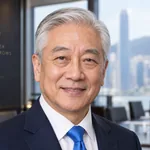

Professional profile
About Hui
Equity Partner | Litigation and arbitration, debt restructuring, non-performing assets, investment and M&A, corporate governance, financial disputes
Hui Xu is an equity partner in Zhong Lun Law Firm's Xi'an office whose official profile identifies deep experience in litigation and arbitration, mergers and acquisitions, corporate governance, debt restructuring and disposal of non-performing assets. His clients include government bodies, enterprises, universities, construction businesses and financial institutions, and his representative matters include financial and commercial disputes involving major banks and asset-management companies. His profile also records professional roles in financial law, mediation and arbitration.
Read full profile
This combination is particularly relevant to banks, asset managers and investors acquiring distressed Chinese loans. Buying a non-performing loan is not simply purchasing a contractual receivable. The buyer needs to understand the enforceability of the underlying debt, the validity and ranking of guarantees and security, limitation periods, prior litigation or enforcement, asset transfers by the debtor, insolvency risk and the practical location of recoverable assets.
Xu's litigation experience is valuable because distressed-debt value depends heavily on procedure. A loan may appear well secured on paper but produce poor recovery if the collateral has already been transferred, enforcement has stalled, the guarantor is insolvent or the creditor failed to preserve important procedural rights. Conversely, a claim considered difficult may have meaningful value if the creditor can preserve receivables, challenge an asset transfer, pursue a guarantor or use bankruptcy proceedings to obtain collective leverage.
His debt restructuring and non-performing asset practice adds a transaction perspective. An NPL investor needs to choose between immediate enforcement and negotiated restructuring. A debtor with a viable business may be worth more through a repayment plan, asset sale, debt-equity arrangement or coordinated restructuring than through piecemeal execution. Counsel must therefore assess both legal rights and commercial recovery paths.
Financial disputes also require careful analysis of guarantee structures. Chinese financing packages may include corporate guarantees, individual guarantees, mortgages, pledges and debt-joining arrangements. The legal consequences differ. The creditor should confirm that approvals and registrations were properly completed and that the scope of guaranteed obligations matches the claim being asserted.
Asset movement before enforcement is another common risk. A distressed debtor may sell real estate, transfer equity, move receivables to affiliates or create new security for another creditor. The creditor needs to distinguish an ordinary commercial transaction from conduct that may be challengeable under the Civil Code, insolvency law or other applicable rules. Evidence of consideration, timing, related-party status and debtor solvency can become critical.
Xu's M&A and corporate-governance background is useful when the recovery strategy involves equity. A creditor may acquire a debtor's subsidiary, accept equity as part of restructuring or sell the NPL to another investor. Corporate authority, shareholder restrictions and valuation then become part of the recovery analysis.
His representative financial matters and ongoing counsel relationships with banks and financial institutions indicate familiarity with institutional decision-making. A bank or AMC often needs an internal recovery memorandum that explains legal strength, expected timeline, preservation options, collateral value and settlement scenarios. Counsel should be able to translate litigation uncertainty into a recoverable-value range.
For an NPL buyer, assignment diligence should also verify the chain of title to the debt. A portfolio may have passed through a bank, asset-management company and private investor before the current sale. Missing notices, unclear interest calculations or inconsistent enforcement records can create avoidable litigation. The buyer should understand exactly what claim is being acquired and what evidence will be available after transfer.
Xu's mediation and arbitration roles are relevant because distressed recovery often involves negotiated settlements. A debtor may be willing to sell an asset, bring in a new investor or provide additional security if enforcement pressure is credible. Counsel must therefore use litigation tools without foreclosing a restructuring that produces a better recovery.
His corporate-governance practice also matters when the creditor seeks remedies involving shareholders or affiliates. Asset transfers, capital reductions, guarantees and related-party transactions often require analysis of corporate authority and the legal relationship among group companies. A creditor cannot assume that economic affiliation automatically creates liability.
For foreign investors purchasing Chinese distressed debt, local procedural knowledge is particularly important. The investment model may assume a certain collateral value or recovery timeline, but actual execution depends on court jurisdiction, preservation, competing claims, bankruptcy risk and the quality of local asset evidence. Xu's combined litigation and NPL profile fits those needs.
A distressed-credit mandate also requires discipline about recovery sequencing. The creditor should know which claims can produce near-term cash, which are useful mainly as leverage, and which depend on longer litigation or insolvency proceedings. That distinction is especially important for institutional clients that must explain expected recovery and timing to investment or credit committees. Xu's combination of litigation, restructuring and non-performing-asset work is relevant to that process because legal strength must ultimately be translated into a practical recovery plan.
Capability
Dispute Resolution Experience
- Dispute ResolutionPrimary