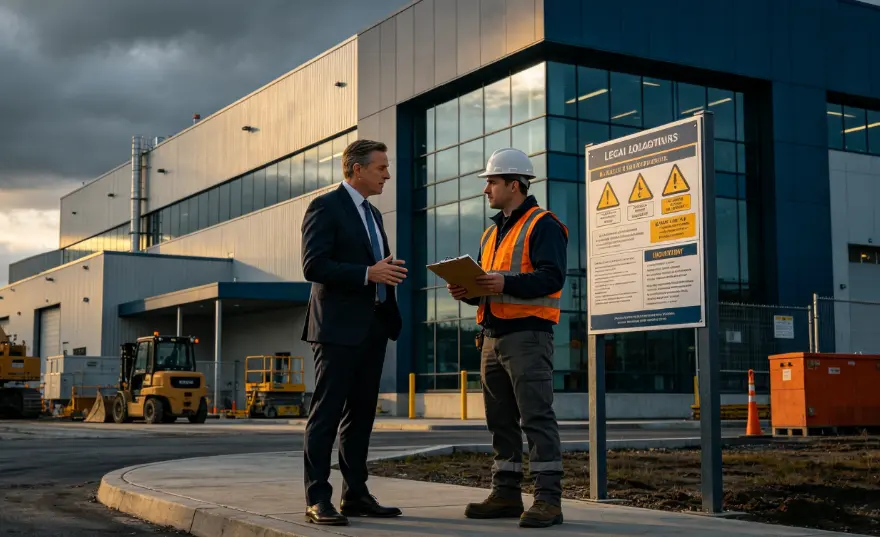

A foreign manufacturer proposes to acquire a Wuhan company that owns an industrial site previously used for chemicals and metal treatment. Environmental diligence identifies elevated contaminants in part of the soil, but the seller argues that no government order has been issued and the plant has operated legally for years. The buyer wants to close quickly and rely on a broad environmental indemnity. [2]
That is dangerous. Soil contamination can create remediation cost, development delay, regulatory restrictions and lender concerns long after closing. The legal question is not simply whether contamination exists. It is who has responsibility, what investigation is required, whether the site can continue operating, and how transaction documents should allocate known and unknown environmental risk under China's soil-pollution framework. [1]
Reconstruct the site's use history. The first diligence step is a chronology of land use, production processes, chemicals, waste storage, accidents and prior occupants. Historical aerial images, environmental filings, land records, plant diagrams and interviews can identify areas of concern even before sampling begins. [3]
The specific issue
The Legal Rule
In Wuhan, treat buying a contaminated industrial site as a question of how to allocate soil remediation liability before closing. Naming the city does not replace the papers, approvals or forum that actually control the outcome.
The Business Impact
In Wuhan, confirm the documents, authority and local filings for this buying a contaminated industrial site matter before you pay, transfer or sue. The city name is not a substitute for the file.
Site history, statutory soil regime and regulatory status
A buyer should not assume the current owner's clean operating record proves the soil was never contaminated by an earlier operator.
Review the Soil Pollution Prevention and Control Law. China's Law on Prevention and Control of Soil Contamination establishes a framework for investigation, risk control and remediation and assigns responsibilities to soil pollution parties and land-use rights holders in specified circumstances. The buyer should identify how the law applies to the site's current status and planned use.
Legal analysis should be coordinated with qualified environmental consultants because statutory obligations often depend on technical findings and regulatory classification.
Check whether the land is on any regulatory list. The diligence team should determine whether the site has been identified by authorities for soil pollution risk management, remediation or special supervision. Review environmental bureau records, land-use transition documents and any prior investigation reports.
A site that is formally listed can face restrictions materially different from an unlisted site with preliminary sampling concerns.
Distinguish operating land from redevelopment land. The buyer's intended use matters. Continuing the same industrial operation may present different regulatory steps from converting the site to residential, commercial or other sensitive use. A transaction model that assumes future redevelopment should therefore be tested against the land's environmental status.
The buyer should not price the property on redevelopment potential before confirming that contamination can be investigated and remediated to the required standard.
Sampling, consultant independence and source identification
Design the sampling plan around the transaction decision. Environmental sampling should answer the commercial questions: where contamination exists, likely source, severity, migration risk and estimated remediation range. A limited “desktop review” may be appropriate for initial diligence but insufficient once a specific historical risk is identified.
The acquisition agreement can allow targeted additional investigation before signing or closing and allocate access, confidentiality and responsibility for invasive testing.
Do not let the seller control the consultant. If the seller appoints and pays the environmental consultant, the buyer should still have rights to review scope, data and underlying laboratory results. For material sites, the buyer may appoint its own adviser or require a jointly agreed consultant.
The legal team should preserve raw data because summary conclusions may change as the project develops.
Identify the pollution source. The statutory and contractual allocation may depend on whether contamination arose from the seller, a predecessor, a tenant, a third party or historic state-owned operations. Technical source attribution can be difficult, but diligence should collect evidence rather than assuming the current operator is responsible for everything.
The SPA can allocate economic responsibility even where public-law liability is uncertain, but private allocation does not necessarily bind regulators.
Indemnity, escrow and remediation structure
Environmental indemnity needs more than “all environmental liabilities”. A broad indemnity may be hard to enforce if it does not define covered contamination, investigation costs, remediation, third-party claims, regulatory orders and diminution in land value. The clause should address known contamination separately from unknown environmental matters.
For a known problem, the buyer should consider specific caps, survival periods and security rather than relying on the general warranty regime.
Escrow can be more valuable than a seller promise. If remediation may cost tens of millions of yuan, the buyer should assess whether the seller will remain solvent and reachable. Escrow, holdback or price retention can provide practical security.
The amount can be tied to an independent remediation estimate plus contingency. Release can occur when defined regulatory or technical milestones are achieved.
Pre-closing remediation may be preferable. Where contamination is localized and remediation can be completed without disrupting operations, the buyer may require the seller to remediate before closing. This reduces post-closing uncertainty but can delay the transaction.
The condition should specify the cleanup standard, evidence of completion, regulator involvement where necessary and what happens if the work exceeds the long-stop date.
Post-closing remediation needs governance. If the buyer accepts the site and the seller funds cleanup later, the documents should define who controls the remediation contractor, technical scope, regulator communication and budget. The seller should not be able to minimize work solely to reduce indemnity cost.
The buyer should retain authority over actions that affect ongoing operations, land value and future redevelopment.
Lender, insurance, waste and safety overlays
Lenders need to see the environmental analysis. A bank financing the acquisition or site may require environmental due diligence and may discount collateral value if contamination is unresolved. The buyer should discuss the issue before finalizing financing, not after the lender's appraisal.
Loan covenants may also require compliance, remediation or reporting that affects transaction economics.
Insurance should be reviewed but not assumed. Some environmental or transaction insurance may address defined risks, but coverage can contain exclusions for known contamination, gradual pollution or remediation orders. The buyer should review actual policy wording and insurer underwriting requirements.
Insurance is a complement to diligence and contract allocation, not a substitute.
Hazardous-waste history can reveal soil risk. Review manifests, storage areas, disposal vendors and incidents involving hazardous waste. Poor historic management can identify likely contamination zones and separate regulatory exposure.
The buyer should also verify whether ongoing waste practices comply with current permits and operational requirements.
Production safety and environment intersect. Contaminated or hazardous sites may also have production-safety risks, especially during excavation, demolition or remediation. The project plan should address worker protection, contractor management and emergency procedures. [4]
A remediation schedule that ignores safety can create a new legal problem while solving the old one.
Worked plating-plant acquisition scenario
Case study: plating plant acquisition. Assume sampling identifies heavy metals near a historic wastewater area. The consultant estimates remediation between RMB 15 million and RMB 35 million depending on excavation depth. The seller offers a five-year indemnity capped at RMB 20 million with no escrow.
The buyer should test the downside: if the final cleanup costs RMB 35 million and the seller later distributes sale proceeds, recovery may be uncertain. A better structure could use a higher specific cap, RMB 25 million escrow, seller-controlled pre-closing investigation and a price adjustment for residual risk.
Future transfer, deal structure and seller disclosure
Future land transfer can crystallize risk. The buyer may intend to sell or redevelop the site in five years. Environmental obligations that are manageable during current operations can become a major issue when land use changes or a new buyer conducts its own sampling.
The valuation should therefore include the future exit scenario, not only today's compliance status.
Share deal versus asset deal. An asset acquisition may allow some corporate liabilities to remain with the seller, but environmental public-law obligations can still follow the land or responsible party under applicable law. A share acquisition preserves permits and operating continuity but brings the target's history with it.
The legal team should compare structures using both corporate and environmental exposure rather than assuming an asset deal automatically isolates contamination.
Seller disclosure should include raw environmental records. Require copies of prior monitoring, environmental impact assessments, penalties, consultant reports, government correspondence and incident records. A disclosure that “the buyer has inspected the site” should not waive reliance on information that was not made available.
Known environmental reports should be scheduled specifically in the SPA.
Build a remediation decision tree. If contamination is immaterial: disclose and monitor. If material but localized: consider pre-closing remediation or escrow. If extent is uncertain: conduct further investigation before binding price. If contamination makes intended use impossible or creates uncapped liability: consider restructuring or abandoning the transaction.
The board should know which branch applies before signing.
Post-acquisition compliance, seller solvency and regulator communication
Environmental compliance after acquisition. The buyer should conduct a post-closing environmental and safety audit covering permits, emissions, waste, soil monitoring, emergency plans and contractor controls. Historic contamination should not distract from current operational compliance.
Integrate the site into group reporting immediately.
Insolvency of the seller changes recovery. If the seller becomes distressed after closing, an unsecured environmental indemnity may have limited value. This is another reason to secure known liabilities through escrow, guarantee or price retention where commercially justified.
The buyer's legal protection should be tested against the seller's post-closing financial position.
Regulator communication should be coordinated. The buyer and seller should agree who communicates with environmental authorities before closing. Inconsistent statements about source, severity or planned remediation can create credibility problems.
Technical and legal teams should use one verified factual record.
Board paper should quantify the environmental downside. The investment committee should see the best estimate, reasonable worst case, transaction protection and impact on financing and future land value. It should not receive only the consultant's conclusion that risk is “manageable.”
Environmental risk becomes actionable when it is connected to money and timeline.
Historic operators, groundwater and redevelopment financing
Historic operators and successor arrangements need review. Industrial sites may have changed corporate ownership without changing physical operations. The buyer should identify former operators, mergers, asset transfers and leases to understand who caused contamination and whether contractual indemnities already exist.
A predecessor indemnity can be valuable, but its enforceability depends on wording, survival and the predecessor's solvency.
Groundwater migration can expand the risk perimeter. Soil sampling alone may miss off-site migration. Where contaminants can move through groundwater, the technical team should assess neighboring parcels, wells and receptors. The legal team should consider third-party claims and whether remediation requires access outside the target property.
This can materially change cost and timetable.
Redevelopment financing may depend on a clean environmental status. A future construction lender or purchaser may require more investigation than the current acquisition lender. The buyer should therefore test the site against its intended exit standard, not merely minimum closing requirements.
A cheap acquisition can become expensive if contamination prevents refinancing or sale.
Demolition, permits, penalties and signing-to-closing covenants
Demolition can expose previously contained contamination. If the buyer plans to demolish old buildings or tanks, construction may disturb contaminated soil and create waste-handling obligations. The remediation plan should be integrated with demolition and earthworks.
Separate contractors should not operate without one environmental management plan.
Environmental permits should be matched to actual operations. Review whether production lines, emissions points, wastewater and hazardous-waste activities match current permits and environmental approvals. Historic expansions may have occurred without complete updates.
A buyer should not focus so heavily on soil that it overlooks current operational violations.
Regulatory inspections and penalties require trend analysis. One small penalty may be immaterial; repeated warnings can show a systemic compliance problem. Review several years of inspection records and corrective actions.
The SPA can distinguish isolated resolved matters from continuing compliance failures that require specific protection.
Seller covenants between signing and closing matter. If closing is delayed for further sampling, the seller should maintain permits, avoid new hazardous activities, notify the buyer of incidents and preserve environmental records. The buyer should have access rights for agreed follow-up work.
The site condition should not materially deteriorate while the transaction is pending.
Remediation contracts, waste chain and purchase-price remedies
Remediation contractor contracts need performance controls. Where cleanup continues after closing, the contractor agreement should define scope, standards, testing, change orders, insurance, waste disposal and completion evidence. The buyer should not inherit an informal remediation arrangement with no measurable endpoint.
Payment milestones should follow verified work.
Waste disposal chain should be auditable. Remediation can generate contaminated soil or hazardous waste. The company should verify transporter and disposal qualifications, manifests and destination. Illegal disposal can create new regulatory and reputational exposure.
The buyer should retain records for future audits and land transactions.
Environmental representations should use knowledge qualifiers carefully. A seller may request that environmental warranties be limited to its “knowledge.” For matters that can be verified objectively—permits, penalties, reports, waste records—the buyer should question whether a broad knowledge qualifier is appropriate.
Known and unknown contamination can be treated differently in the warranty package.
Purchase-price adjustment can be simpler than indemnity. If remediation cost is reasonably estimable, reducing price at closing may be cleaner than pursuing future reimbursement. The buyer then controls the work and bears overruns, while the seller receives finality.
The parties should compare this approach with escrow based on uncertainty and bargaining power.
Final safeguard. Before closing, counsel should confirm that agreed investigations are complete, material reports are disclosed, regulator communications are current, any required consent is obtained and transaction protections are funded. The certificate should identify residual monitoring obligations after closing.
This gives the board a clear statement of what risk remains.
Reports, legacy insurance, excavation and neighboring land
Soil investigation reports should be legally readable. Technical reports often use risk terminology that business teams misunderstand. Counsel should work with consultants to translate findings into transaction consequences: whether further sampling is required, whether a regulatory filing is likely, what use restrictions exist and what cost range is defensible.
The board should not approve a transaction based on an unexplained technical conclusion such as “medium risk.”
Historical environmental insurance and indemnities should be traced. The target may have prior acquisition agreements, leases or insurance policies that allocate environmental responsibility. Review whether those rights can still be enforced and whether notice deadlines have expired.
Existing recovery rights can materially reduce net exposure, but only if the relevant obligor remains solvent and the clause covers the discovered contamination.
Demolition and excavation contracts should allocate contamination discoveries. If redevelopment starts after closing, contractors may discover previously unknown tanks, buried waste or contaminated soil. Construction contracts should state who stops work, who investigates, how variations are priced and who bears disposal cost.
Without this mechanism, environmental risk can turn immediately into a construction dispute.
Community and neighboring land issues can affect timetable. Off-site migration, odor, dust or truck movements can create complaints even before formal regulatory action. The buyer should understand sensitive neighboring uses and any historic disputes.
Stakeholder management is not a substitute for compliance, but it can prevent avoidable escalation during remediation.
Lease drafting, monitoring, access and completion standards
Integrate soil risk into future lease drafting. If the buyer will lease parts of the site, leases should regulate tenant hazardous substances, reporting, waste, access for monitoring and responsibility for tenant-caused contamination. The landlord should preserve baseline data before new tenants begin operations.
This helps distinguish historic contamination from future tenant liability.
Post-remediation monitoring can outlive the transaction. Some sites may require monitoring or institutional controls after active cleanup. The transaction documents should identify who funds and performs those obligations and how they affect future sale or financing.
A remediation certificate does not always mean environmental obligations have ended.
Environmental due diligence should survive the transaction. The buyer should convert the diligence findings into a post-closing environmental register. Each known issue should have an owner, monitoring requirement, budget and reporting date. This prevents the environmental report from becoming a static closing document while conditions on the ground continue to change.
Site access rights matter during deferred remediation. If the seller remains responsible for investigation or cleanup after closing, the buyer should define when the seller and its contractors may access the site, how work is coordinated with production and who bears interruption cost. Uncontrolled access can create safety and operational problems, while inadequate access can make the seller's obligations impossible to perform.
Environmental records should be part of the corporate archive. Keep sampling data, laboratory reports, remediation plans, regulator correspondence, waste records and completion evidence with the permanent property file. Future lenders, insurers and buyers will ask for this history. A clean chain of records can materially reduce uncertainty in the next transaction.
Define environmental completion for the SPA. Where remediation is a closing or post-closing obligation, the contract should define completion by reference to objective technical or regulatory evidence rather than the seller's statement that work is finished. The required evidence may include consultant verification, monitoring results, regulator acknowledgement where applicable and proper waste-disposal documentation.
Future redevelopment assumptions should be stress-tested. If part of the purchase price reflects a future change to higher-value use, the board should model the possibility that remediation cost, planning requirements or timing prevent that redevelopment. The acquisition should still make economic sense under a more conservative industrial-use scenario.
A conservative closing model is preferable to relying on uncertain future redevelopment value.
Final transaction safeguard
Final safeguard. If the parties disagree about remediation scope after signing, the SPA should provide an expert-determination or other defined process rather than allowing technical disagreement to become an open-ended closing dispute.
Conclusion
Soil contamination in industrial M&A cannot be solved by a generic environmental warranty. The buyer needs a site history, technical investigation, legal responsibility analysis and transaction structure that provides real financial protection.
The central principle is: known contamination should be priced, secured and governed before closing.
Legal and regulatory sources
[1] Law of the PRC on Prevention and Control of Soil Contamination, official NPC English law collection: https://www.npc.gov.cn/englishnpc/lawsoftheprc/index_1.html
[2] Environmental Protection Law of the PRC, official NPC legal database: https://flk.npc.gov.cn/
[3] Law of the PRC on the Prevention and Control of Environmental Pollution by Solid Waste, official NPC legal database: https://flk.npc.gov.cn/
[4] Work Safety Law of the PRC, official NPC legal database: https://flk.npc.gov.cn/
General legal information only; not advice on a specific site or acquisition.
Discussion
Share experience or questions about this topic. This is a public discussion — not legal advice. Do not post confidential case details.
Have a question after reading? Leave it here, or Ask a Lawyer for a free initial intake.
Comments are moderated. China Legal Portal is a directory and information resource; no attorney–client relationship is formed by posting here.