
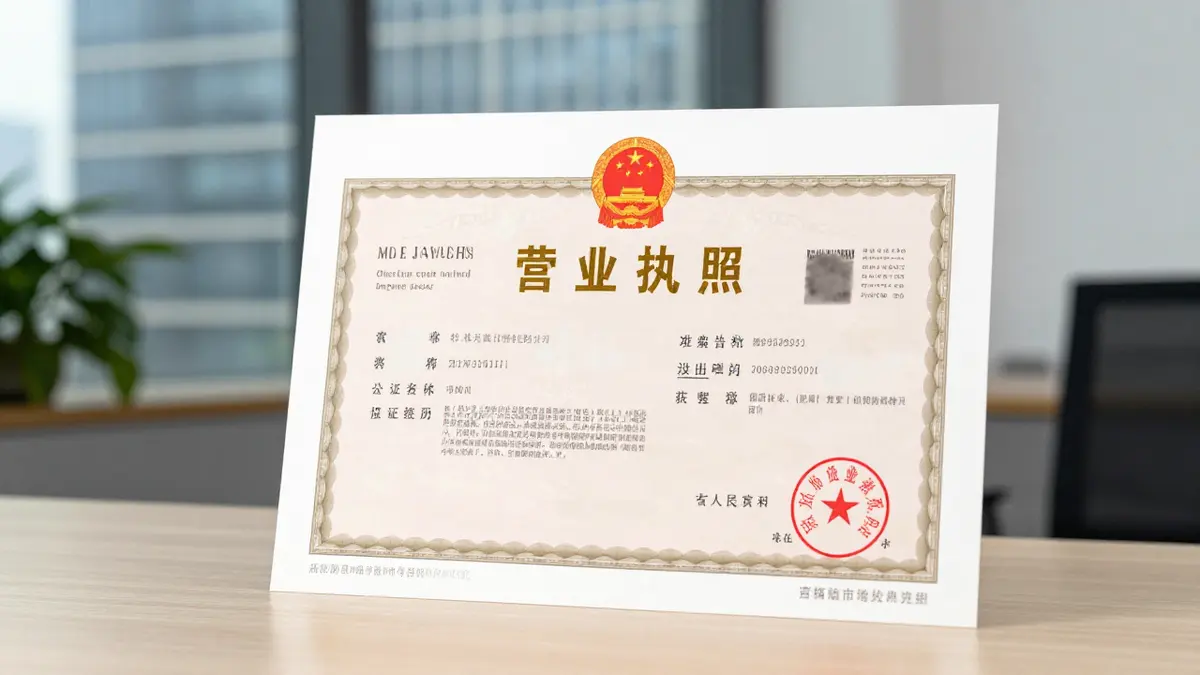

Corporate governance in China starts with the Company Law, but an operating authority map must also reconcile the company's articles of association, valid shareholder and board decisions, registered particulars, internal delegations, bank mandates and control of company chops. An offshore group chart or job title alone does not establish authority for a Chinese subsidiary.
This guide explains the governance framework under the revised Company Law effective 1 July 2024. It covers corporate organs, reserved matters, board and shareholder resolutions, minority-shareholder protections, dispute escalation and a practical compliance calendar for foreign-invested companies.
Governance map under the revised Company Law
The Legal Rule
Corporate governance in China starts with the Company Law, but an operating authority map must also reconcile the company's articles of association, valid shareholder and board decisions, registered particulars, internal delegations, bank mandates and control of company chops.
The Business Impact
Treat “Company Registration and Corporate Governance in China” as a structuring decision, not just a registration task. Confirm who owns, controls, funds and legally represents the company, and make those choices consistent with the licences and contracts the business will need.
Foreign-invested companies generally use the same Company Law framework as other Chinese companies, subject to the foreign-investment negative list and sector-specific rules. The precise structure depends on whether the entity is a limited liability company or a company limited by shares; listed companies have additional requirements that should not be treated as universal.
| Layer | Core function | Documents to verify |
|---|---|---|
| Articles of association | Company-specific allocation of powers, meeting procedure and transfer rules within statutory limits | Current registered articles and all amendments |
| Shareholders | Decisions reserved by law or the articles, including fundamental structural and capital matters | Register of shareholders, contribution evidence, notices, proxies and resolutions |
| Board or director | Business decisions and management oversight allocated by law and the articles | Appointment records, board rules, conflict disclosures, minutes and delegations |
| Manager | Execution within authority granted by the articles or board | Appointment, authority matrix, employment terms and signing limits |
| Supervisory function | Supervision through a board of supervisors, supervisor or qualifying audit committee structure | Chosen statutory structure, appointments, work rules and reports |
| Legal representative | Representation by the director or manager who performs company affairs as specified in the articles | Articles, appointment and registration, specimen signature and handover record |
Separate statutory authority from authority created by the articles and authority delegated internally. Internal restrictions on the legal representative's authority may not be asserted against a good-faith counterparty. That makes counterparty diligence, written delegations, chop custody and rapid registration of changes essential controls.
Shareholder and board reserved matters
Create a reserved-matters schedule from the current Company Law and the registered articles rather than copying an offshore template. For a limited liability company, shareholder authority commonly includes electing and replacing directors and supervisors, reviewing their reports, approving profit distribution and loss recovery plans, changing registered capital, issuing bonds, and deciding merger, division, dissolution, liquidation, company-form changes and amendments to the articles. The board's functions and any manager delegation should then be mapped without overlap or gaps.
Check the rules applicable to the entity type and decision. Fundamental matters such as amendments to the articles, capital changes, merger, division, dissolution and company-form changes generally require a supermajority under the Company Law. Other voting thresholds, notice periods and procedures may come from the statute and the articles. Do not assume that one threshold applies to every company or every decision.
Board and shareholder resolution checklist
- Authority: identify the organ empowered by the Company Law and the current registered articles.
- Notice and agenda: satisfy the applicable convening party, notice period, delivery method and agenda requirements; retain proof of delivery.
- Attendance and representation: verify the shareholder register, director appointments, proxies, remote participation and any written-consent mechanism.
- Quorum and voting: calculate votes using the rule applicable to the entity and matter, including any articles-based provisions that are legally permitted.
- Conflicts: identify related-party interests, record disclosure and apply abstention or approval rules where required.
- Decision record: state the facts, legal and articles basis, operative decision, authorisations, effective date and dissent; obtain required signatures.
- Implementation: align contracts, bank mandates, chop use, accounting entries and internal authority records with the approved decision.
- Registration or filing: determine whether the decision changes a registered or filed item and submit accurate materials within the applicable period.
Written decisions are useful only where the law and articles allow them and the required consent and signatures are obtained. Minutes should show what occurred, not reconstruct approval after the event. A company chop cannot cure a resolution passed by the wrong organ or through a defective process.
Minority-shareholder rights and protections
The revised Company Law provides shareholders with information and inspection rights, but the scope and procedure depend on the record requested and the company type. A limited liability company shareholder may seek specified corporate records and, subject to statutory requirements, accounting books and vouchers. The company may resist a request where it has reasonable grounds to believe an improper purpose would materially harm legitimate interests. Use a precise written request and preserve the response.
- Meeting rights: check statutory and articles-based rights to propose, convene, attend and vote, together with the thresholds and procedure for the company type.
- Defective resolutions: distinguish a decision that is invalid, revocable or treated as not established. Remedy and timing depend on the defect, standing and the effect on good-faith third parties.
- Derivative action: where directors, supervisors, senior managers or others harm the company, eligible shareholders may have a route to request company action and, after the statutory steps or in urgent circumstances, sue for the company's benefit.
- Equity transfers: review the Company Law, articles, notices, payment terms, pre-emption issues and registration updates rather than relying only on an offshore sale document.
- Buyout and exit: dissenting shareholders may request purchase of their equity in specified statutory settings; controlling-shareholder abuse may also create a purchase route. Confirm facts and procedure before asserting it.
- Judicial dissolution: qualifying shareholders may seek dissolution where serious operating-management difficulty would cause major loss and other means cannot resolve it. This is a high-threshold remedy, not a routine deadlock clause.
No remedy should be promised without checking the registered articles, standing, ownership threshold, notice and demand steps, limitation or filing periods, evidence and the exact company type.
Shareholder-dispute escalation
- Stabilise records: preserve articles, registers, contribution records, notices, messages, minutes, chops, bank mandates and electronic evidence.
- Classify the claim: separate statutory corporate-law rights from contractual claims under a shareholders' agreement, employment issues and criminal or regulatory concerns.
- Check forum: do not assume an arbitration clause covers every statutory corporate claim or binds every necessary party. Analyse governing law, jurisdiction and clause scope.
- Protect the position: consider inspection demands, meeting steps, objection notices, evidence preservation and asset or conduct preservation where legally available.
- Select the remedy: assess resolution challenge, performance, damages, derivative action, equity purchase, transfer, negotiated exit or dissolution against commercial collectability.
- Plan enforcement: identify assets, registrations, cooperation needed from the company and practical control of records and chops before proceedings begin.
For litigation, arbitration, interim relief and enforcement planning, use the China dispute-resolution playbooks. Corporate-law rights remain governed by the applicable statute and articles even when a contract contains a dispute clause.
Specialist governance controls
- Legal representative appointment, risk and change
- Personal liability risks for foreign directors
- Company chop and seal-control SOP
- Beneficial owner information filing
- Five-year registered-capital contribution rule
Governance compliance calendar
- Event-driven: record appointments, resignations, equity transfers, capital changes, articles amendments and changes to registered or filed particulars; complete handovers and required registration or filing.
- Meeting cycle: schedule shareholder, board and supervisory work under the articles; circulate materials; record conflicts, decisions and implementation owners.
- Annual: complete market-entity annual reporting, financial and tax work, foreign-investment information reporting where applicable, and an authority/chop/bank-mandate review.
- Capital: monitor each shareholder's subscribed amount, due date, evidence and any board verification or statutory response required for non-payment.
- Beneficial ownership: keep UBO analysis and filings current, while treating regulatory filing and bank KYC as related but distinct processes.
Official sources
- Company Law of the People's Republic of China (2023 revision)
- Measures for the Implementation of Company Registration Administration
- Registered Capital Registration Management Provisions
- Measures for the Administration of Beneficial Owner Information
- Regulation on the Administration of Registration of Market Entities
General information only, not legal advice. Official-source currency checked on 30 August 2026.
Discussion
Share experience or questions about this topic. This is a public discussion — not legal advice. Do not post confidential case details.
Have a question after reading? Leave it here, or Ask a Lawyer for a free initial intake.
Comments are moderated. China Legal Portal is a directory and information resource; no attorney–client relationship is formed by posting here.