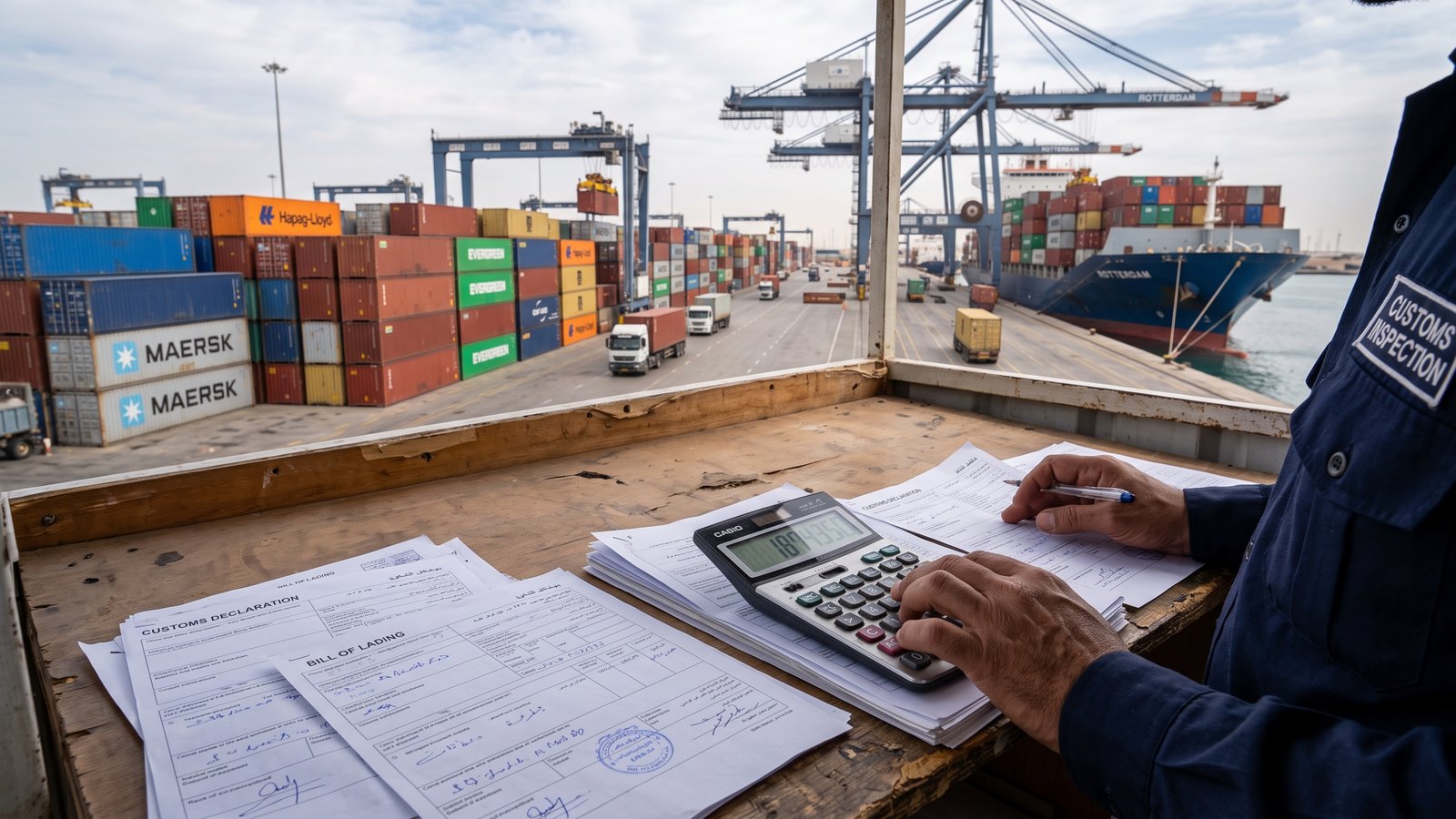

A multinational group imports components into China from an overseas related party. The China importer pays transfer prices established under the group's tax policy. At year end, the tax team proposes a transfer-pricing adjustment because the China entity's operating margin falls outside the target range.
Separately, the China entity pays trademark, software or technology royalties to an affiliate.
From a corporate income tax perspective, management may see these items as ordinary transfer-pricing mechanics. From a customs perspective, they can create a completely different question:
The specific issue
The Legal Rule
From a corporate income tax perspective, management may see these items as ordinary transfer-pricing mechanics.
The Business Impact
Confirm classification, origin evidence, the preference claim and importer-side formalities. Pricing the deal on an assumed tariff rate is risky if the documentary conditions are not met at clearance. Apply that to the facts of China Customs Audits of Related-Party Import Prices: How Multinationals Should Reconcile Transfer Pricing, Royalties and Customs Valuation Before a Year-End Adjustment Creates Duty Exposure.
Was the declared import transaction value acceptable, did the relationship influence the price, and should royalties or other payments have been included in customs value?
This is not a general customs guide. It is a focused analysis of how related-party pricing, year-end adjustments and royalties can create customs underpayment risk even when a tax transfer-pricing policy appears defensible.
1. Customs valuation starts from transaction value, but only if conditions are satisfied
China's customs valuation framework generally uses the transaction value of imported goods as the basis for customs value, together with specified additions and pre-import transport and insurance elements.[1]
The official customs guidance states that transaction value should satisfy conditions including that the buyer and seller are not specially related, or, where they are related, that the relationship did not affect the transaction price.[1]
That is the first tension with multinational transfer pricing.
Related-party trade is normal. The existence of a relationship does not automatically disqualify the transaction value.
But the importer must be able to demonstrate that the relationship did not improperly influence the declared price.
A tax transfer-pricing report is relevant evidence, but it does not automatically answer the customs question.
2. Tax and customs can have opposite incentives
Income tax authorities generally focus on the allocation of taxable profit among related entities.
Customs authorities focus on the value of imported goods for tariff and import tax purposes.
Consider a China distributor.
If its import price is too high:
- China taxable profit may be lower.
- Customs duty base may be higher.
If its import price is too low:
- China taxable profit may be higher.
- Customs duty base may be lower.
The tax and customs systems are therefore not economically identical.
A group that adjusts transfer pricing solely to achieve an income-tax margin can inadvertently create a customs inconsistency.
The legal and finance teams should not assume that tax acceptance equals customs acceptance.
3. Year-end transfer-pricing adjustments require a customs impact review
Suppose the China importer pays RMB 100 per unit during the year.
At year end, the group concludes that the importer earned too much profit and makes an upward purchase-price adjustment to RMB 110 per unit.
From a tax perspective, the adjustment may reduce the China entity's profit.
But from a customs perspective, the commercial reality may now suggest that the true import price was higher than the value declared at clearance.
That raises questions:
- Should additional customs duty be paid?
- Which imports are affected?
- How should the adjustment be allocated among products?
- Does the adjustment represent goods value or a separate service/payment?
- Is the adjustment consistent with the intercompany agreement?
The reverse adjustment also creates questions.
If price is adjusted downward, can the importer seek a refund? What evidence would Customs require? Was the original declared price genuinely provisional?
The company needs a policy before year-end, not after the adjustment is booked.
4. The intercompany agreement must explain the pricing mechanism
Customs will not analyze a transfer-pricing adjustment in a vacuum.
The importer should be able to provide an agreement explaining:
- product price mechanism;
- benchmark or target margin;
- frequency of adjustment;
- whether adjustment is retrospective or prospective;
- whether it relates to specific imports;
- whether it covers services or intangible assets;
- how royalties are treated.
An intercompany agreement drafted only for tax documentation may be too vague for customs.
For example, language stating that prices “may be adjusted to achieve an arm's-length result” does not explain how an adjustment maps to imported products.
The legal team should align the agreement with actual invoicing and accounting.
5. Customs can issue a formal price challenge
Official customs guidance describes a process in which Customs may issue a written price challenge where it doubts the truth or accuracy of the declared price or considers that the special relationship between buyer and seller may have affected the transaction price.[1]
The importer is expected to provide supporting materials within the specified period.
This is why evidence preparation matters.
The company may need to explain years of pricing in days.
A customs defense file should therefore be maintained before any audit.
6. The evidence should be transaction-specific
Useful materials can include:
- intercompany purchase agreement;
- invoices;
- payment records;
- product price lists;
- transfer-pricing policy;
- benchmarking study;
- profit-and-loss data;
- comparable uncontrolled prices if available;
- product specifications;
- procurement data;
- royalty agreements;
- service agreements;
- year-end adjustment calculations.
The strongest submission explains the commercial pricing system in a way that Customs can reconcile with import declarations.
7. Royalties can be dutiable even when paid separately
China's customs rules include certain royalties and license fees in customs value where the statutory conditions are met.
Official guidance based on the customs valuation regime states that royalties related to imported goods and paid as a condition of sale may need to be included.[1]
This is a critical issue for foreign brands and technology companies.
A group may structure:
- goods purchase from affiliate A;
- trademark license from affiliate B;
- technology license from affiliate C.
The fact that the royalty is invoiced separately does not automatically keep it outside customs value.
The customs question examines economic and contractual connection.
8. Trademark royalties require careful factual analysis
Suppose a China importer buys branded finished products from a related manufacturer and separately pays a trademark royalty to the group IP owner.
Questions may include:
- Is the royalty related to the imported goods?
- Could the importer buy the goods without paying the royalty?
- Is the seller affiliated with the licensor?
- Does the group condition supply on compliance with the license?
- Does the royalty relate only to post-import marketing activity?
The answer depends on facts and contracts.
A generic statement that “royalties are paid for IP, not goods” is insufficient.
9. Technology royalties can be even more difficult
A China manufacturer may import equipment or components and pay an affiliate for manufacturing technology.
The royalty may relate to:
- imported machinery;
- imported components;
- local production;
- know-how;
- patents;
- software;
- technical support.
If the payment relates partly to imported goods and partly to local activity, the company may need an allocation methodology.
The contract should distinguish those elements clearly.
Otherwise Customs may challenge the characterization.
10. Assists create another valuation risk
Customs valuation can also include certain items or services supplied by the buyer free of charge or at reduced cost for production of imported goods.
Official guidance lists relevant categories such as materials, tools, molds and certain overseas development or design services connected with production and sale of the imported goods.[1]
For multinational groups, these “assists” can be hidden in operations.
Examples:
- China buyer provides tooling to overseas supplier;
- China R&D team provides drawings;
- group supplies molds without charge;
- buyer pays engineering costs for supplier.
The customs team should understand these arrangements before imports begin.
11. Product classification and valuation data should be linked
Customs compliance teams often manage HS classification separately from valuation.
But a price challenge may require Customs to compare the declared goods with identical or similar imports.
If the company's product description is inconsistent across:
- customs declarations;
- ERP;
- invoices;
- transfer-pricing files;
- technical specifications,
the valuation defense becomes harder.
Master data governance should therefore align classification and pricing records.
12. A transfer-pricing study is not a customs ruling
Tax transfer-pricing documentation may show that the China entity's operating margin is within an arm's-length range.
Customs may still ask whether the price of the imported goods was influenced by the relationship.
The methodologies differ.
A TNMM-based tax study examining enterprise-level profitability does not necessarily prove the customs transaction value of a specific imported product.
The company should avoid telling Customs that a tax study “proves” customs value unless the methodology actually supports that conclusion.
Instead, the study should be one part of a broader factual explanation.
13. Prospective pricing is easier to defend than retroactive surprises
If a group knows that year-end adjustments occur every year, the customs function should be involved in designing the pricing policy.
A better system can include:
- quarterly monitoring;
- prospective price adjustments;
- customs review before major retroactive entries;
- allocation methodology;
- documentation of provisional pricing where relevant.
This reduces the size of year-end corrections.
14. Customs and tax teams should reconcile before booking the adjustment
Before a year-end transfer-pricing adjustment is finalized, the company should hold a joint meeting involving:
- tax;
- customs;
- legal;
- finance;
- accounting;
- supply chain.
The meeting should answer:
- What is the tax reason for adjustment?
- Does it change the economic price of imported goods?
- Which import declarations are affected?
- Does customs duty change?
- Are royalties or assists involved?
- Is a customs disclosure or correction needed?
- What accounting entry will be used?
- What documents will support the position?
This should become a formal control.
15. Customs pre-ruling tools can reduce uncertainty
China Customs provides mechanisms for advance rulings on certain customs matters, including elements relevant to customs value.[2]
Where a recurring royalty or complex valuation arrangement is material, a company should consider whether an advance-ruling strategy is appropriate.
The goal is not to seek a ruling for every related-party transaction.
The goal is to identify high-value recurring issues where uncertainty will multiply across thousands of declarations.
16. Case study: technology importer with year-end true-up
Assume a German group sells industrial components to its China subsidiary.
During the year:
- transfer price = EUR 100;
- China importer declares EUR 100;
- China entity pays 3% technology royalty to group IP company;
- year-end TP review shows China margin above target;
- group books an additional EUR 8 per unit purchase-price adjustment.
Potential customs issues:
Issue A: related-party price
Was EUR 100 accepted because relationship did not influence price?
Issue B: year-end adjustment
Does additional EUR 8 represent additional consideration for imported goods?
Issue C: royalty
Is 3% royalty related to imported goods and a condition of sale?
Issue D: documentation
Do tax, accounting and customs records tell the same story?
A customs audit may examine all four together.
17. The audit response should begin with chronology, not argument
When Customs raises questions, the company should build a chronology:
- intercompany agreement date;
- price-setting date;
- each import period;
- royalty agreement;
- TP review;
- adjustment decision;
- accounting entry;
- payment.
This helps distinguish:
- original agreed price;
- later adjustment;
- unrelated services;
- royalty payments.
The legal theory should follow the facts.
18. Do not let tax and customs submissions contradict each other
A multinational may make one argument to tax authorities and another to Customs.
For example:
- tax team: overseas seller earns high return because it owns valuable IP;
- customs team: royalty has no connection to imported goods.
Those positions may be difficult to reconcile.
The company should maintain a cross-regulatory narrative.
This does not mean the legal tests are identical. It means factual representations should be consistent.
19. Customs valuation should be part of M&A diligence
A buyer acquiring a China importer should review:
- related-party pricing;
- historic adjustments;
- royalty arrangements;
- assists;
- price challenges;
- customs audits.
A recurring valuation issue can create historical liability.
The SPA may need:
- specific indemnity;
- escrow;
- pre-closing remediation.
20. Governance model for multinational importers
A strong governance model has four controls.
Control 1: transaction onboarding
New intercompany trade reviewed by customs.
Control 2: royalty review
Every new IP or service payment checked for customs-value relevance.
Control 3: quarterly margin monitoring
Potential TP adjustments identified early.
Control 4: year-end sign-off
No retroactive adjustment booked without customs impact assessment.
This turns valuation compliance into a process rather than an emergency.
21. What the CFO should ask before approving a TP adjustment
- Does this adjustment relate to imported goods?
- Is it retrospective?
- Which declarations are affected?
- Does it increase or decrease customs value?
- Do royalties also exist?
- Were assists provided?
- Have Customs and tax narratives been reconciled?
- Is documentation ready?
- Should Customs be consulted?
- What is the historical exposure if the same method was used in prior years?
22. The 30-day remediation project
Week 1
Inventory:
- related-party imports;
- pricing policies;
- royalties;
- assists.
Week 2
Test:
- related-party influence;
- royalty connection;
- recurring adjustments.
Week 3
Align:
- contracts;
- TP documentation;
- customs records;
- accounting.
Week 4
Implement:
- quarterly review;
- year-end approval;
- audit file;
- escalation.
23. Conclusion
Related-party customs valuation is not solved by having a transfer-pricing report.
The customs framework asks whether transaction value is acceptable, whether the related-party relationship influenced price, and whether specified additions such as royalties or assists should be included.[1]
A year-end transfer-pricing adjustment can therefore create customs consequences even when it is intended only to manage income-tax profit allocation.
The practical rule is:
No material retrospective transfer-pricing adjustment involving imported goods should be finalized without a customs valuation review.
That review should reconcile intercompany agreements, royalties, assists, import declarations and tax documentation before the accounting entry becomes a customs problem.
24. Customs valuation governance should be embedded into the ERP process
The compliance problem often begins because customs data and accounting data live in different systems.
A strong importer should connect:
- supplier master data;
- related-party status;
- royalty relationships;
- product classification;
- customs value;
- year-end adjustment;
- accounting entries.
When a supplier is marked as related, the system should trigger a customs review.
When a royalty agreement is added, customs should be notified.
When finance proposes a retroactive purchase-price adjustment, the adjustment should not post until customs impact is reviewed.
This is not simply an IT enhancement. It creates a control environment that can later demonstrate reasonable compliance.
25. Product-level profitability can help explain the pricing story
Enterprise-level profit data may hide large differences among product lines.
If Customs challenges one category of imported products, the company may need more granular analysis.
For example:
- product A has stable third-party comparables;
- product B includes valuable technology;
- product C is sold at launch-stage low margins.
The company should understand whether its transfer-pricing method produces consistent import prices across these categories.
A customs audit can become much harder when the company has no product-level explanation.
26. Customs and TP adjustments should be modeled before year end
A simple scenario model can show management the trade-offs.
Assume:
- 100,000 imported units;
- declared value RMB 500 each;
- duty rate 8%;
- proposed upward TP adjustment 5%.
The company should estimate:
- incremental customs value;
- incremental duty;
- import VAT impact;
- penalty or interest risk if historical;
- accounting treatment.
This allows the CFO to evaluate the true cost of the tax adjustment.
The model should not assume the adjustment is automatically dutiable; it should show the exposure if Customs treats it as additional consideration for imported goods.
27. Royalty agreements should contain customs-relevant drafting
A royalty agreement should clearly describe:
- IP licensed;
- territory;
- calculation base;
- relationship to imported goods;
- relationship to local manufacturing;
- whether purchase of goods is conditional on the license;
- services included.
Ambiguous drafting creates customs risk.
For example, a contract that calculates royalty as a percentage of China sales but covers both imported finished goods and locally manufactured goods should specify the economic basis.
If the agreement is silent, allocation becomes harder during an audit.
28. Customs compliance should review restructuring transactions
Corporate restructurings can change valuation risk.
Examples:
- IP migrates to a new affiliate;
- seller entity changes;
- royalty recipient changes;
- procurement principal changes;
- transfer-pricing method changes.
The customs function should be part of restructuring sign-off.
A change designed for tax efficiency may alter the relationship between importer, seller and licensor.
29. M&A integration should include customs valuation
When a multinational acquires a China importer, the first 100 days should include:
- related-party mapping;
- royalty review;
- TP true-up process;
- customs audit history.
The acquirer may inherit a valuation approach developed years earlier.
If the business is integrated into a new group IP structure, legacy assumptions may no longer work.
30. Audit response teams should separate fact collection from legal characterization
When Customs asks why a payment was made, business employees may describe it casually as “part of product cost” even if the legal agreement treats it as a service fee.
The response team should first establish facts:
- who paid;
- who received;
- why;
- calculation;
- contractual basis.
Only then should counsel characterize the payment.
This reduces internal contradiction.
31. The company should prepare a royalty decision tree
For each royalty:
- Is there an import transaction?
- Is the royalty related to imported goods?
- Is payment a condition of sale?
- Is part of the royalty attributable to local activity?
- Can allocation be supported?
- Is the arrangement recurring?
- Should advance guidance be considered?
The decision tree should be documented.
32. Customs valuation and transfer pricing should share one annual certification
Senior tax and customs managers should jointly certify:
- material related-party import relationships reviewed;
- royalties identified;
- assists identified;
- proposed TP adjustments analyzed;
- known customs challenges escalated.
This creates accountability.
33. A customs audit file should be refreshed yearly
The file should include:
- organization chart;
- related-party matrix;
- intercompany agreements;
- current TP report;
- royalty agreements;
- pricing calculations;
- product data;
- prior customs correspondence.
Do not rebuild the file under audit pressure.
34. The legal team should monitor the modernized taxable-price rules
China's customs valuation terminology and implementing rules were updated in connection with the PRC Tariff Law, including amendments under GACC Order No. 273.[3]
Importers should ensure that internal policies use current legal terminology and procedures.
Legacy internal manuals referencing outdated rule names should be updated.
35. Disputes over taxable price require procedural planning
If Customs determines a higher taxable price and the importer disagrees, the company should understand the administrative-remedy path and payment requirements.
The customs rules and related tax administration procedures should be reviewed for the specific decision.
The legal team should preserve:
- price challenge notice;
- submissions;
- valuation explanation;
- payment records;
- administrative decisions.
Do not treat the audit as closed merely because duty was paid.
36. A board-level risk can emerge from repeated small errors
A RMB 20 customs-value difference may appear immaterial.
Across:
- 500,000 units;
- multiple years;
- duty and VAT,
the exposure can become significant.
The customs team should aggregate recurring risk.
Materiality should be measured by historical volume, not one declaration.
37. Practical final checklist for the importer
Before closing the year, confirm:
- all related sellers identified;
- all royalties identified;
- assists identified;
- proposed TP adjustments reviewed;
- customs impact quantified;
- contracts consistent;
- customs/tax narratives reconciled;
- audit file updated;
- management sign-off completed.
If one of those items is missing, the year-end adjustment is not ready.
Legal and regulatory sources
[1] China Customs online guidance summarizing the customs valuation framework, including transaction-value conditions, royalties, assists, price challenges and valuation methods: https://online.customs.gov.cn/static/pages/guides/000729005002/000729005002.html
[2] China Customs, advance-ruling guidance, including valuation-related elements such as royalties, commissions and related-party relationships: https://online.customs.gov.cn/static/pages/guides/000729004003/000729004003.html
[3] General Administration of Customs Order No. 273 (2025), updating terminology and provisions of the customs taxable-price rules following the PRC Tariff Law: https://www.mofcom.gov.cn/zcfb/zgdwjjmywg/art/2025/art_184489310e2742a499d4ccda88fe5482.html
This article is general legal information, not legal advice for a particular customs audit.
Discussion
Share experience or questions about this topic. This is a public discussion — not legal advice. Do not post confidential case details.
Have a question after reading? Leave it here, or Ask a Lawyer for a free initial intake.
Comments are moderated. China Legal Portal is a directory and information resource; no attorney–client relationship is formed by posting here.