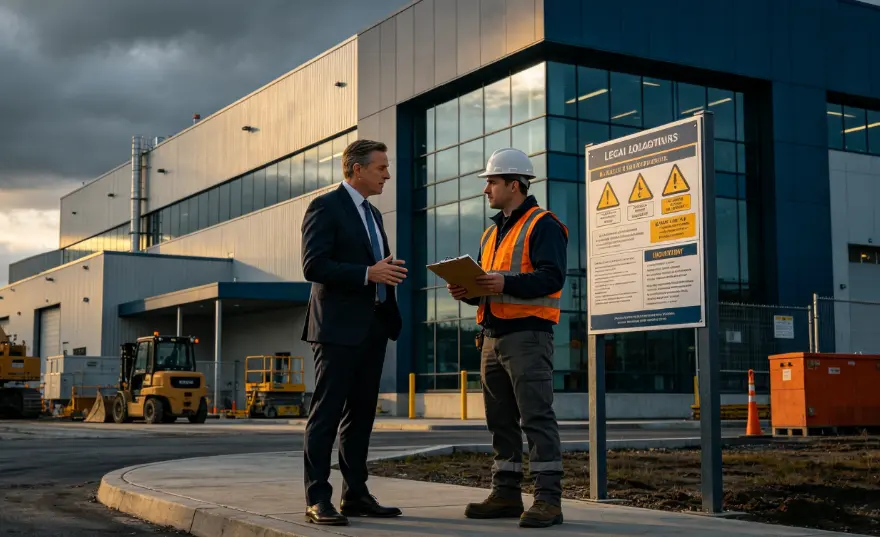

A buyer agrees in principle to acquire a Chinese coal-processing or chemical plant. The business is profitable, its permits appear current, and the factory land has been used industrially for twenty years. During diligence, consultants identify a risk of historical soil and groundwater contamination beneath an old storage area. The buyer now faces two different questions. First, what environmental obligations can attach to the site or operating company under Chinese law? Second, how should the transaction allocate a risk whose full remediation cost may not be known before closing?
The Environmental Protection Law establishes China's general pollution-control framework, while the Soil Pollution Prevention and Control Law creates specific rules for soil pollution investigation, risk control and remediation, including construction land.[1][2] For a buyer, the legal issue is not merely whether the seller has received an environmental penalty. It is whether the target's historical operation, land status and future use can create obligations or costs after closing.
The specific problem
The Legal Rule
Real-property rights and remedies depend on title, contract terms, registration, approvals and the status of the project or property. A contractual promise does not always substitute for required registration or authority.
The Business Impact
Check title/registration, permitted use, approvals, payment conditions and disclosed defects before committing funds. Contract wording can allocate risk, but it cannot create a missing property right or make an unusable site fit for purpose. Apply that to the facts of Buying a Coal or Chemical Plant with Historical Contamination: Environmental Due Diligence and SPA Risk Allocation in China.
Separating operating compliance from historical contamination
Separate operating compliance from historical contamination. a plant can hold current permits and still have historical contamination. Operating compliance diligence should review matters such as environmental impact assessment, pollutant discharge, hazardous waste, monitoring, emergency plans and administrative penalties. Historical contamination diligence asks a different question: what substances entered the soil or groundwater over the site's life, whether regulators have identified the site for risk management, and whether future redevelopment may trigger investigation or remediation. The buyer should not let a clean permit file substitute for a site-history review. For a long-operated coal or chemical plant, the environmental workstream should reconstruct: The relevant items include prior processes, tanks and pipelines, waste storage, spills, underground infrastructure, previous owners, regulatory inspections, and soil or groundwater testing.
A historical aerial photo, plant map or former process description can be as important as a current license. The Soil Pollution Prevention and Control Law should drive the land-risk analysis. the Soil Pollution Prevention and Control Law establishes a framework for prevention, monitoring, risk control and remediation.[2] Its construction-land provisions are especially important where industrial land may later be redeveloped or transferred. The legal team should determine: The relevant items include whether the land has been identified in any relevant regulatory list, whether a soil pollution investigation has been required, whether risk assessment or remediation documents exist, and whether the current or proposed land use changes the regulatory analysis.
A buyer should also distinguish the owner of the operating company from the holder of the land-use right. In some transactions, the factory company leases land from an affiliate or industrial park. That can change who controls remediation work and access. The SPA should not say simply that "Seller is responsible for all environmental matters." The relevant site, period, contaminant and responsibility mechanism need to be defined. Use environmental consultants under a legally controlled scope. environmental sampling can create both information and risk. The buyer needs to agree with consultants on: The relevant items include areas of concern, contaminants, sampling methods, access, reporting, and preservation of data.
Counsel should understand whether the report could trigger contractual disclosure obligations or communications with authorities. A seller may resist intrusive sampling because it fears creating a record of contamination. The buyer should not accept a purely desktop review when the site's history makes physical investigation commercially necessary. If full sampling cannot occur before signing, the buyer should consider staged diligence and transaction protection. For example, signing can be conditional on a Phase II-type investigation or the purchase price can include a remediation escrow that adjusts after quantified results. Define the baseline condition before the buyer changes operations. a post-closing dispute often becomes a causation dispute. The seller argues that contamination occurred after closing. The buyer argues that it was historical. The best protection is a documented baseline. Before closing, preserve: The relevant items include site maps, sampling results, photographs, tank and pipeline records, hazardous-waste records, historical monitoring data, and regulator correspondence.
If the buyer plans to change production or excavate land after closing, baseline evidence becomes even more important. The SPA should state how pre-closing and post-closing contamination are distinguished and who bears mixed or unknown-source contamination. A broad indemnity can become difficult to enforce if causation has not been addressed. Quantify remediation scenarios rather than demand a perfect number. environmental contamination is often uncertain. The buyer needs to model at least three scenarios: 1. limited risk-control measures;
- targeted remediation;
- major remediation or redevelopment restriction. Each scenario should include: The relevant items include consultant cost, remediation cost, production interruption, monitoring, regulatory delay, and land-value impact. The purchase-price model can then use a risk-adjusted reserve. Demanding an exact remediation number before sufficient investigation may create false precision. The better approach is to define the uncertainty and allocate it contractually.
Site investigation, baseline evidence and remediation scenarios
Choose the SPA remedy that matches the type of environmental risk. different environmental findings require different transaction tools. ### Known and quantifiable Use price reduction or pre-closing remediation. ### Known but uncertain cost Use escrow, specific indemnity and post-closing access rights. ### Potential but unconfirmed Use further investigation condition, special warranty and cost-sharing mechanism. ### Deal-breaking Use termination or exclude the site from the transaction. The seller's general environmental warranty should remain, but it should not replace a specific regime for a known contaminated area. The indemnity should define: The relevant items include covered site, covered contaminants, covered period, remediation standard, claim process, control of regulatory communication, survival period, and security.
Share deals do not erase site risk, and asset deals do not automatically avoid it. a share buyer inherits the company and its historical liabilities. An asset buyer may still acquire contaminated land, operate the site or become subject to future regulatory obligations connected with the property. The structure analysis should therefore separate corporate liability from site exposure. If the buyer wants the plant but not the land, it may consider acquiring equipment and business assets while leasing a remediated site. But that may create permit and operational complexity. If the target owns valuable industrial land and customer permits, a share deal may remain commercially superior, provided contamination risk is priced and secured. The environmental finding should influence structure, but not through a simplistic "asset deal is clean" assumption. Environmental permits and EIA documents should be tested against actual operations. a permit file may look complete while production has changed. The buyer should compare:
The relevant items include approved process, actual process, production capacity, emission points, raw materials, and waste streams. If the target expanded capacity or added a line without matching environmental procedures, the buyer may inherit a current compliance problem separate from historical contamination. The Environmental Protection Law and related sector rules should be applied to the actual plant, not the description in old approvals.[1] The SPA can require remediation of identified permit gaps before closing or allocate post-closing completion responsibilities. Hazardous waste and underground storage deserve special attention. chemical and coal-processing facilities often have contamination pathways linked to: The relevant items include hazardous-waste storage, buried pipes, underground tanks, loading areas, and chemical warehouses.
The buyer needs to review manifests, storage records and contractor arrangements. A waste contractor's license does not prove that every historical disposal was lawful. Where records are incomplete, the technical consultant should prioritize likely source areas. The legal team should also review whether third-party contractors may bear contractual responsibility, but the buyer should not rely on uncertain contribution claims as a substitute for seller protection. Case study: coal-chemical acquisition. assume a private buyer acquires a Shaanxi coal-chemical plant. Diligence finds: The relevant items include current discharge permit, no recent environmental penalties, an old benzene storage area, 2017 consultant memo noting possible groundwater impact, and no full remediation study. The seller says the issue is immaterial because production continues lawfully. A stronger buyer response would:
- require targeted sampling before closing;
- establish a baseline;
- quantify a high and low remediation case;
- place part of the price in escrow;
- obtain a specific pre-closing contamination indemnity;
- control communications with regulators;
- require seller cooperation with historic records. The plant can still be acquired, but the uncertainty becomes a defined transaction risk.
SPA risk allocation and transaction structure
Financing and insurance should be involved before signing. lenders and insurers may have environmental standards beyond statutory minimums. A bank financing the acquisition may require: The relevant items include environmental report, no material contamination, remediation reserve, and covenant compliance. Environmental insurance may be available for certain risks, but policy exclusions and known-condition treatment must be reviewed carefully. The buyer should not promise a lender that no contamination exists when diligence has identified uncertainty. Instead, the financing documents should reflect the agreed remediation plan and risk allocation. Post-closing governance should prevent the old problem from becoming a new one. after closing, the buyer should establish: The relevant items include environmental compliance owner, monitoring schedule, hazardous-waste controls, incident reporting, contractor oversight, and remediation tracking.
If the SPA includes an environmental indemnity, the company should preserve evidence of remediation costs and regulatory communications. The buyer needs to also separate work done to satisfy historical obligations from voluntary upgrades. Sellers often dispute indemnity claims where the buyer chooses a more expensive remediation standard than regulators require. The contract should therefore define the applicable remediation standard as precisely as possible. Redevelopment assumptions can radically change environmental cost. a plant may be acceptable for continued industrial use but expensive to convert to residential or commercial use. If the buyer's valuation assumes future redevelopment, the soil-risk analysis should reflect that proposed use rather than only current operations. The transaction committee should understand that environmental liability and land value are linked. A site that appears profitable as an operating industrial asset may become uneconomic if the buyer expects redevelopment requiring extensive remediation. The investment paper should therefore separate:
The relevant items are operating value, land redevelopment value, and remediation cost. Historical operator records can materially change the seller's risk position. a site may have been operated by several entities before the current target acquired it. The buyer should identify former operators, historic leases, mergers, asset transfers and changes in legal ownership. Those facts can affect both technical causation and contractual recovery. If contamination appears beneath an area used by a predecessor, the current seller may argue that it did not cause the problem. That argument does not necessarily eliminate the buyer's transaction risk. The buyer still needs to know who will fund any regulator-required response after closing.
The SPA can therefore allocate risk by period rather than by legal fault alone. For example, the seller may indemnify all contamination existing before closing, while reserving whatever contribution claims it has against former operators. The buyer needs to not be forced to litigate against an unknown historic polluter simply because the seller cannot prove causation. The diligence team should preserve corporate and land records showing when each operator controlled the site. Technical sampling locations should be compared with historic process maps. Regulatory correspondence should be read for unresolved obligations, not only penalties. environmental diligence often focuses on penalty decisions. Equally important are: The relevant items include inspection notices, rectification orders, monitoring requests, regulator meeting minutes, and commitments made by the company.
A target may have avoided a formal fine by promising to install equipment, investigate contamination or improve storage. If that commitment remains incomplete, the buyer can inherit the implementation burden. The legal team should create a regulator-commitment schedule showing each outstanding item, due date and completion evidence. Where the seller says an issue was "closed informally," seek written confirmation or other reliable evidence before removing it from the risk list.
Permits, hazardous waste and case-specific diligence
Change of control can affect environmental financing and project agreements. industrial projects may have received loans, subsidies, land incentives or investment support that contain environmental performance conditions. A buyer should review whether change of control or remediation affects: The relevant items include green financing, subsidy eligibility, industrial-park agreements, and land-use commitments. If a lender's environmental covenant is breached by the identified contamination, the transaction can create a financing problem in addition to a remediation problem. The SPA should therefore coordinate environmental closing conditions with financing consents. The buyer should not assume that an environmental indemnity from the seller cures a covenant breach owed to a bank. Remediation control should be negotiated before closing. if remediation will continue after closing, the parties should decide who controls: The relevant items include consultant selection, regulator communication, work scope, budget, and settlement with contractors.
The buyer, as post-closing operator, may need immediate control to protect ongoing production. The seller, funding the indemnity, may want approval rights over cost. The agreement should balance those interests. A useful structure gives the buyer operational control subject to reasonable consultation and defines when emergency work can proceed without seller consent. Disputes over remediation scope should have a rapid expert-determination mechanism rather than waiting for ordinary litigation. Data integrity matters when environmental records are transferred. environmental information may sit across: The relevant items include plant systems, consultant reports, paper archives, and regulator portals.
Before closing, the buyer should verify that raw monitoring data and laboratory results are preserved, not merely summary reports. If later sampling shows deterioration, historical raw data can help distinguish pre-closing and post-closing conditions. The seller should also deliver calibration, chain-of-custody and laboratory documentation where available. A beautifully formatted consultant report is less useful if the underlying data cannot be verified. Health and safety findings should be separated from environmental findings. coal and chemical plants can present both environmental and occupational safety risks. The legal teams should avoid merging them into one "HSE" conclusion. Environmental exposure may concern soil, water, waste and emissions. Safety exposure may concern dangerous chemicals, process safety, equipment and employee protection. The remediation timelines, regulators and liabilities can differ. The investment committee should therefore receive separate quantified risks even if one consultant performs both workstreams.
The buyer needs to define the remediation standard in economic terms. a seller may agree to remediate "in accordance with law," but that phrase can produce disputes. Questions include: The relevant items include industrial-use standard or redevelopment standard?, regulator-required measures or buyer's global standard?, monitoring period?, and residual contamination accepted?. The SPA should tie the seller-funded scope to an identifiable legal or regulatory standard and separately state whether the buyer may voluntarily perform higher-specification work at its own cost. This distinction is particularly important if the buyer intends to redevelop the land.
Financing, redevelopment and seller security
Seller solvency should influence the indemnity structure. a ten-year environmental indemnity is weak if the seller will distribute proceeds and wind down. The buyer should assess seller creditworthiness. Possible security includes: The relevant items include escrow, parent guarantee, bank guarantee, and retained purchase price. The amount should reflect the plausible high-case remediation scenario. Environmental risk often develops slowly, so security duration should match the expected investigation and remediation period. Post-closing discovery protocol should be agreed in advance. if new contamination is discovered, the agreement should specify: 1. notice to seller;
- preservation of samples;
- joint consultant access;
- regulatory notification;
- interim safety measures;
- cost allocation.
Without a protocol, the seller may later argue that the buyer destroyed evidence or over-remediated. A pre-agreed procedure turns a future dispute into a managed technical process. Seller disclosure should distinguish known contamination from regulatory non-compliance. a seller may disclose that a site has historical contamination but also state that the company is in current legal compliance. Those statements can both be true. The buyer needs to keep the categories separate in the SPA. Historical contamination provisions should address the physical condition of the site and remediation. Compliance warranties should address permits, monitoring, reporting and violations. If the two are merged, the seller may later argue that disclosure of contamination qualified every environmental warranty. Disclosure schedules should therefore identify which warranty each disclosed matter qualifies. Acquisition integration should include environmental capital expenditure. the buyer's post-closing business plan should budget for: The relevant items include remediation, monitoring, storage upgrades, waste systems, and emergency equipment.
Some costs may be legally required; others may be necessary to meet the buyer's internal operating standard. The investment committee should separate seller-funded remediation from buyer-funded modernization. Otherwise the buyer can overstate the indemnity claim or underbudget integration. Future asset sale should be anticipated when documenting cleanup. a buyer may later sell or finance the plant. The environmental file created now will become future diligence evidence. Preserve: The relevant items include baseline report, remediation design, regulator acceptance, monitoring results, and closure records. A future buyer or lender will want to know not only that remediation occurred but what standard was achieved. Good documentation can preserve asset value long after the original seller indemnity expires.
Post-closing remediation, claims and future asset value
Environmental claims should be coordinated with dispute strategy. if the seller disputes responsibility, the buyer should preserve technical evidence before remediation changes the site. Where urgent work must proceed, collect samples, photographs, consultant records and regulator instructions first. The dispute team should understand the technical chain of causation. An indemnity claim based only on invoices can fail to prove that the cost related to pre-closing contamination. Final transaction decision. before closing, management should be able to answer four questions: what contamination is known, what remains uncertain, what legal standard applies and who funds each scenario. If any answer is missing, the environmental risk has not been converted into a transaction term.
Final environmental closing certificate. before completion, the buyer should require a closing certificate listing all known environmental conditions, agreed remediation actions, escrow funding, open regulator items and the baseline reports delivered. This creates one authoritative record of what the parties knew at closing and reduces later disputes about whether a condition was disclosed. Final valuation discipline. environmental uncertainty should appear explicitly in the acquisition valuation rather than disappear into a legal footnote. Environmental due diligence should also examine contractor and tenant activities on the site. not every contamination source comes from the target's own production. Waste contractors, logistics operators, former tenants and utility providers may have used areas of the site. The buyer should identify who occupied high-risk areas and whether contracts contain environmental allocation provisions.
Those third-party rights can matter after closing. The buyer may have contribution or contractual claims, but it should not reduce the seller's transaction protection simply because another party might ultimately share responsibility. A plant shutdown scenario should be priced even if management intends continued operation. industrial acquisitions sometimes fail commercially after closing. If the buyer later closes the plant, environmental and land-restoration obligations may become more visible and immediate. The investment model should therefore ask what decommissioning would cost under a downside scenario. That analysis should cover waste removal, tank closure, monitoring, site security and any regulator-required investigation. A transaction that works only while the plant remains indefinitely operational may be more fragile than management realizes.
Board reporting should distinguish environmental legal exposure from ESG improvement spending. a foreign buyer may want to invest in cleaner equipment, lower emissions or global sustainability standards that exceed local legal minimums. Those upgrades may be strategically valuable, but they should not be confused with seller-funded remediation unless the SPA expressly says so. The board should receive separate budgets for mandatory compliance, historical remediation and voluntary ESG modernization. This makes the purchase price and indemnity economics more defensible.
Conclusion
Environmental diligence in an industrial acquisition is not a permit checklist. The Environmental Protection Law and the Soil Pollution Prevention and Control Law require the buyer to consider both current operating compliance and historical land risk.[1][2] The practical rule is: define the baseline, quantify plausible remediation scenarios, and convert known contamination into a specific SPA mechanism rather than leaving it inside a generic environmental warranty.
Legal and regulatory sources
[1] Environmental Protection Law of the People's Republic of China, official NPC legal database: https://flk.npc.gov.cn/ [2] Soil Pollution Prevention and Control Law of the People's Republic of China: https://www.npc.gov.cn/npc/c2/c30834/201905/t20190521_281576.html
General legal information only; not legal advice for a specific environmental transaction.
Discussion
Share experience or questions about this topic. This is a public discussion — not legal advice. Do not post confidential case details.
Have a question after reading? Leave it here, or Ask a Lawyer for a free initial intake.
Comments are moderated. China Legal Portal is a directory and information resource; no attorney–client relationship is formed by posting here.