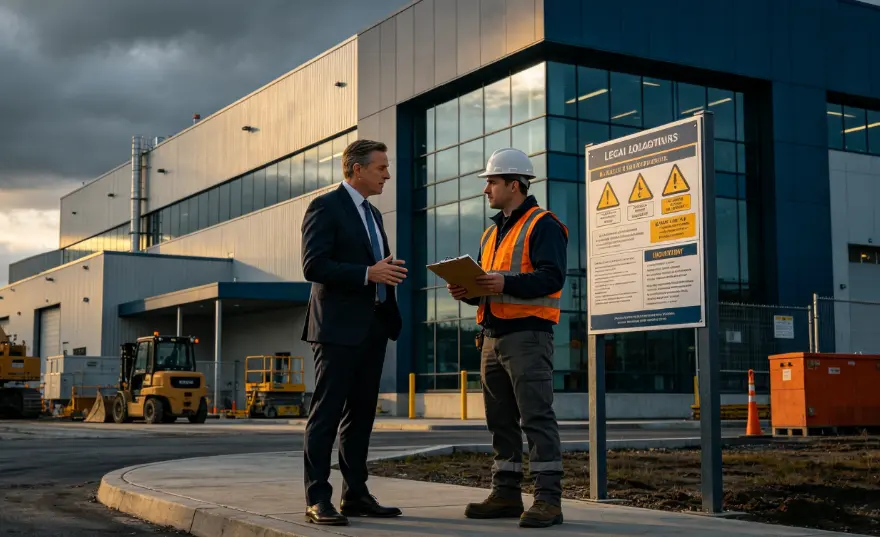

An investor wants to acquire 100 percent of a Wuhan project company that owns industrial land and a partially completed technology park. The title certificate is valid, the seller has construction permits and the company has no obvious litigation. Management concludes that an equity acquisition is straightforward.
During deeper diligence, counsel finds an investment agreement with the district government requiring minimum fixed-asset investment, construction completion by a specified date, employment targets and restrictions on changing the industrial use. The project is already behind schedule and several contractor change orders remain unsettled. [4]
The issue is not whether the project company owns the land. It is whether the buyer can operate, complete, finance and eventually transfer the project under the obligations attached to the investment.
The specific issue
The Legal Rule
Real-property rights and remedies depend on title, contract terms, registration, approvals and the status of the project or property. A contractual promise does not always substitute for required registration or authority.
The Business Impact
Check title/registration, permitted use, approvals, payment conditions and disclosed defects before committing funds. Contract wording can allocate risk, but it cannot create a missing property right or make an unusable site fit for purpose.
Land file, government commitments and change of control
Start with the complete land acquisition file. Review the land grant contract, title certificate, auction or listing materials, planning conditions, investment agreements and any supplemental government documents. The title certificate alone does not show every commercial commitment made to obtain the land. [2]
The buyer should create one obligations schedule showing land use, term, construction start, completion, investment intensity, tax or output targets, transfer restrictions and default consequences.
Separate public-law conditions from contractual commitments. Some obligations arise from land, planning or construction law; others arise from a negotiated investment agreement with the industrial park or local government. The buyer should identify the legal source of each obligation and whether it binds the project company, shareholder or both.
This distinction affects consent, amendment and remedies. A seller cannot privately waive a public-law condition in the SPA.
Test change-of-control consequences. The project agreements may require notice or consent if control of the project company changes. Even where no express clause exists, a buyer should determine whether local authorities expect approval or re-confirmation of investment commitments.
Do not assume an equity sale can be completed privately without affecting the government's commercial relationship with the project.
Investment intensity should be measured against actual expenditure. If the project must meet a fixed-asset investment threshold, verify what costs count and what has actually been incurred. Seller forecasts should be reconciled to contracts, invoices, bank payments and capitalized assets.
The buyer should calculate the additional investment required to cure any shortfall and include it in the acquisition economics.
Construction deadlines can create hidden default exposure. A partially completed project may already have missed a commencement or completion milestone. Review extension approvals, government correspondence and reasons for delay. If the authority has informally tolerated delay, the buyer should seek written confirmation where possible before paying a price that assumes the project remains in good standing.
A vague seller representation that “no penalty has been imposed” is not enough if the company is already in technical breach.
Planning, construction claims and financing constraints
Planning and permit consistency matters. Compare the approved planning scheme, construction permits and actual construction. Unauthorized changes in floor area, building use or layout can delay acceptance and future financing.
Engineering diligence and legal diligence should use the same project drawings so discrepancies are identified early.
Unsettled contractor claims belong in valuation. Construction projects often carry disputed variation, delay or final-account claims. Review the EPC or general construction contract, change orders, payment certificates, meeting minutes and pending audit. The seller may understate exposure by showing only invoices already accepted.
The SPA should allocate known contractor disputes specifically rather than leaving them inside a general litigation warranty.
Retention money and warranties continue after closing. The buyer will inherit obligations and rights relating to defects, retention, performance bonds and warranties. Confirm whether bank guarantees remain valid after change of control and whether the company has preserved claims against contractors.
A project that appears nearly complete may still carry years of defect-management obligations.
Project financing should be reviewed as a control document. Bank facilities may contain covenants on change of control, asset disposal, additional debt, leasing, project completion and use of proceeds. A buyer cannot evaluate the project only from the property side.
Obtain lender consent where required and model whether existing financing remains available after acquisition.
Related parties, leasing, environment and subsidies
Related-party construction contracts are a red flag. If the seller's affiliate is contractor, designer, manager or supplier, review pricing, approvals and outstanding balances. Related-party arrangements can shift value out of the project company or leave the buyer with contracts that were never negotiated at arm's length.
The buyer should decide which contracts must be terminated, repriced or independently verified before closing.
Leases and pre-leasing affect redevelopment flexibility. The technology park may have tenant commitments, rent-free periods, fit-out obligations or exclusivity promises. Review every material lease and letter of intent.
A buyer planning to change the project's tenant mix or use may be constrained by contracts even if planning law permits the change.
Environmental and soil issues need separate diligence. Industrial land may carry soil contamination or environmental permit issues. A share acquisition brings the project company's historical exposure. The buyer should review site history, environmental filings, waste and any investigations.
This work should be coordinated with land redevelopment plans because a future change of use can increase remediation requirements.
Government subsidies may have clawback terms. Industrial park projects can receive rent support, construction subsidies, tax-linked incentives or infrastructure assistance. Review the conditions and whether a control change, project delay or failure to meet targets triggers repayment.
The acquisition price should not count subsidies as permanent value unless the buyer can preserve them.
Corporate capitalization matters. The revised Company Law and registered-capital transition regime may affect the project company's funding obligations. Confirm registered capital, paid amount, future contributions and shareholder loans. [1]
If significant capital remains unpaid, the buyer should include future funding in the normalized acquisition price.
Control transition and worked project-company scenario
Legal representative and chop control should transfer cleanly. Project companies enter many contracts and communicate with authorities through local management. The closing plan should cover legal-representative change, company chops, finance chops, bank tokens, tax accounts and project-system access.
Do not pay the full price before operational control can be delivered.
Case study: delayed smart-manufacturing park. Assume the project company owns 120 mu of industrial land, must complete construction by December 2026 and has achieved only sixty percent of the required investment intensity. The seller says COVID-era delays were informally accepted, but there is no written extension. A general contractor claims RMB 30 million of additional work.
The buyer should seek written authority confirmation, quantify the remaining investment, audit the contractor claim and make cure of material project defaults a closing condition or price adjustment.
Deal structure, disclosure schedules and SPA protections
Share deal versus asset deal. An equity acquisition preserves permits, land title and existing contracts but inherits liabilities. An asset acquisition may isolate some corporate risk but can require separate land transfer, tax, permit and contract procedures.
The correct structure depends on which project rights are transferable and how serious the historic liabilities are.
Use a project-obligation disclosure schedule. The SPA should attach a schedule of all government and land commitments, current status, outstanding milestones and known breaches. This is more useful than a generic representation that the company complies with all investment agreements.
The buyer should also require disclosure of oral or informal commitments made by management to local authorities.
Conditions precedent should target blockers. Suitable conditions may include lender consent, written extension of construction milestones, settlement of a contractor dispute, completion of a land registration step or amendment of an investment agreement. Not every diligence issue needs to become a condition.
Use conditions only for matters that can prevent the buyer's intended business plan or materially change value.
Specific indemnities need security. If the buyer accepts a known pre-closing breach, a specific indemnity should define the covered liability, claim process, cap and duration. Consider escrow or holdback where the seller may not have sufficient assets after distributing proceeds.
A seller promise without recovery security may have little practical value.
Post-closing government engagement and compliance controls
Post-closing government engagement. The buyer should meet relevant local authorities promptly, introduce the new ownership and confirm the project implementation plan. Any agreed revised milestones should be documented.
The buyer should avoid creating a new inconsistency between what was promised during acquisition negotiations and what the operating team later tells authorities.
Establish project compliance controls. After closing, implement contract approval, procurement conflicts, related-party transaction controls and document retention. Large development projects can generate significant compliance risk through local procurement and government-facing activity.
The project company should not continue informal seller-era practices simply because construction is urgent.
Build a completion evidence file. Preserve permits, inspections, acceptance records, contractor certificates, payment evidence and government communications. Future financing, leasing or sale will require proof that the project was completed lawfully and in accordance with land obligations.
A well-maintained project file increases future exit value.
Board decision paper. The investment committee should see total acquisition price plus required completion investment, contractor exposure, government milestone risk, environmental cost, financing assumptions and incentives at risk. The headline equity price is only one component of project value.
A project is attractive only if the buyer understands the cost to make it legally and operationally complete.
Land premium, utilities, fire safety and infrastructure
Verify land premium and payment history. Unpaid land premium, late fees or deferred infrastructure charges can affect title and transaction economics. Review payment receipts and any agreement allowing staged payment.
The buyer should not assume that issuance of a title certificate means every financial obligation to the land authority has been satisfied.
Utility capacity can be a legal-commercial constraint. Advanced manufacturing projects may depend on guaranteed electricity, water, gas or wastewater capacity. Review utility agreements and government commitments, especially where expansion is part of the investment thesis.
A site can be legally buildable but commercially unusable if promised capacity is not secured.
Fire and safety acceptance should be confirmed. Partially completed or converted buildings may face fire-safety and occupancy requirements. The buyer should verify acceptance status before relying on lease-up or production dates.
Outstanding safety work can delay use even when construction appears physically complete.
Infrastructure sharing agreements matter. Technology parks may share roads, substations, wastewater facilities, parking or energy systems with neighboring projects. Review ownership, maintenance, cost-sharing and access rights.
A project company may depend on infrastructure it does not control.
Operating costs, tenant incentives and construction defects
Property-management commitments can affect operating cost. If the seller or an affiliate provides property management, security or energy services, determine whether contracts are arm's length and transferable. The buyer may want to retender services after closing.
Long-term affiliate contracts should be reflected in valuation.
Tenant incentives should be accrued properly. Rent-free periods, fit-out contributions and rent guarantees can create liabilities not obvious from headline rent. Review lease abstracts against accounting and cash forecasts.
A nearly full building can still have negative near-term cash flow if incentives are substantial.
Construction defect rights must be preserved. The buyer should identify defect notification deadlines, warranty periods and retained amounts. If the seller has accepted work informally, some claims may be harder to pursue.
Closing documents should transfer project records and contractor contacts completely.
Access disputes, tax and foreign-investment restrictions
Neighbor and access disputes can derail development. Check easements, road access, boundary disputes and shared facilities. Industrial projects often depend on truck access and utility corridors that cross other land.
A minor title inconsistency can have large operational consequences.
Tax treatment should be modeled by structure. Share and asset acquisitions can have very different tax consequences for land and property. Tax advisers should model seller taxes, buyer basis and future transfer implications before the structure is selected.
Legal convenience alone should not determine structure.
Foreign investment restrictions should be checked for intended business. If the project company will conduct activities beyond property holding—such as data services, logistics, energy or regulated operations—the buyer should confirm foreign-investment access and sector licensing.
The land transaction may be permissible while the planned operating business requires a different structure.
Closing handover, post-closing audit and hidden litigation
Closing should include a physical and document handover. The buyer should receive keys, chops, original title documents, permits, drawings, contracts, warranties, system credentials and authority correspondence. A closing checklist should assign custody for each item.
Legal ownership without operational records is incomplete control.
One-year post-closing audit. After twelve months, review whether investment milestones, permits, contractor claims, tenant obligations and government commitments remain on track. Acquisition diligence should become an operating compliance calendar rather than disappear after closing.
This protects the buyer's future financing and exit.
Verify project-company litigation beyond court dockets. Construction claims may still be at audit, mediation or pre-litigation stage. Ask for contractor claim letters, meeting minutes, payment disputes and threatened arbitration. A project with no filed cases can still carry substantial unresolved exposure.
The buyer should interview project management and reconcile claims with accounting provisions.
Design rights, insurance, long-stop dates and transition services
Review design ownership and reuse rights. Technology parks and specialized industrial facilities may rely on proprietary design, BIM models or process layouts. Confirm that the project company has the rights needed to complete, modify and operate the project after the seller exits.
A design consultant's unpaid fees or restrictive license can become a practical completion problem.
Construction insurance should remain effective through change of control. Review contractor all-risk, liability and other project policies. Determine whether the acquisition requires insurer notice and whether historic claims remain covered.
A project with pending defect or casualty issues should preserve notice and evidence before policy changes.
Long-stop dates should match real government and construction timelines. The SPA long-stop date should allow enough time to obtain lender, government or project consents. Unrealistic deadlines create repeated amendments and weaken leverage.
For material conditions, define what happens if the authority remains silent rather than formally refuses.
Seller transition services may be necessary. If local project managers hold relationships or technical knowledge, the buyer may require short-term transition support. The agreement should specify personnel, scope, access, confidentiality and duration.
Transition should not leave the seller with continuing control over bank accounts, chops or procurement.
Future sale restrictions, government amendments and reserves
Future sale restrictions should be priced today. If the land or investment agreement restricts transfer for a number of years, the buyer's exit options are limited. That restriction can affect valuation even if the current business plan is long term.
Investment committee materials should reflect reduced liquidity explicitly.
Government commitment amendments should be documented consistently. If the authority agrees to revised investment or construction milestones, ensure the amendment is reflected across all relevant documents and internal project plans. An informal meeting minute may not amend a formal land or investment contract.
The buyer should know exactly which document controls.
Project completion reserve. The buyer should maintain a reserve for unresolved variations, acceptance work, utility upgrades and compliance remediation. A purchase price based solely on seller's remaining-cost budget can be misleading.
Independent quantity and cost review can improve the acquisition model.
Original documents, budget, seller knowledge and exit planning
Check title and permit originals before releasing price. The closing team should inspect original land, planning and construction documents where customary and confirm custody transfer. Scanned data-room copies are useful for diligence but do not replace operational control of originals needed for financing, registration or later project procedures.
Completion obligations should be incorporated into the buyer's budget. Any government milestone, unfinished construction package, contractor settlement, fire-safety work or utility upgrade identified in diligence should appear in the post-closing capital budget. This gives the board a realistic total project cost and prevents compliance work from competing unexpectedly with ordinary construction funding.
Seller knowledge should be captured before management changes. Project history often lives with individual managers. Before closing, conduct structured handover interviews covering government commitments, contractor disputes, tenant negotiations, utility arrangements and informal approvals. Record the information and identify supporting documents. Once the seller team leaves, reconstructing these facts can be difficult.
Exit planning should begin at acquisition. The buyer should document which restrictions could affect a future share sale, asset transfer, refinancing or redevelopment. Transfer limits, government consent, environmental status and tenant obligations all influence liquidity. An acquisition is better priced when the eventual exit constraints are understood on day one.
Buyer authority, data-room schedules and milestone alerts. Buyer-side authority should be equally disciplined. The acquiring entity should confirm its own board, shareholder, financing and foreign-investment approvals before committing to the project. A well-diligenced target can still produce a failed transaction if the buyer's funding or internal authority is not ready by closing.
Data-room conclusions should be converted into schedules. For land obligations, contractor claims, tenant incentives, permits and government commitments, attach clear schedules to the SPA or closing memorandum. This prevents critical project facts from being lost in narrative diligence reports once the operations team takes over.
Post-closing compliance should use milestone alerts. Calendar every construction, investment, permit-renewal and government-reporting deadline identified in diligence. Assign one responsible manager and one legal reviewer. Automated reminders and quarterly board reporting can reduce the risk that the buyer inherits a known obligation and then misses it again.
The acquisition team should also keep those schedules current until final completion.
A final legal handover should confirm those controls remain operational.
Final project safeguard. Final safeguard. The buyer should verify immediately before closing that no new government notice, contractor claim, permit issue or tenant commitment has arisen since the diligence cut-off date, and require an updated disclosure certificate from the seller.
This final review should be documented formally.
Conclusion
Industrial project-company M&A requires diligence beyond the title certificate. Land commitments, government agreements, construction status, financing and contractor claims can determine whether the buyer can achieve the intended development.
The core principle is: buy the obligations as carefully as you buy the land.
Legal and regulatory sources
[1] Company Law of the PRC (2023 Revision): https://www.npc.gov.cn/npc/c2/c30834/202312/t20231229_433999.html
[2] Urban and Rural Planning Law of the PRC, official NPC legal database: https://flk.npc.gov.cn/
[3] Land Administration Law of the PRC, official NPC legal database: https://flk.npc.gov.cn/
[4] Civil Code of the PRC, including construction contract provisions, official NPC legal database: https://flk.npc.gov.cn/
General legal information only; not advice on a specific project acquisition.
Discussion
Share experience or questions about this topic. This is a public discussion — not legal advice. Do not post confidential case details.
Have a question after reading? Leave it here, or Ask a Lawyer for a free initial intake.
Comments are moderated. China Legal Portal is a directory and information resource; no attorney–client relationship is formed by posting here.